
Historic Return of Naga Ancestral Remains Marks a New Era for Nagaland
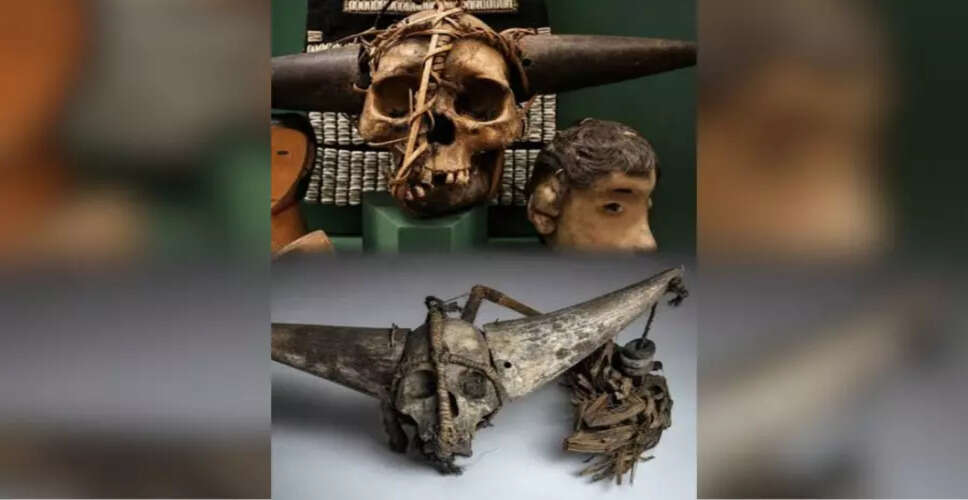

A Momentous Homecoming for Naga Heritage
The remains are brought back from the Pitt Rivers Museum at the University of Oxford (Photo: @ChotuThoughts)
Kohima, Nov 29: Nagaland's Chief Minister Neiphiu Rio hailed the return of 39 ancestral human remains from the UK as a significant milestone, emphasizing that it symbolizes the reclamation of the community's identity, dignity, and shared history.
During a public event at the NBCC Convention Hall, Rio stated that these remains, retrieved from the Pitt Rivers Museum at the University of Oxford, are integral to Naga heritage and represent a history that was taken during colonial times.
He remarked, “This signifies the restoration of our identity, history, and collective memory,” noting that the successful repatriation illustrates the power of unity and collective action among the Naga people.
Rio expressed gratitude to the Forum for Naga Reconciliation (FNR), the Recover, Restore and Decolonise initiative, tribal Hohos, researchers, community leaders, and the 28-member delegation that facilitated the return of the remains to Nagaland.
Reflecting on the State Government's initiatives, he mentioned that he had reached out to the Ministry of External Affairs on October 8, 2024, to intervene against the auction of a 19th-century Naga human skull in the UK.
Thanks to this intervention, the auction house retracted the item from sale and display.
“The State Government then formed a ministerial committee led by Deputy Chief Minister Y Patton to oversee the repatriation process, with support from various Union ministries and the Archaeological Survey of India for necessary approvals,” he added.
Rio emphasized that repatriation transcends the mere return of remains; it is about honoring ancestors and acknowledging the historical and cultural rights of indigenous peoples.
“Our ancestors are not mere relics of the past; they are an integral part of our identity,” he stated.
He expressed hope that the remains would be interred in their homeland with the respect and honor they deserve, and that the unity shown during this process would inspire future collaborative efforts for the advancement of the Naga community.
Rev Wati Aier, convenor of the FNR, spoke on the theme ‘The Journey Home: The Homecoming of Our Ancestors and the Hope in Christ’, highlighting that this event allows for the acknowledgment of past wounds and the pursuit of a future devoid of hatred and vengeance.