
Historic Free Trade Agreement Signed Between UK and India
A Landmark Agreement
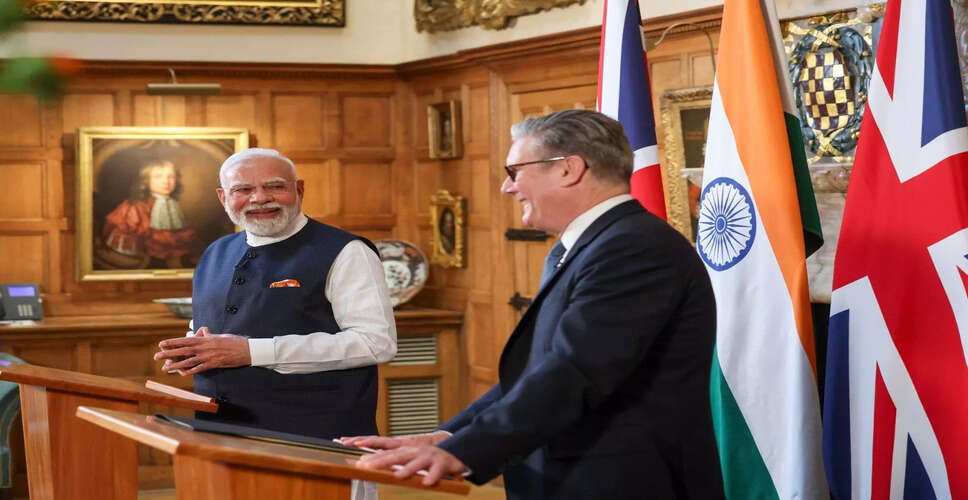
After a lengthy negotiation process spanning three years, Keir Starmer of the UK and Narendra Modi of India have officially signed a free trade agreement, which Starmer described as "a landmark moment for both of our countries." Although British exports to India represent only 1.9% of the total and imports from India account for a mere 1.8%, the significance of this deal extends beyond these figures.
The true importance of this agreement lies in its timing, as it represents a victory for free trade amidst rising global protectionism and fears of trade wars, particularly in light of US President Donald Trump's tariff policies.
The looming threat of a global trade conflict accelerated the negotiations, prompting both nations to finalize the deal swiftly. This collaboration serves as a model for other countries to follow in order to maintain stability in global trade amidst challenging circumstances.
Once implemented within a year, the agreement will reduce tariffs on various Indian imports, including British products such as gin, whisky, aerospace components, medical devices, cosmetics, lamb, salmon, chocolates, biscuits, and high-end vehicles. Conversely, British consumers will enjoy lower tariffs on Indian goods, which will encompass clothing, footwear, cars, and food items like frozen prawns, jewelry, and gems.
While the European Union remains India's largest trading partner, this UK-India agreement is expected to expedite ongoing discussions between India and the EU.
This deal may also prompt Trump to reconsider his approach, as it illustrates that nations prioritize their own interests when shaping foreign and trade policies. The agreement aims to boost trade between the UK and India, currently valued at $42 billion, by an additional £25.5 billion annually by 2010.
The deal includes provisions for certain Indian and British workers to benefit from a three-year exemption from social security contributions. Additionally, it addresses the services sector and procurement, enabling British companies to compete for more contracts, which is advantageous for both nations. India stands to gain from increased foreign investment, while the UK secures a foothold in the growing Indian market.
Experts believe this agreement will invigorate the service sectors in both countries, enhancing the ease of doing business and enriching the UK economy with skilled Indian professionals. Both nations anticipate that this partnership will stimulate trade, investment, growth, job creation, and innovation, establishing the UK and India as high-priority trade allies.
Ultimately, this agreement serves as a powerful example of the advantages of mutual cooperation on a global scale.