
Historic Collaboration for Underwater Archaeological Survey of Danish Ship Oresund
The Archaeological Survey of India has partnered with Denmark's National Museum to explore the wreck of the historic ship Oresund, which sank in 1619. This collaboration aims to enhance research on underwater cultural heritage while employing advanced non-invasive techniques. The project is a significant milestone for ASI's Underwater Archaeology Wing, marking its first international collaboration. Experts believe this investigation will provide valuable insights into early maritime trade and connections between Denmark and India. Discover more about this exciting archaeological endeavor and its implications for cultural heritage.
| Jun 16, 2026, 19:04 IST
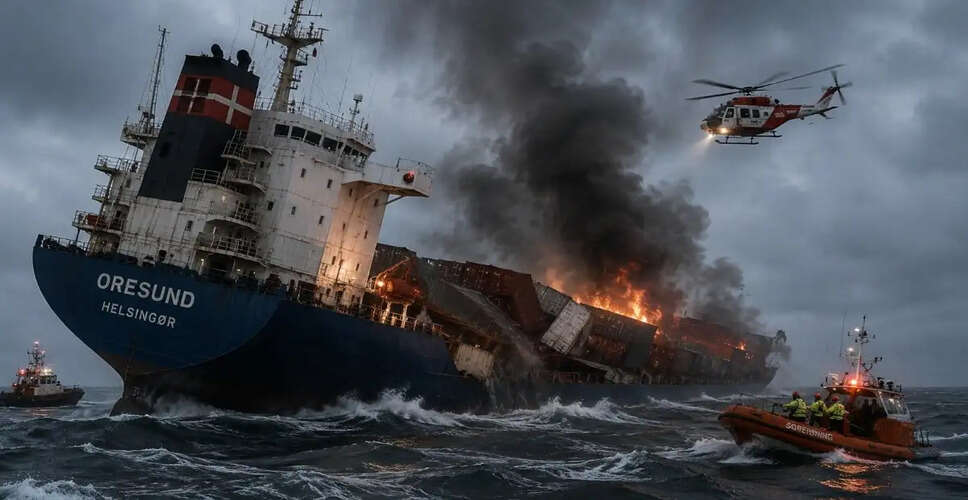

Joint Effort Between ASI and Denmark's National Museum
The Archaeological Survey of India (ASI) has entered into a Memorandum of Understanding (MoU) with Denmark's National Museum to conduct an underwater archaeological investigation of the historic Danish ship 'Oresund'. This vessel met its fate in 1619 when it wrecked near Karaikal, close to present-day Puducherry. The agreement was finalized on Monday and marks a significant step towards advancing research on underwater cultural heritage and strengthening academic collaboration between India and Denmark. The primary aim is to locate, document, and study the ship's remains through scientific and non-invasive underwater archaeological surveys. This initiative will be jointly executed by ASI's Underwater Archaeology Wing and maritime heritage experts from Denmark's National Museum's 'Nørd – Center for Maritime and Underwater Cultural Heritage'.
Significance of the Oresund Ship in Maritime History
Indo-Danish Heritage of the Historic Wreck
The 'Oresund' ship holds a unique position in maritime history as it is considered the first Danish vessel to reach India. Historical records indicate that shortly after arriving in Indian waters, the ship was wrecked and sank near Karaikal on the Coromandel coast. Archaeologists and historians regard this sunken ship as a priceless cultural heritage, offering crucial insights into maritime trade, navigation, shipbuilding techniques, and the early direct maritime connections between Denmark and India during the early 17th century. Experts believe that this investigation could reveal extensive trade networks that linked Europe with the Indian Ocean region during a time of expanding global trade and colonial maritime ventures.
Advanced Techniques for Non-Invasive Survey
Focus on Non-Invasive Archaeological Survey
Under the terms of the MoU, the project will emphasize conducting a comprehensive non-invasive archaeological survey using advanced scientific methods and remote sensing technology. The Ministry of Culture has stated that researchers will employ cutting-edge underwater survey techniques to identify potential remains of the sunken ship while minimizing damage to the seabed and associated cultural artifacts.
A Milestone for ASI's Underwater Wing
First Global Collaboration for ASI's Underwater Wing
This project represents a significant achievement for ASI's Underwater Archaeology Wing, marking its first collaborative archaeological project with an international institution. Officials have expressed optimism that this partnership will enhance research capabilities in the field of maritime archaeology, promote knowledge exchange, and strengthen institutional cooperation. During the announcement, ASI's Director General, Yadubir Singh Rawat, described the agreement as a crucial step towards reinforcing academic and institutional ties between India and Denmark.