
Historic Agreement Establishes Frontier Nagaland Territory Authority
Formation of Frontier Nagaland Territory Authority
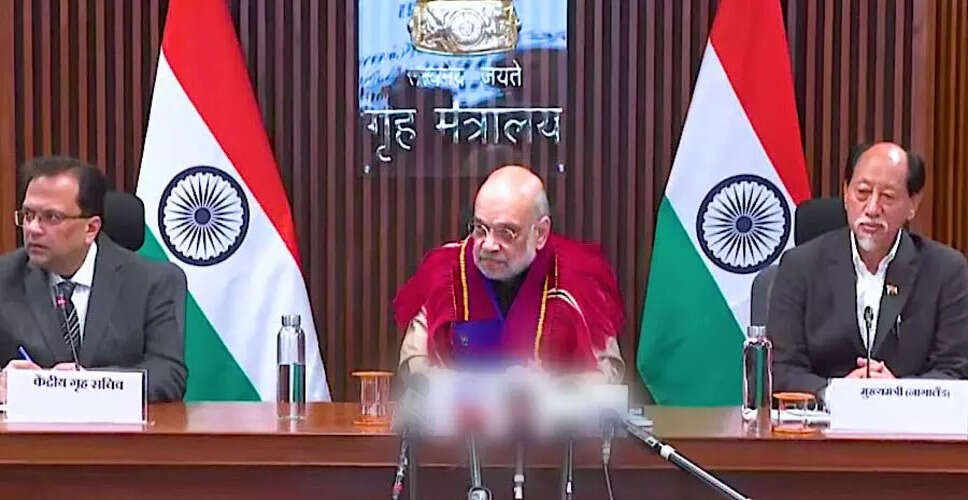
Guwahati, Feb 5: The long-awaited establishment of the Frontier Nagaland Territory Authority (FNTA) was officially realized on Thursday with the signing of a tripartite agreement involving the Central Government, the Nagaland state government, and the Eastern Nagaland People’s Organisation (ENPO).
This agreement was finalized in New Delhi, with Union Home Minister Amit Shah present, and it outlines a distinctive autonomous administrative framework for six districts in eastern Nagaland: Kiphire, Longleng, Mon, Noklak, Shamator, and Tuensang.
Shah emphasized the importance of this agreement, noting that the negotiations were conducted directly between the Nagaland government and the ENPO, leading to a draft that reflects their discussions.
“This agreement brings us closer to resolving the issues in Nagaland, and both the state government and the Centre will collaborate to advance Eastern Nagaland,” Shah stated.
Addressing historical grievances, he remarked, “Since the formation of Nagaland, the residents of Eastern Nagaland have felt overlooked; today’s negotiations have yielded a positive result.”
Shah also acknowledged the efforts of the Union Home Ministry officials for their role in facilitating the agreement between the ENPO and the state government.
“In my previous discussions with Chief Minister Neiphiu Rio, he assured me that the state would heed the ENPO's demands. I extend my gratitude to Rio and his cabinet for successfully concluding the negotiations, resolving nearly all issues,” he added.
Shah assured that the Centre would take on the initial financial obligations for the region's development, stating, “We will allocate designated annual funds, with the Centre covering initial expenses.”
Chief Minister Neiphiu Rio expressed his appreciation to Prime Minister Narendra Modi and Shah, asserting that the agreement was made possible through their negotiations.
“I firmly believe this agreement will foster trust among all communities and fulfill the aspirations of the Eastern Nagaland populace and the state as a whole,” Rio remarked, congratulating the people of eastern Nagaland.
While the complete details of the agreement are yet to be disclosed, the FNTA is anticipated to possess significant executive, legislative, and financial autonomy.
This arrangement aims to bolster self-governance in eastern Nagaland without establishing a separate state or compromising Nagaland’s territorial integrity, a concern consistently raised by the state government.
Sources indicate that the agreement will likely delineate the powers, funding structures, and administrative framework of the proposed FNTA, along with measures to ensure coordination between the state government and the Centre.
Previously, the Nagaland government had expressed strong opposition to the Centre’s suggestion of a separate constitutional provision for the FNTA, arguing that it would lead to the territorial division of the state.