
Hirapara Artisans Prepare for Diwali with Traditional Pottery
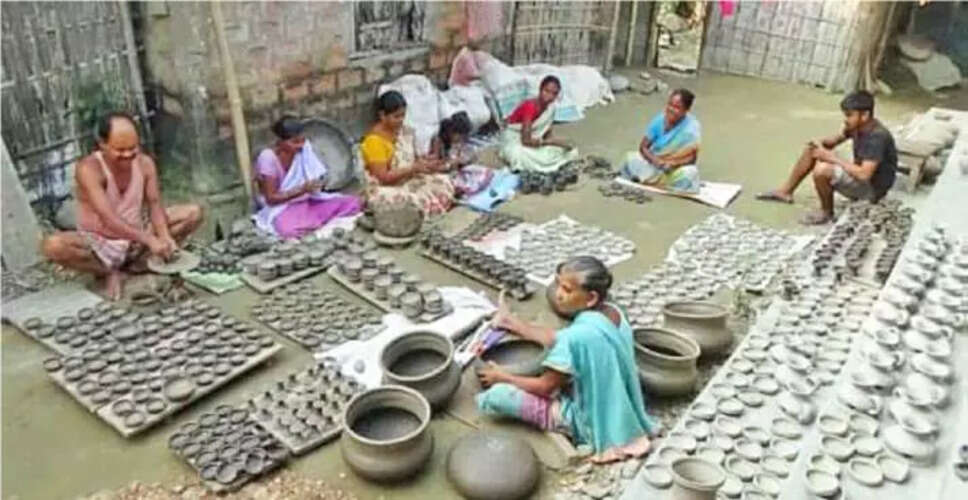

Traditional Craftsmanship Thrives in Hirapara
Despite the increasing availability of machine-made goods, traditional clay products like earthen lamps and pots crafted by Hirapara artisans remain highly valued in the marketplace.
Chamata, Nov 4: As Diwali approaches, the pottery artisans of Hirapara Chuburi in Pachim Nalbari are diligently crafting earthen lamps to satisfy the growing market demand.
Even with the rise of machine-manufactured items, the traditional clay creations, including diyas, pots, and vessels from Hirapara, continue to be cherished. This year, artisans are optimistic about a successful Diwali season.
Nestled on the eastern bank of the Burhadiya River in Khatarupiabathan village, Hirapara has become a hub for terracotta artistry. Approximately 60 families in this region have been engaged in pottery for generations.
In preparation for the festival, artisans are working relentlessly, adhering to age-old pottery-making techniques. This involves clay preparation, shaping diyas on potter's wheels, drying them, and firing them in kilns.
One artisan shared, "Our creations are not only sold within the state but also attract orders from outside Assam, showcasing the growing appreciation for our traditional craft."
Despite the demand, artisans face numerous hurdles. A significant issue is the scarcity of quality clay, compelling them to source the material from Morigaon and other districts at elevated prices.
Interestingly, a pottery industrial unit was set up in Hirapara Chuburi a few years ago with assistance from the Ministry of Development of North Eastern Region (DoNER) to enhance and promote this traditional craft. However, the unit has yet to operate at full capacity.
Artisans expressed, "We must embrace modern techniques to boost our production capabilities. With the competitive market and the influx of cheaper Chinese products, we need to make our offerings more appealing and user-friendly. Adequate government support is crucial for this."
Despite these obstacles, the pottery-making families of Hirapara are committed to preserving their traditional way of life. As Diwali draws near, they remain hopeful of capitalizing on the festive market while keeping their age-old craft alive.