
Himachal Pradesh Government Implements New Dress Code for Employees
Introduction of Dress Code in Himachal Pradesh
Munish Sood
Mandi
The Himachal Pradesh government, under the leadership of Chief Minister Sukhvinder Singh Sukhu, has taken a significant step by instituting a formal dress code for all government personnel. This unprecedented initiative is already sparking discussions within both bureaucratic and political spheres.
Details of the Dress Code
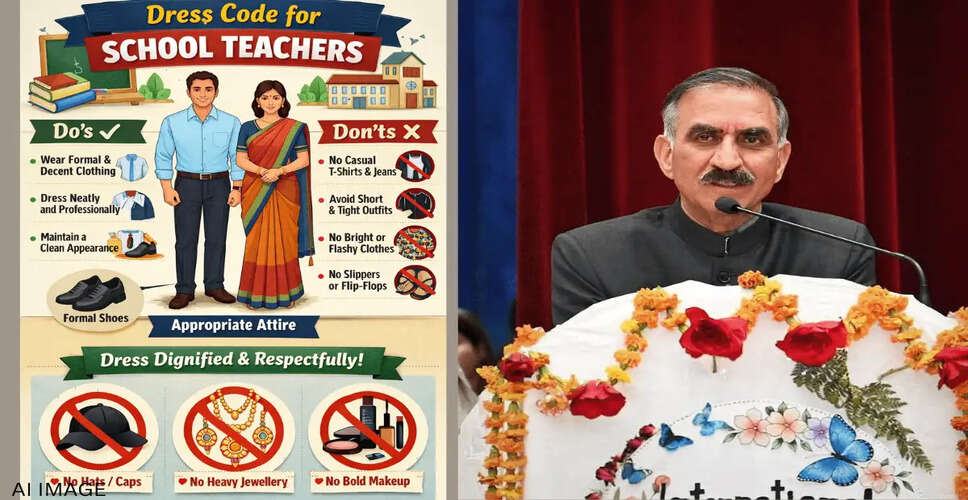
According to a notification from the state’s Personnel Department, male staff members are now mandated to wear formal shirts and trousers while at work. Female employees are instructed to don sarees or salwar suits, although they may also choose collared shirts with formal trousers. The directive explicitly bans casual clothing such as jeans, T-shirts, and party outfits in government offices.
Implementation and Governance Implications
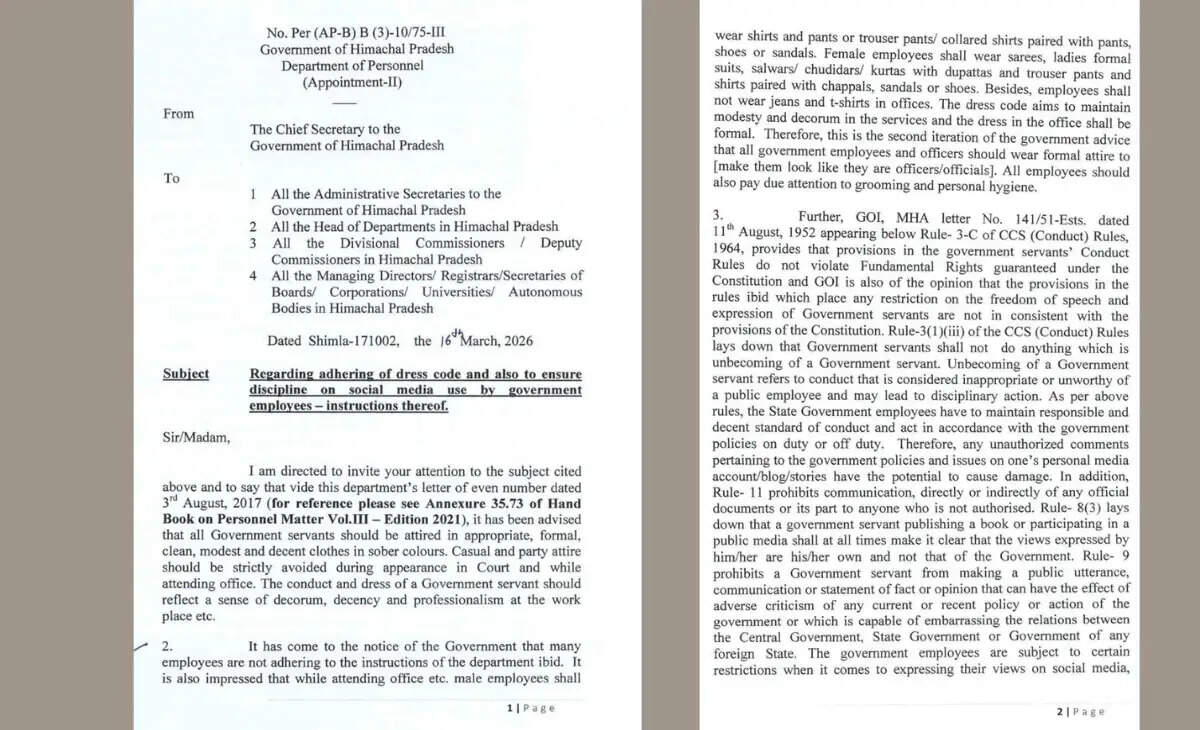
The directive, issued by Joint Secretary (Personnel) Neeraj Kumar, is set to be enforced across all departments immediately.
While the government aims to present this move as a means to enhance discipline and professionalism within the administrative framework, political analysts suggest that the timing and nature of this decision may indicate a larger narrative.
Political Context and Reactions
In recent months, the Sukhu administration has faced financial challenges and scrutiny regarding governance. Consequently, some observers interpret the dress code as a strategy to convey a message of control and seriousness in administration.
"This initiative is as much about shaping perceptions as it is about policy. Such measures often seek to visibly alter the governance culture," noted a senior political analyst.
Opposition and Employee Concerns
The opposition is likely to challenge the government's focus, potentially portraying the dress code as a superficial measure. Critics may argue that pressing issues like job creation, fiscal health, and infrastructure development warrant more attention than regulating employee clothing.
Additionally, employee unions may express concerns regarding personal freedom and practicality, particularly given the state's varied climate.
A Unique Governance Approach
While dress codes are standard in sectors like education, corporate environments, and aviation, a uniform dress code across government departments is largely unprecedented in India.
This initiative positions Himachal Pradesh as a potential model for a governance style that integrates visual discipline with administrative operations.
Future Implications
The effectiveness of this directive will hinge on employee acceptance and the government's response to any resistance. What is clear is that this decision has thrust the Sukhu administration into a broader dialogue—one that transcends mere attire and delves into governance style, public perception, and the balance between discipline and personal choice.
As reactions unfold, this policy could either serve as a blueprint for administrative reform or become a new point of contention in the state's political arena.