
Himachal Pradesh Faces Severe Wildfire Crisis Amid Prolonged Dry Spell
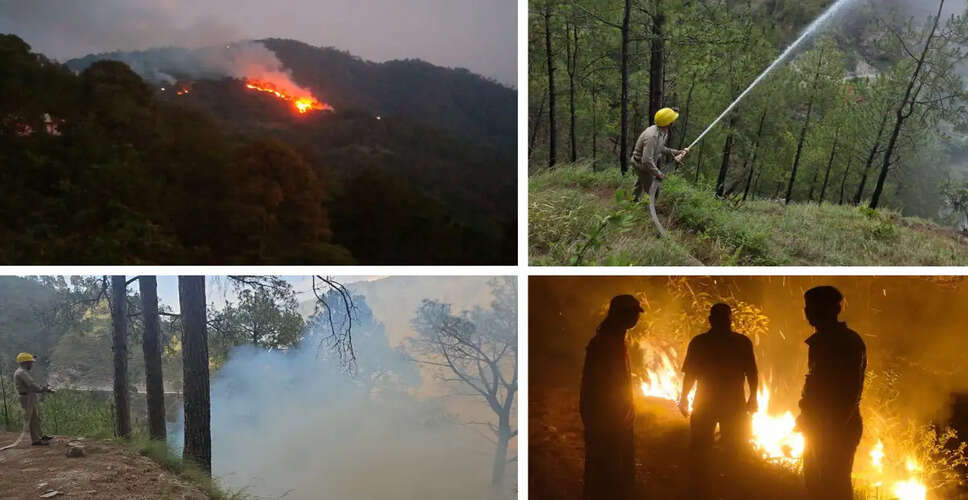

Wildfires Ravage Himachal Pradesh's Forests
Over 3,300 hectares impacted, with damages surpassing ₹82 lakh due to ongoing dry conditions fueling wildfires in the Himalayan region
Munish Sood
Mandi
Forest fires in Himachal Pradesh have once again brought to light the increasing vulnerability of the state's woodlands and the significant challenges faced by authorities in safeguarding them. Despite considerable investments in fire management, extensive areas of forest continue to be consumed by flames, raising alarms about preparedness and long-term strategies for mitigation.
Official reports indicate that this season, Himachal Pradesh has experienced 263 forest fire incidents, impacting over 3,328 hectares of forested land. Initial assessments suggest damages exceeding ₹82 lakh, marking one of the most severe wildfire seasons in recent memory.
Mandi has been identified as the most affected area, with 87 fire incidents recorded, the highest in the state. Approximately 513 hectares of forest land in the Mandi Circle have suffered damage, with estimated losses nearing ₹18 lakh.
The devastation has been particularly pronounced in the Katoula, Kotli, Drang, Mandi, and Panarsa forest ranges. The Mandi Forest Division alone reported 30 fire incidents, affecting over 183 hectares of forest, including significant natural areas. Financial losses were highest in Panarsa, while Katoula and Panarsa each experienced nearly 67 hectares of forest land scorched.
The wildfire crisis is not limited to Mandi; incidents have also been reported in Dharamshala, Nahan, Shimla, and Solan circles. Shimla has seen the largest area affected, with over 1,570 hectares damaged by fire.
The severity of the situation was highlighted in Solan district, where a major fire in the Sari area threatened an Indian Air Force station. The situation escalated to the point where the Air Force had to deploy helicopters to aid firefighting efforts, underscoring the scale of the threat.
This widespread destruction occurs despite financial backing from central forest fire management initiatives. Environmental specialists argue that these recurring incidents highlight the urgent need for enhanced prevention strategies, better surveillance, increased community involvement, and climate-resilient forest management practices.
Forest fires not only obliterate vegetation but also devastate wildlife habitats, degrade soil quality, diminish biodiversity, and jeopardize essential water sources in the delicate Himalayan ecosystem. With prolonged dry spells and shifting climatic conditions becoming more common, experts caution that such incidents may intensify and spread in the future.
In response to the ongoing crisis, Mandi Divisional Forest Officer (DFO) Vasu Doegar stated that the department's field staff has been tirelessly working to control the fires, with most incidents now under control.
“The persistent dry conditions and lack of rainfall have significantly worsened the situation. In many areas, even accessing the affected sites on foot is extremely challenging, complicating firefighting efforts,” Doegar remarked.
He further noted that the Forest Department has received robust support from local communities and the Fire Services Department. “Our main goal is to minimize damage to forest resources and ensure that fires are contained as quickly as possible,” he added.
As wildfires continue to erupt across the state, the statistics reveal a concerning trend. The ongoing wildfire crisis is rapidly becoming one of Himachal Pradesh's most urgent environmental issues, endangering not only its forests but also the ecological integrity of the Himalayan region.