
High Court Upholds Defamation Case Against Rahul Gandhi Over Army Remarks
Court Ruling on Freedom of Speech and Defamation
The Allahabad High Court recently ruled that the constitutional right to free speech does not protect individuals from making defamatory statements about the Indian Army. This decision came as the court dismissed a petition from Congress leader Rahul Gandhi, who was contesting a summons issued by a Lucknow court.
In February, Additional Chief Judicial Magistrate Alok Verma had summoned Gandhi in connection with a defamation lawsuit filed against him. The Opposition leader argued in the High Court that the case was initiated with malicious intent.
However, Justice Subhash Vidyarthi rejected Gandhi's arguments and upheld the summons on May 29. He stated, “While Article 19(1)(a) of the Indian Constitution guarantees freedom of speech and expression, this right is subject to reasonable limitations and does not extend to making defamatory statements about individuals or the Indian Army.”
The defamation suit was brought forth by Uday Shankar Srivastava, a former director of the Border Roads Organisation, who holds a rank equivalent to Colonel. The court noted that Srivastava expressed profound respect for the Army and felt personally offended by Gandhi's remarks.
As a result, the High Court determined that Srivastava was an aggrieved party under Section 199 of the Code of Criminal Procedure, allowing him to pursue the defamation claim against Gandhi.
The judge clarified that the current proceedings were solely focused on the validity of the summons issued by the Lucknow court, and the substantive issues would be addressed during the trial.
Gandhi's controversial comments were made on December 16, 2022, regarding a confrontation between Indian and Chinese forces along the Line of Actual Control in Arunachal Pradesh's Tawang region. This incident, which occurred on December 9, resulted in injuries to personnel from both sides.
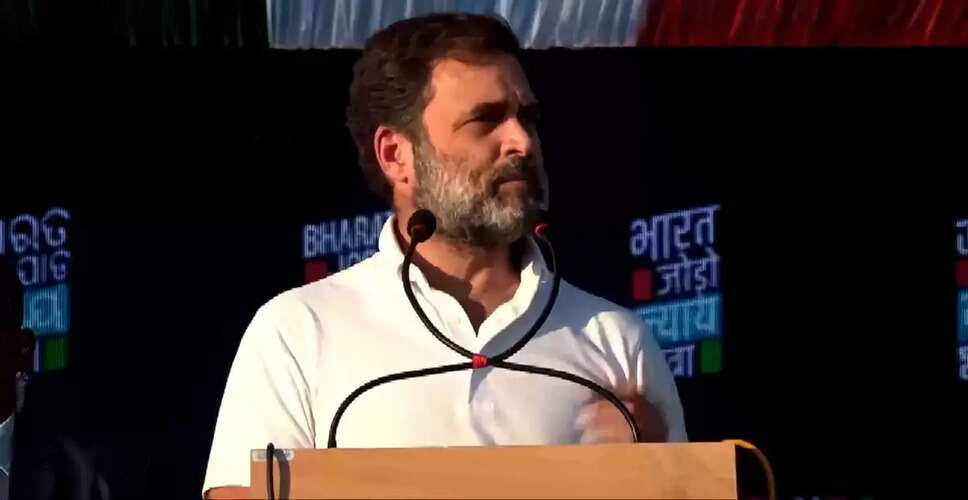
His statements were delivered during the Congress' Bharat Jodo Yatra, a campaign aimed at opposing the divisive policies of the ruling Bharatiya Janata Party, stretching from Kanyakumari to Kashmir.