
Healthcare Crisis in Lumding: A Town's Struggle for Survival

Severe Healthcare Challenges in Lumding
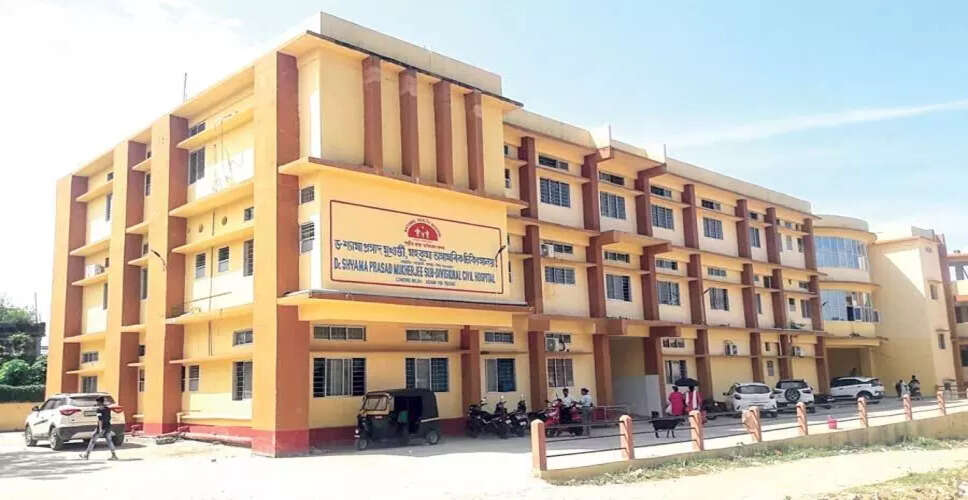
Lumding, a crucial railway hub in Assam, is currently grappling with a dire healthcare crisis that poses a significant threat to the well-being of its residents. The town's medical services are primarily reliant on two facilities: the Lumding Divisional Railway Hospital and the Dr Shayma Prasad Mukherjee Sub-District Civil Hospital. Unfortunately, both institutions are struggling to operate effectively as major healthcare providers due to inadequate infrastructure, a shortage of specialists, and insufficient critical care resources.
Rather than offering treatment, these hospitals have become referral centers. Patients with everything from minor injuries to severe emergencies are frequently redirected to hospitals in Hojai, Diphu, and Guwahati. This delay in receiving appropriate care has led to numerous preventable fatalities, particularly among those suffering from accidents, heart conditions, and critically ill children.
Emergency medical services in Lumding are virtually non-existent. Victims of road accidents receive only basic first aid before being transferred elsewhere, wasting crucial time during the critical golden hour. Cardiac patients, who need immediate specialized care, are given temporary medication and sent to distant facilities without access to cardiologists or cardiac units, resulting in many not surviving the journey.
The plight of children and newborns is equally alarming. With no pediatricians or neonatal intensive care units available, infants facing infections, respiratory issues, or complications from premature births are referred to Guwahati or other locations. Tragically, several families have reported losing their children during these transfers.
Doctors at these hospitals, who wish to remain anonymous, have acknowledged that the lack of essential services compels them to refer patients even when local treatment is feasible. One doctor remarked, "We lack ICU facilities, ventilators, and specialists. We have no option but to refer patients, even when we understand the associated risks."
Beyond the medical crisis, there is a significant financial strain that patients and their families endure during these referrals, particularly when they must seek better care in Guwahati.
For many families in Lumding, especially those from low-income and middle-class backgrounds, a referral to Guwahati is not merely a medical emergency; it transforms into a financial catastrophe. The costs associated with hiring a private ambulance or arranging urgent transportation can vary from several thousand rupees to much higher amounts, depending on the urgency and distance. Government ambulance services are often limited or unavailable in critical situations, forcing families to rely on costly private options.
Once they arrive in Guwahati, the financial burden escalates. Patients are frequently admitted to private hospitals due to overcrowding in government facilities, resulting in high expenses for admission, diagnostic tests, ICU care, medications, and surgeries. Additionally, families must cover costs for accommodation, food, and daily living while in the city.
Many families find themselves compelled to borrow money, sell possessions, or take out high-interest loans just to continue treatment. In several heartbreaking instances, families have depleted their financial resources before the patient could receive comprehensive medical care.
A local resident shared his tragic experience: "When my brother had an accident, the hospital here instructed us to take him to Guwahati immediately. We borrowed money to arrange a vehicle. By the time we arrived, he had passed away. Now we are left with debt and sorrow."
This dual burden—medical and financial—has plunged many families in Lumding into prolonged economic hardship. The lack of accessible healthcare in the town is not only costing lives but also undermining the financial stability of households.
In the past six months, local reports indicate that numerous patients have died either during transit or shortly after being referred due to delays in treatment. The absence of specialists such as cardiologists, pediatricians, surgeons, and trauma experts has rendered it impossible for the hospitals to manage even moderately critical cases.
The infrastructure gap is glaring. There are no operational ICUs, trauma centers, cardiac units, or advanced diagnostic facilities. Ambulances are often ill-equipped for critical care transport, and there is no system in place to ensure safe and timely referrals.
The situation in Lumding has escalated beyond a healthcare issue; it has become a humanitarian crisis. Patients are not only fighting illness but also the overwhelming financial burden of seeking treatment far from home.