
Gwadar Port's Security Challenges Amid Rising Insurgency

Geopolitical Tensions Surrounding Gwadar Port
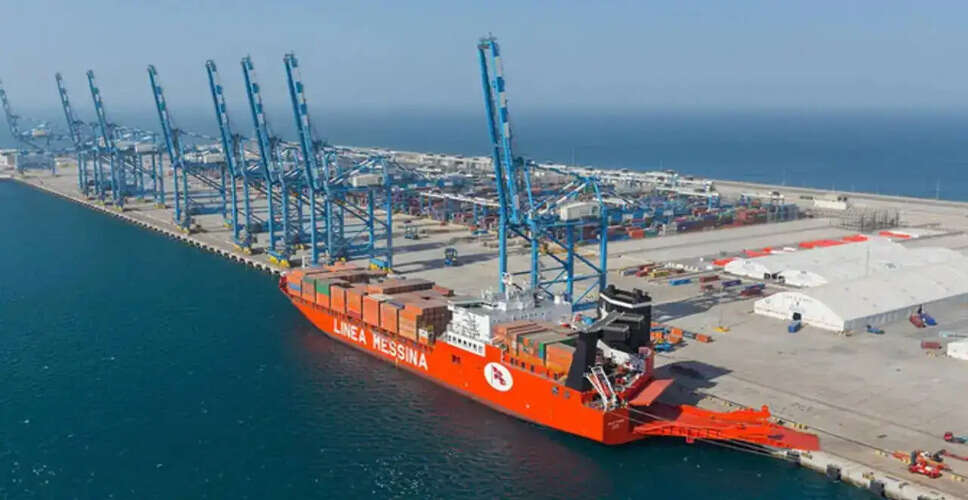
The security situation at Gwadar port is increasingly becoming a focal point in global geopolitical discussions. Ongoing conflicts between Pakistan and Afghanistan have disrupted vital land connectivity, which is crucial for the port's trade development. A recent maritime attack highlights the insurgents' capability to strike not only on land but also at sea and in the air. The incident on April 12 near Jiwani, which resulted in the deaths of three coast guard members, marks a significant escalation in the insurgency and poses a serious threat to Gwadar's security.
Over the last twenty years, the armed conflict in Balochistan has followed a predictable pattern, with insurgents targeting pipelines, attacking supply convoys, and carrying out bombings. Recently, however, the nature of these attacks has evolved. The Baloch Liberation Army (BLA) has introduced a drone unit named 'QAHR,' which has conducted aerial strikes, including those targeting Gwadar port.
The April 12 incident serves as a stark example of this new trend. According to BLA reports, this marked their inaugural maritime operation, resulting in the deaths of three coast guard personnel who were on a routine patrol. While it was claimed that the attackers destroyed a boat, official confirmation of this was lacking. The details suggest that the means employed did not lead to the sinking of the patrol vessel.
Furthermore, the BLA has established a naval wing called the 'Hammal Maritime Defence Force,' signaling the beginning of a national navy aimed at protecting Baloch resources and countering enemy naval activities. This development indicates a concerning shift towards a multi-domain insurgency that operates on land, in the air, and now at sea.
Jiwani, located approximately 84 kilometers from Gwadar port and near the Pakistan-Iran border, is strategically significant for Gwadar's security, which is a key component of the China-Pakistan Economic Corridor (CPEC). Maritime attacks are inherently more challenging to predict and prevent than land-based assaults. Security experts note that executing an attack on a moving patrol boat requires advanced planning and access to vessels. The Pakistan Coast Guard, lacking experience in counterinsurgency at sea, was caught off guard by this attack.
This maritime assault occurs against a backdrop of heightened security concerns. Pakistan's Operation Ghazab lil-Haq, a large-scale military campaign targeting Taliban positions in Afghanistan, was launched on February 26 in response to what Islamabad described as unprovoked shelling. This operation resulted in significant casualties, with UN estimates indicating over 90,000 refugees.
China has attempted to mediate the situation, with informal trilateral talks held in Urumqi from April 1-7 representing the first engagement between the conflicting parties since February. Unfortunately, these discussions yielded no agreements, as Islamabad demands verifiable actions from the Taliban to dismantle TTP sanctuaries in Afghanistan, while the Taliban is resistant to foreign influence.
For China, the outcome of these negotiations has been disappointing, as its influence over Pakistan and Afghanistan's economies has not led to a resolution. Gwadar port finds itself caught in the crossfire of these issues, with Baloch nationalists opposing CPEC, arguing that it exploits Balochistan's resources for the benefit of Chinese and Pakistani companies without providing local employment or infrastructure. This ongoing insurgency now extends its reach to maritime operations.
Given the current climate of conflict on land, air, and now sea, commercial shipping through Gwadar port is fraught with risk. Shipping companies are likely to avoid the port, despite China's substantial investments in the CPEC project, as actual shipping volumes remain low compared to its potential. With the insurgency spanning three domains, ongoing conflict with Afghanistan, and failed diplomatic efforts, increasing shipping activity seems unlikely.
At this juncture, Pakistan requires a period of stability in Balochistan and improved relations with Afghanistan, which appears distant. Addressing the escalating maritime threat is a priority for Pakistan's security. For China, the pressing question is whether its significant investment in CPEC can endure the prevailing instability.