
Guwahati's Roadside Vendor Survey Aims to Support Local Businesses
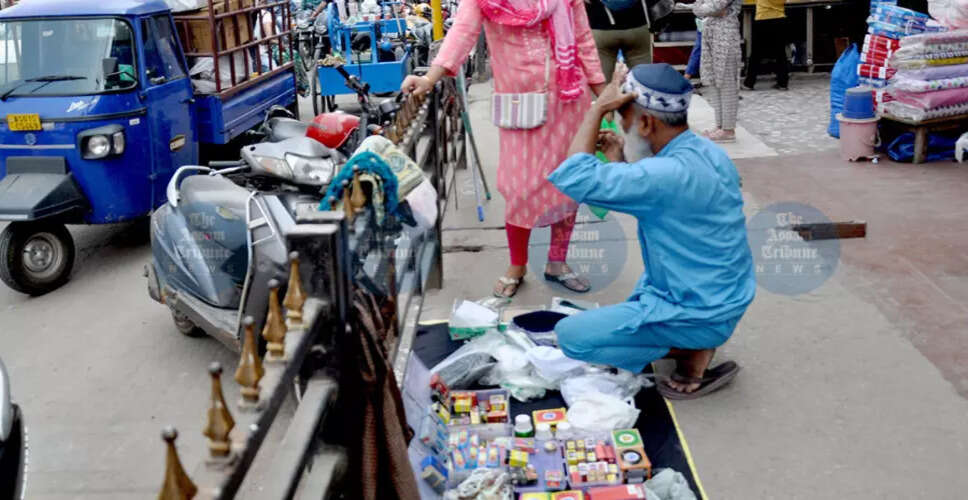

Survey to Enhance Economic Opportunities for Indigenous Vendors
According to official estimates, around 1 lakh people are currently engaged in business activities on Guwahati's footpaths.
Guwahati, June 15: Chief Minister Himanta Biswa Sarma has announced a two-month survey targeting roadside vendors in Guwahati, aimed at fostering structured economic opportunities for local communities by identifying and removing non-local encroachers from the city's footpaths, as stated by senior BJP spokesperson Brajen Mahanta.
During a press conference on Sunday, Mahanta emphasized that footpaths should primarily serve pedestrians, but have increasingly been taken over by vendors from outside the state, thereby restricting livelihood options for local residents.
He explained, "The goal is to establish a systematic approach for indigenous communities to conduct business, whether on designated footpaths or beneath bridges. The initial step involves identifying and removing outsiders to allow local participation."
Mahanta further claimed that the unchecked presence of non-local vendors has diminished economic opportunities for the city's indigenous population.
He also connected the unregulated vending activities to two significant civic issues: urban flooding and traffic congestion. Vendors have been accused of improperly disposing of waste into drains instead of using dustbins, exacerbating waterlogging, while the unregulated placement of stalls has contributed to citywide congestion, according to Mahanta.
Official estimates indicate that approximately 1 lakh individuals are currently involved in business activities on Guwahati's footpaths, many of whom lack legal authorization.
During a session on June 13, Chief Minister Sarma referred to the initiative as a census-like data collection effort focused on street vendors throughout the city.
He noted, "This will provide insights into the employment opportunities that Assamese individuals may have been missing," adding that the survey is set to commence on August 16 and will last for two months.
Sarma mentioned that the data gathered will include comprehensive information about the vendors' origins, including those from districts like Dhubri, Goalpara, Nalbari, Kamrup, and Barpeta, as well as individuals who may have migrated from states such as Bihar and West Bengal.
The findings from this survey are expected to guide policy decisions regarding the regulation and relocation of street vending activities in the city, with the government indicating that indigenous vendors will receive priority access to designated vending areas once the survey concludes.