
Guwahati's New Flyover Faces Traffic Design Challenges
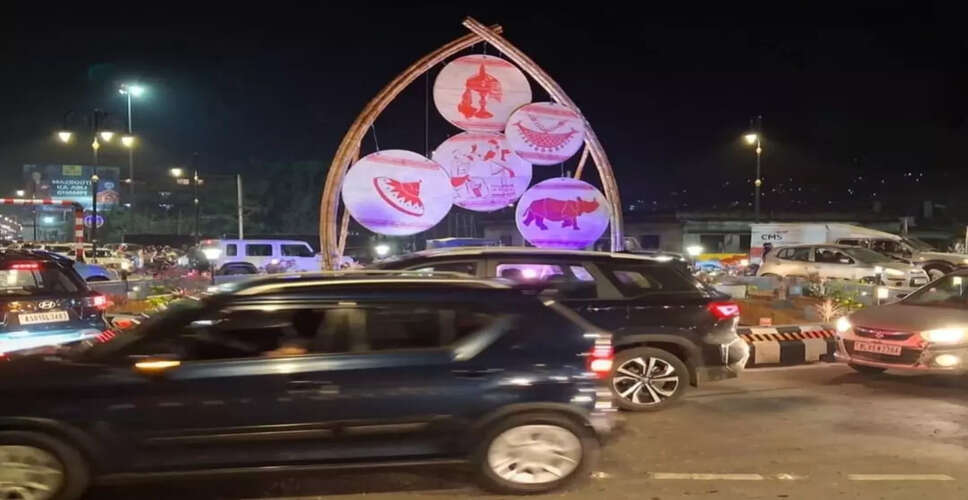
Introduction to the Maharaj Prithu Flyover
Guwahati, March 28: The inauguration of the Maharaj Prithu flyover on March 10 was hailed as a significant step towards alleviating Guwahati's persistent traffic woes.
This elevated corridor, extending 4.5 kilometers from Noonmati to Dighalipukhuri, promised enhanced connectivity and shorter travel durations.
However, just weeks after its launch, a controversial design element—a large roundabout at the Chandmari junction—has sparked considerable discussion among engineers, commuters, and local residents.
Criticism of the Roundabout Design
Roundabout Design Under Scrutiny
The central issue raised is whether a city with ongoing lane discipline challenges can effectively manage a roundabout situated on a busy flyover.
Urban planners and engineers suggest that the design may be fundamentally flawed. Roundabouts, particularly on elevated structures, necessitate thorough traffic studies, disciplined driving, and meticulous design.
Senior consultant engineer J N Khataniar noted that the implementation at Chandmari seems to have neglected these critical aspects.
“The rotary at the junction of the two flyovers is poorly designed. Its large diameter and inadequate planning have transformed it into a significant congestion point. Such structures require much more scientific consideration,” he stated.
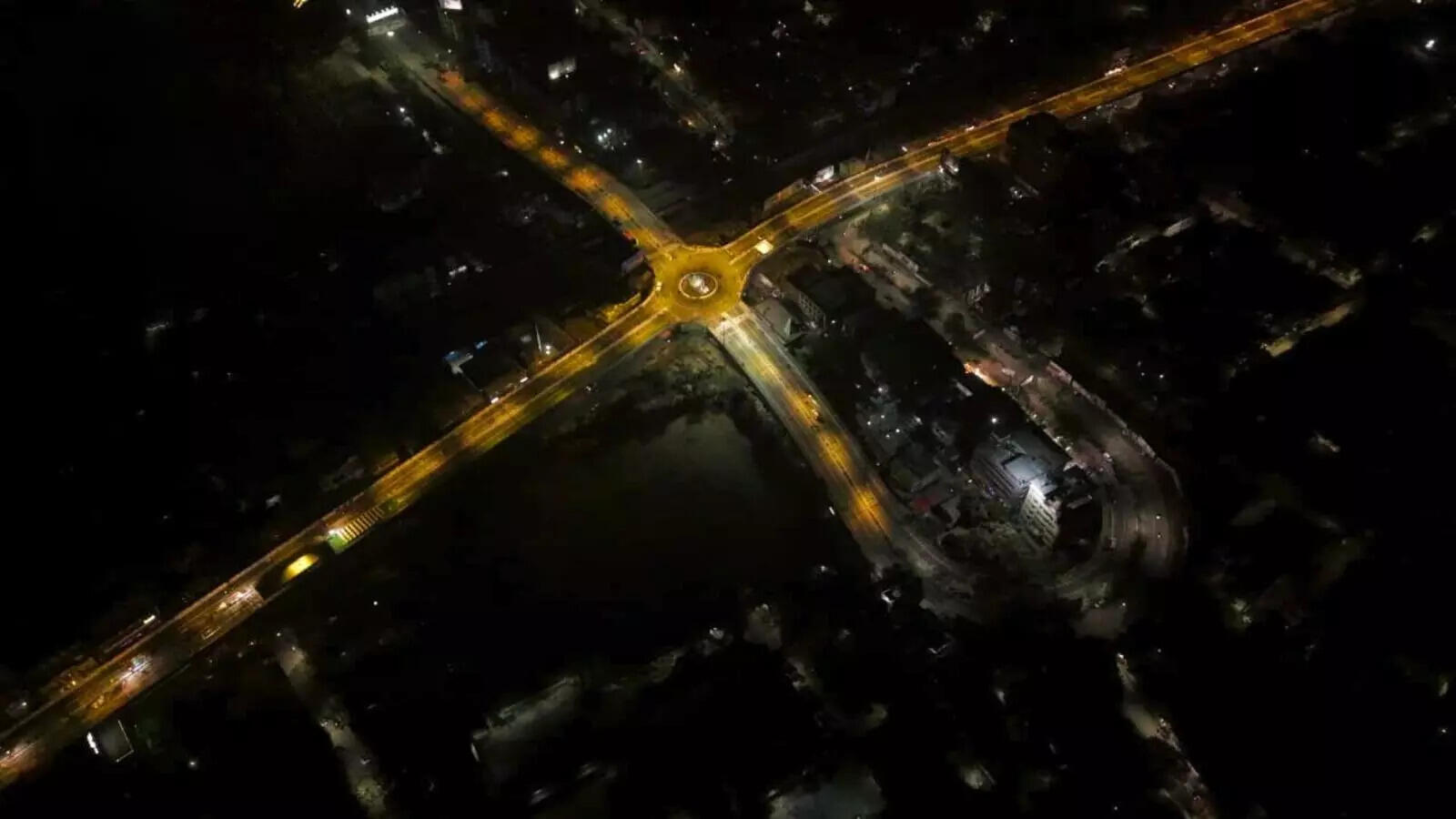
Aerial view of the Maharaj Prithu Flyover and roundabout at Chandmari (Image)
The new flyover intersects with an older 35-year-old structure, which is already a crucial route built over railway lines.
Instead of creating separate traffic flows through grade-separated crossings, the two flyovers converge at the same level, forcing vehicles from various directions into a single circular movement. Commuters report that this has led to confusion and bottlenecks rather than the anticipated relief.
Experts have pointed out that traffic distribution was not sufficiently evaluated. The older flyover continues to bear a heavier load, including buses and heavy vehicles, while certain restrictions apply to parts of the new corridor.
“When a less-utilized elevated road merges with a heavily trafficked one, congestion is unavoidable. This indicates a lack of proper traffic intensity analysis,” an engineering assessment remarked.
In addition to planning issues, structural and design flaws have also been highlighted. Differences in elevation where the two flyovers meet have reportedly resulted in uneven joints, making travel uncomfortable and potentially hazardous.
Concerns have also been raised regarding whether the load-bearing capacities of the older structure were adequately considered, leading to compromises in materials and design at the junction.
Commuters Share Their Experiences
Commuters Weigh In
For daily commuters, the situation is less about technicalities and more about the immediate frustrations of traffic jams, confusion, and delays. Many express that the roundabout feels counterproductive, especially considering that even ground-level roundabouts in the city struggle to operate efficiently.
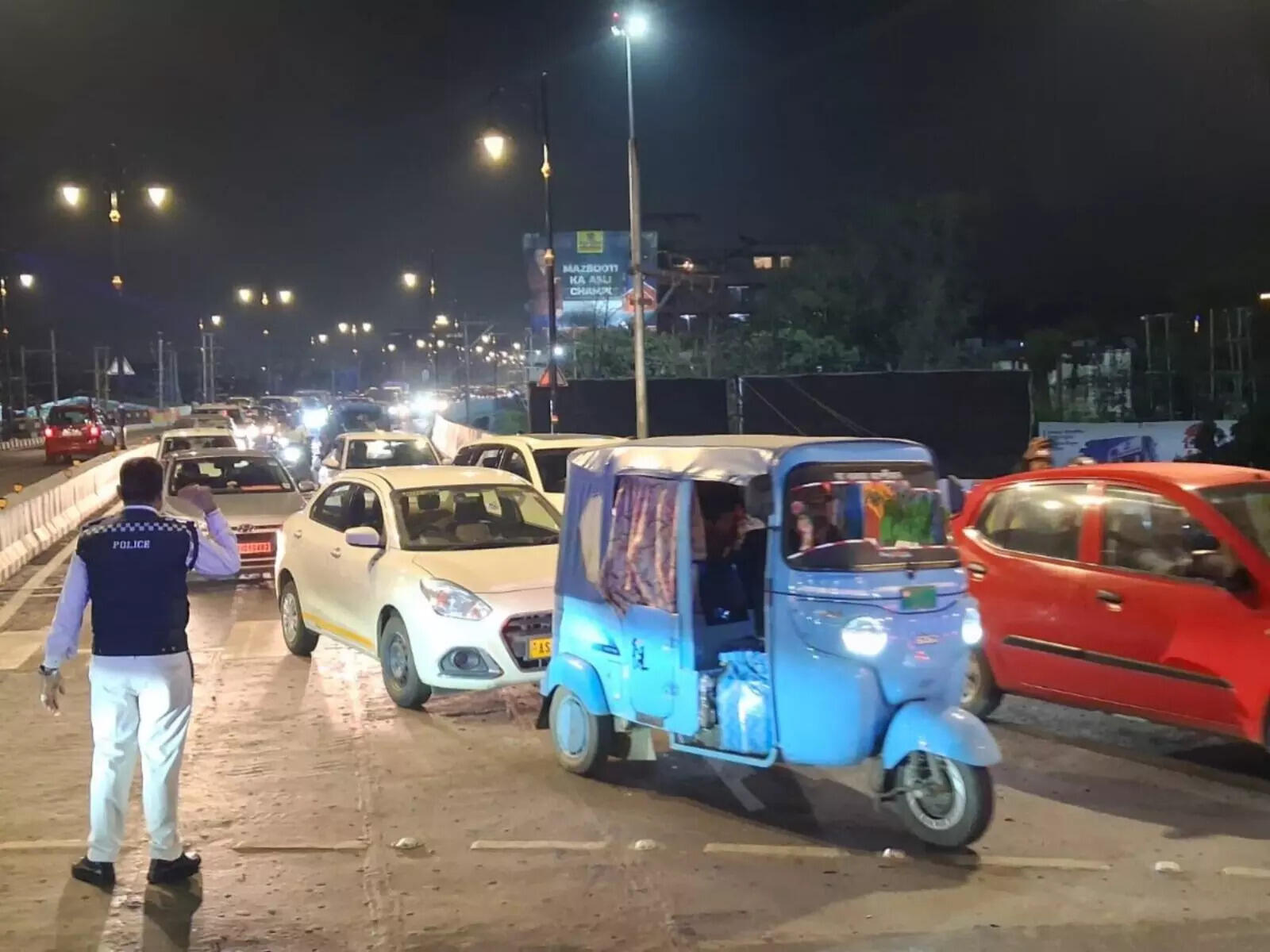
Vehicles navigate the newly constructed roundabout atop the Maharaj Prithu flyover in Chandmari, where congestion has become a daily concern (Image)
Rakesh Kalita, a commuter from Beltola, compared it to existing problematic areas: “If you look at the Last Gate roundabout, it becomes chaotic during peak hours. Vehicles change lanes recklessly, and there’s little discipline. Now, envision the same scenario on a flyover; it only adds to the confusion.”
Similarly, Ankita Das, a resident of Hatigaon, noted that the issue is not new but has simply been elevated. “The Hatigaon roundabout itself causes significant traffic snarls during peak hours. Instead of addressing those issues, we now have a roundabout on a flyover. It feels like the problem has just been shifted upward, not resolved,” she remarked.
Official Response to Concerns
Officials Defend the Project
Authorities, however, assert that the situation is being managed and improvements are forthcoming.
A senior official from the Public Works Department defended the project, stating, “The flyover has been constructed in a short time frame, which is commendable. Some concerns, like the perceived steepness at the end, are more psychological than actual. As for traffic, that falls under the traffic department’s jurisdiction.”
Traffic police have acknowledged the current congestion but insist that measures are being implemented.
“An integrated traffic management system is planned for the roundabout. Currently, 8–10 personnel are deployed in shifts to manually regulate movement. We are analyzing traffic patterns to enhance efficiency,” stated DCP (Traffic) Jayanta Sarathi Borah.
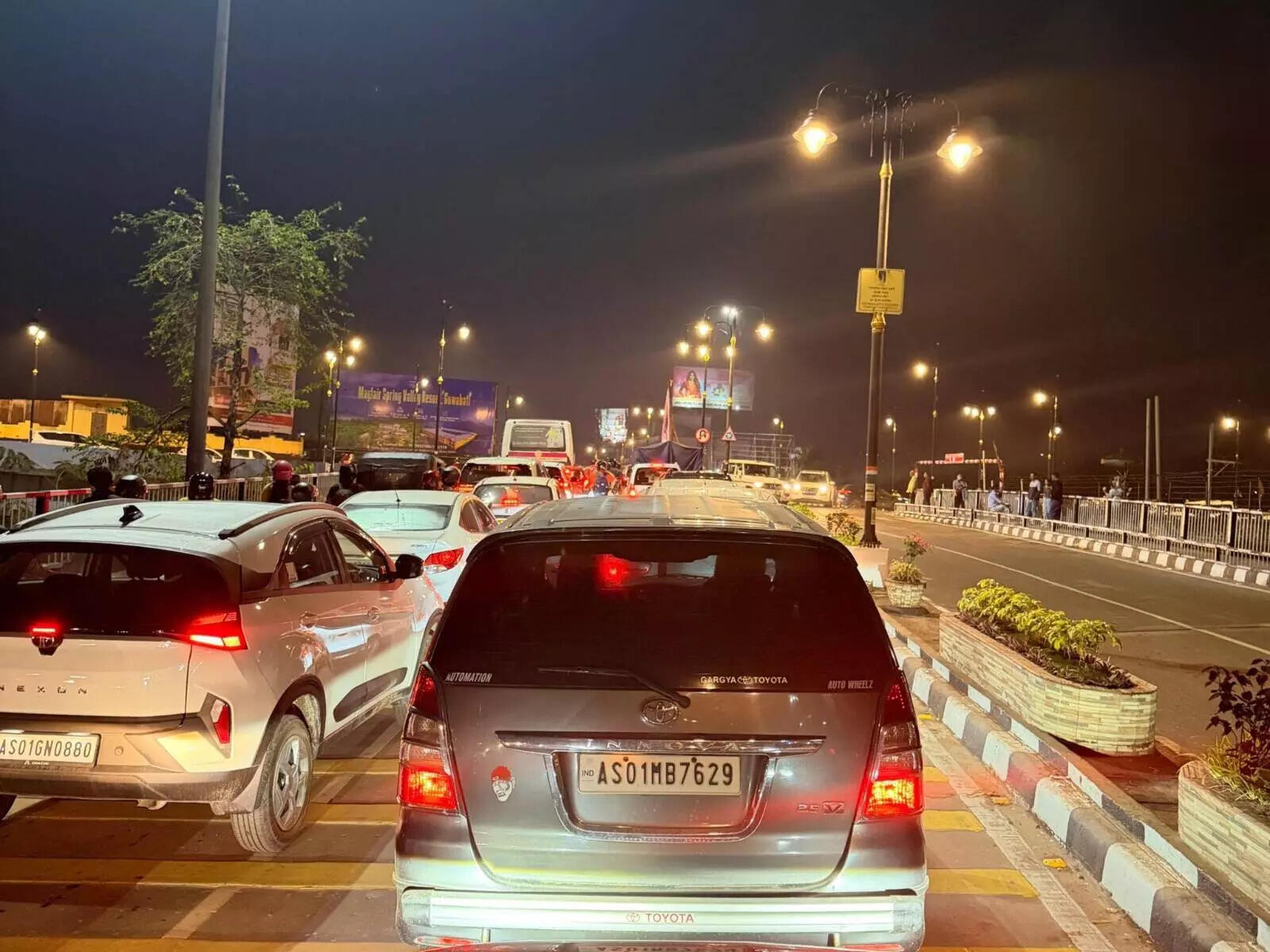
Traffic builds up at the elevated roundabout junction, highlighting design and management challenges on the Maharaj Prithu flyover (Image)
Nonetheless, the overarching concern remains whether Guwahati’s infrastructure development is keeping pace with its urban realities.
In summary, the Maharaj Prithu flyover embodies both ambition and contradiction. It reflects the government's drive for rapid infrastructure development while also revealing gaps in planning, coordination, and understanding of real-world behavior.
As Guwahati continues to expand, the focus should not only be on constructing more flyovers but also on ensuring they are built correctly.