
Gujarat Launches HPV Vaccination Drive for Adolescent Girls
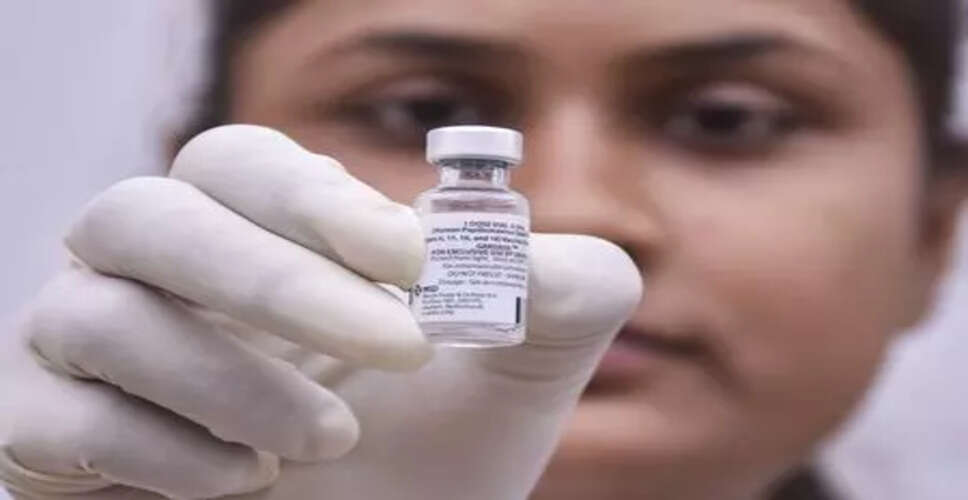
Statewide HPV Immunization Initiative
Gandhinagar/Ahmedabad, March 5: Gujarat has initiated a significant campaign aimed at vaccinating 550,000 adolescent girls against cervical cancer, as part of a broader Human Papillomavirus (HPV) immunization effort that commenced in Ahmedabad following a national rollout announced recently.
Prime Minister Narendra Modi officially launched this nationwide initiative on February 28 in Rajasthan.
The Gujarat segment of the campaign was inaugurated at Sola Civil Hospital by Chief Minister Bhupendra Patel, accompanied by Health Minister Praful Pansheriya.
Health officials indicated that this initiative targets 14-year-old girls to protect them from cervical cancer, which ranks as the second most prevalent cancer among women in India, accounting for approximately 17.7% of cases.
According to national statistics, a woman in India is diagnosed with cervical cancer every four minutes and 12 seconds, while one succumbs to the disease every seven minutes.
About 70 to 75% of patients are diagnosed at either the second or third stage, making it a leading cause of mortality among women aged 30 to 69 years.
In 2022, India saw an estimated 127,526 new cervical cancer cases and 79,906 related deaths, with Gujarat reporting 4,928 new cases and 1,781 deaths during the same timeframe.
Experts from the Gujarat Cancer Research Institute (GCRI) have dismissed concerns and misinformation regarding the HPV vaccine, asserting its safety and efficacy in preventing infections from high-risk HPV types 16 and 18, which are primarily responsible for cervical cancer.
Medical professionals explained that a persistent HPV infection can lead to Cervical Intraepithelial Neoplasia (CIN) over a span of 10 to 20 years, potentially progressing to invasive cancer, thus highlighting the importance of early vaccination.
Global evidence, including findings from the World Health Organization's Global Advisory Committee on Vaccine Safety, indicates no causal relationship between HPV vaccination and infertility or severe side effects.
The vaccine has received approval from the US Food and Drug Administration and the Centers for Disease Control and Prevention.
In India, its integration into public health initiatives has been endorsed by the Indian Council of Medical Research and the National Technical Advisory Group on Immunization.
Over 100 countries, including Australia, the United Kingdom, and Canada, have included the HPV vaccine in their national immunization programs.
Since the vaccine's introduction in Australia in 2007, there has been a reported 90% decrease in HPV infections and high-grade cervical lesions.
Research from the United Kingdom indicates an 87% reduction in cervical cancer incidence among girls vaccinated at ages 12 to 13.
State officials noted that while the vaccine costs around Rs 3,000 per dose in the private sector, it is being provided free of charge under this program, with an estimated expenditure of Rs 150 crore to the state budget.
A total of 2,297 cold chain points have been established to ensure storage temperatures between +2°C and +8°C.
Medical personnel and emergency medications are available at vaccination sites to address minor adverse reactions, while real-time monitoring of coverage and outcomes is facilitated through the TeCHO+ and SAFE-VAC digital platforms.
This campaign aligns with the World Health Organization’s 90-70-90 goal to eradicate cervical cancer by 2030, which aims for 90% vaccination coverage among adolescent girls, screening for 70% of women at ages 35 and 45, and treatment for 90% of identified cases.