
Gujarat High Court Rejects Kejriwal's Request for Separate Trial in Defamation Case
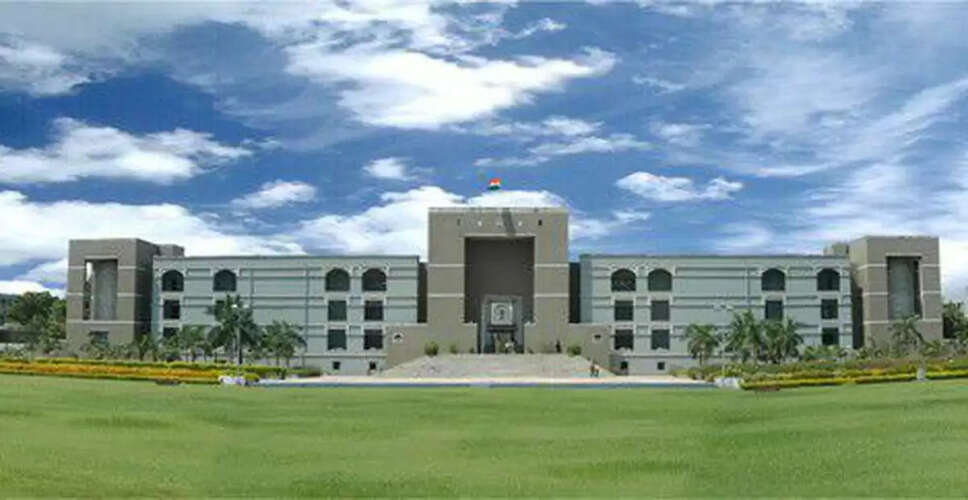
Court Decision on Defamation Case
On Tuesday, the Gujarat High Court dismissed a petition from Arvind Kejriwal, the leader of the Aam Aadmi Party, who sought a separate trial from his colleague Sanjay Singh in a criminal defamation case initiated by Gujarat University. This case arose from their remarks regarding Prime Minister Narendra Modi's academic credentials.
The court had previously reserved its judgment in December.
Justice MR Mengdey, presiding over a single bench, rejected the pleas from the AAP leaders, who had appealed to the High Court after their requests for separate trials were turned down by both the trial and city sessions courts.
Kejriwal contended in the sessions court that he and Singh should not be tried together due to differing dates of the alleged incidents.
It was argued that both leaders had posted distinct videos on their personal social media platforms, suggesting that evidence against one should not implicate the other.
On December 15, the sessions court noted that Kejriwal held a press conference on April 1, 2023, while Singh did so on April 2, 2023, during which they allegedly used defamatory language that harmed the reputation of Gujarat University.
These press conference videos were subsequently shared on social media.
The court indicated that the term 'same offence' refers to the 'same act of crime' as outlined in Section 223 of the now-repealed Code of Criminal Procedure, which specifies circumstances under which individuals can be jointly accused of a crime.
According to the court, if both individuals are motivated by a common goal and their actions are continuous, it constitutes a single transaction in relation to their case.
Background of the Defamation Suit
On March 31, 2023, the Gujarat High Court annulled a 2016 directive from the Central Information Commission that required Gujarat University to disclose details about Prime Minister Modi's degrees to Kejriwal. The Central Information Commission serves as the highest appellate authority under the Right to Information Act.
Gujarat University contested this order in the High Court, arguing that an individual's 'irresponsible childish curiosity' does not qualify as being in the public interest under the Right to Information Act.
Following the ruling, the university initiated a criminal defamation case against Kejriwal and Singh, claiming they made derogatory remarks about Modi's educational qualifications during their press interactions.
The Bharatiya Janata Party asserts that Modi received a Bachelor of Arts degree from Delhi University in 1978 and a Master of Arts degree from Gujarat University in 1983. However, the Aam Aadmi Party has alleged that these degrees are fraudulent.