
Government Takes Strong Measures to Combat Pollution in Delhi-NCR
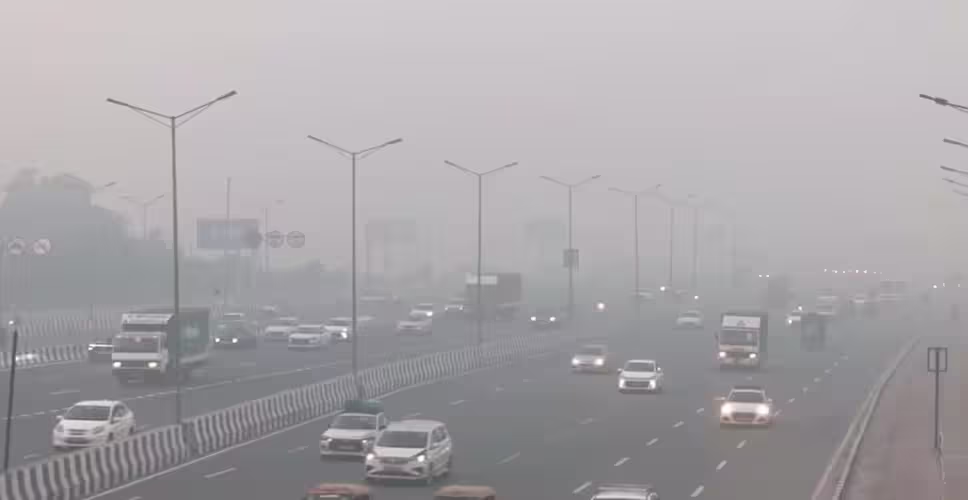

Urgent Actions Against Pollution in Delhi-NCR
In response to the deteriorating air quality and rising pollution levels in Delhi-NCR, the central government is preparing to implement stringent measures. With the winter season expected to exacerbate pollution issues, Union Environment Minister Bhupender Yadav convened a review meeting with officials from Delhi, Haryana, Uttar Pradesh, and Rajasthan. The meeting resulted in several critical decisions, including actions against polluting factories, road repairs, traffic congestion management, and waste management.
The government emphasized that merely formulating plans is insufficient; timely execution on the ground is essential. As part of this initiative, directives have been issued to immediately seal 191 polluting industries.
Action Against 191 Polluting Factories
To curb industrial pollution in Delhi-NCR, the Central Pollution Control Board (CPCB) has been instructed to seal 191 industrial units that have failed to comply with orders to install Air Pollution Control Devices (APCDs), despite repeated reminders.
The government has also mandated strict adherence to a particulate matter emission limit of 50 mg/Nm³ for industries. Non-compliant units may face shutdowns, disconnection of electricity, and sealing actions.
Plans to Address Road Dust and Potholes
Road dust is a significant contributor to pollution. The meeting revealed that while the goal was to redevelop 5,480 kilometers of roads in NCR, only 3,221 kilometers have been completed so far.
Officials have been directed to expedite work on the remaining roads, fill potholes, repair damaged sidewalks, and ensure complete paving of road surfaces. Additionally, mechanical road sweeping machines will operate in two shifts, and AI-based monitoring will be enhanced to reduce dust from roads.
Measures for Traffic Congestion
To alleviate traffic jams and reduce vehicle emissions, immediate actions will be taken at 233 identified congested locations in Delhi-NCR.
Furthermore, a multi-lane free flow system is planned for 154 entry points at Delhi's borders, with a completion deadline set for December 31, 2026. This initiative aims to minimize vehicle stoppages at borders and facilitate smoother traffic flow.
Crackdown on Old Polluting Vehicles
The government has instructed the acceleration of the PARIVARTAN scheme to phase out polluting old vehicles. This initiative will promote the replacement of old trucks and buses with BS-VI, CNG, and electric vehicles, targeting completion by 2028.
Moreover, petrol stations will be equipped with ANPR cameras linked to VAHAN and PUCC databases to identify and take action against old and polluting vehicles. Authorities have been warned that failure to install these cameras by November 30, 2026, will result in action against them.
Monitoring Waste Burning and Landfill Sites
The government is also focusing on preventing open waste burning and improper waste disposal. It was noted that municipal solid waste processing capacity is currently short by 6,747 tons per day, and efforts to bridge this gap must be expedited.
Additionally, the disposal of old waste at landfill sites in Okhla, Ghazipur, Bhalswa, and Bandhwari will be accelerated. Inspections of over 3,000 active construction sites will be conducted to ensure compliance with dust control regulations.
Accountability for Officials in Four States
The central government has decided to establish accountability among officials for pollution control in Delhi-NCR. Secretaries from seven cities in Haryana, four in Uttar Pradesh, and four in Rajasthan will be assigned responsibilities.
These officials will regularly visit the areas and provide weekly reports on pollution control efforts to the Commission for Air Quality Management (CAQM). A system for issuing notices to negligent officials has also been put in place.
Current Air Quality in Delhi
Amidst this action plan, the air quality in Delhi remains a significant concern. On November 14, the AQI was recorded at 348, categorizing it as 'very poor.' The average AQI for the previous day was 373, with pollution levels at seven monitoring stations classified as 'severe.' Thus, the government's action plan is seen as crucial for curbing pollution and improving air quality in the coming days.