
Government Takes Strong Action Against Encroachment in Dibru-Saikhowa National Park
Government's Firm Stance on Encroachment
Doomdooma, July 26: The state administration has adopted a decisive approach towards encroachment issues, particularly concerning the Dibru-Saikhowa National Park in Tinsukia district, which is currently facing significant encroachment challenges.
The ongoing destruction and encroachment of forested regions throughout Assam are severely impacting the ecological balance. This has led environmentalists to support the government's recent initiatives against forest encroachers.
Activists from Tinsukia have called on the state authorities to remove the village of Erasuti, situated at the entrance of the Dibru-Saikhowa National Park. Historically, this village was a revenue village near Guijan, adjacent to Garamjan, which was entirely submerged by the river Dibru's overflow in 1990, causing substantial damage to Erasuti as well. While residents of Garamjan relocated, most families in Erasuti remained.
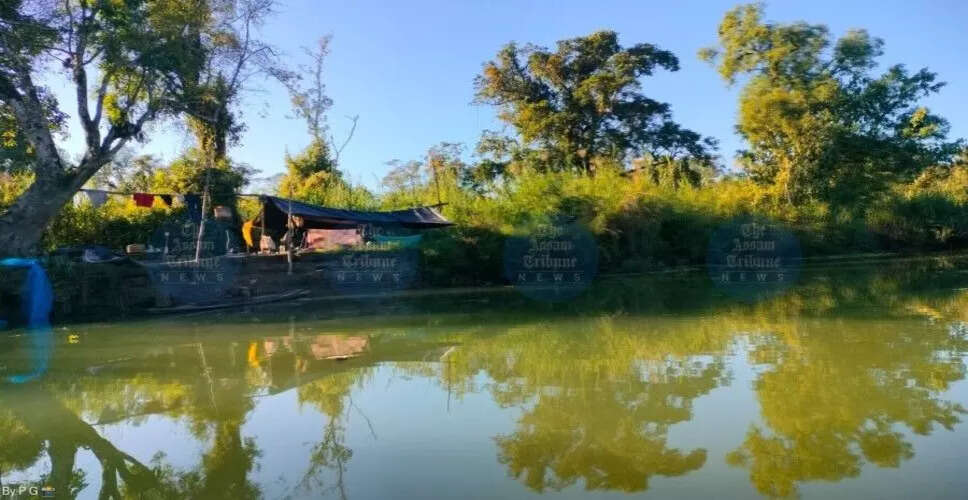
Each year, the river Dibru's erosion has caused the village to gradually encroach upon the national park's boundaries. By 2021, after the complete erosion of Erasuti, its inhabitants moved deeper into the park, with over 50 families now residing there and clearing forest land for agriculture. This encroachment is occurring right at the park's edge, yet the forest department has not taken action.
Notably, the Guijan forest range officer's office is located nearby the encroached area. Environmentalists warn that if immediate measures are not implemented to evict these families and provide them with alternative housing, the situation could worsen.
Activists have accused the current MLA from Chabua LAC and a former Guijan Zila Parishad member from the ruling party of shielding the encroachers from eviction.
Although Erasuti was once a revenue village, the river has completely eroded the original land. Therefore, the government must facilitate the rehabilitation of these landless individuals elsewhere, as occupying land within a national park due to landlessness is unjustifiable.
Additionally, to the north of the national park, residents from two villages of the now-submerged Laika are living within the park. Despite promises from the district administration for their rehabilitation, no action has been taken. Currently, these individuals reside in flood-prone areas of the park, which are also subject to ongoing erosion.
Recently, as water levels rose, over a hundred families from Laika were compelled to move to a small elevated area near Baghjan. However, forest officials allegedly threatened them and returned them by boat, leaving them once again in floodwaters. Local environmentalists suspect there may be underlying reasons for the administration's failure to rehabilitate these flood-affected individuals, alongside its inaction regarding the clear encroachment of national park land.
Satellite imagery has confirmed that the village has encroached significantly into the national park by 2021, with an estimated 40 hectares of park land being affected.
Environmentalists are concerned that if this encroachment persists, the park's unique flora and fauna may face extinction.