
Government Reduces Excise Duty on Fuel Amid Rising Global Oil Prices
Excise Duty Cuts Announced
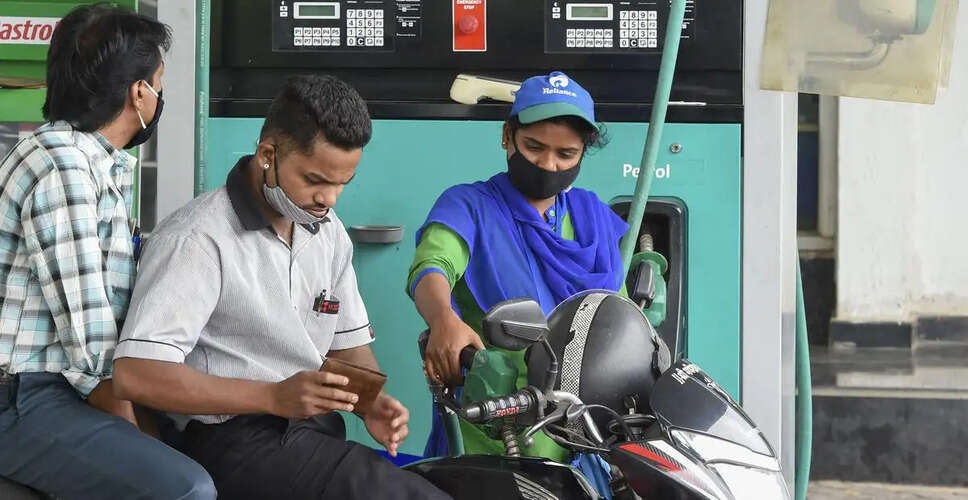
On Thursday, the Union government announced a significant reduction in the special additional excise duty on petrol, lowering it from Rs 13 to Rs 3 per litre, and completely eliminating the duty on diesel, which was previously set at Rs 10 per litre.
Fuel marketing companies have been facing challenges as retail prices for petrol and diesel have remained unchanged, despite a nearly 50% increase in international oil prices since the onset of the conflict in West Asia on February 28. This excise duty reduction is anticipated to assist in stabilizing fuel prices.
Hardeep Singh Puri, the Union Minister for Petroleum and Natural Gas, stated that the government has absorbed a substantial loss in tax revenue to alleviate the financial burden on oil companies.
He also mentioned that an export tax has been introduced due to soaring international prices, meaning any refinery exporting fuel will incur this tax.
International crude prices have gone through the roof in the last 1 month from around 70 dollars/barrel to around 122 dollars/barrel. Consequently, petrol and diesel prices for consumers have gone up all over the world. Prices have increased by around 30%-50% in South East Asian…
— Hardeep Singh Puri (@HardeepSPuri) March 27, 2026
Export Duties Set
Finance Minister Nirmala Sitharaman announced that the export duty on diesel has been established at Rs 21.5 per litre, while aviation turbine fuel will incur a levy of Rs 29.5 per litre. This measure aims to ensure sufficient availability of these fuels for domestic use.
However, Congress leader Pawan Khera criticized the government's announcement, asserting that the reduction in duties should not be seen as a relief for the average citizen, as prices for dealers and consumers remain unchanged.
Khera remarked, “Relief exists but only in the narrative – not in reality. Instead of creating headlines and misleading the public, the government should focus on providing genuine relief to consumers.”
If you saw the headlines about petrol and diesel prices ‘coming down’ and thought the government had offered relief to your pocket – you’d be mistaken.
— Pawan Khera 🇮🇳 (@Pawankhera) March 27, 2026
As of now, prices remain the same for dealers and for consumers.
What has actually been reduced is the ‘special additional… https://t.co/iZ95MEjOC5
Impact of Global Oil Prices
In the midst of the ongoing conflict, Iran has effectively restricted access to the Strait of Hormuz, a crucial maritime route for international commercial vessels, through which approximately 20% of the world's petroleum supply flows.
India relies on imports for 88% of its crude oil and about half of its natural gas, primarily transported through this strategic waterway.
Following a slight decrease in global oil prices earlier this week, Brent crude was trading above $100 per barrel on Thursday, having been priced at $78 per barrel just before the conflict began.
As of Friday, Brent crude was reported at $107 per barrel.
According to a rating agency, if crude oil prices average between $100 and $105 per barrel, fuel retailers could face losses of Rs 11 per litre on petrol and Rs 14 per litre on diesel.
Government's Assurance on Fuel Supplies
Centre says India has oil for 60 days, LPG for a month
The Ministry of Petroleum and Natural Gas confirmed on Thursday that crude oil supplies have been secured for the next 60 days, with liquefied petroleum gas supplies arranged for about a month.
The ministry stated, “Nearly two months of steady supply is available for every Indian citizen regardless of what happens globally. The next two months of crude procurement has also been secured.”
Additionally, the ministry assured that there is no shortage of LPG in the country, citing a 40% increase in domestic refinery production, which has reduced the net daily import requirement to 30,000 metric tonnes.
This indicates that the country is now producing significantly more than it needs to import, according to the Centre.