
Government Open to Extending Discussion on Public Examination Amendment Bill

Discussion on Public Examination Amendment Bill
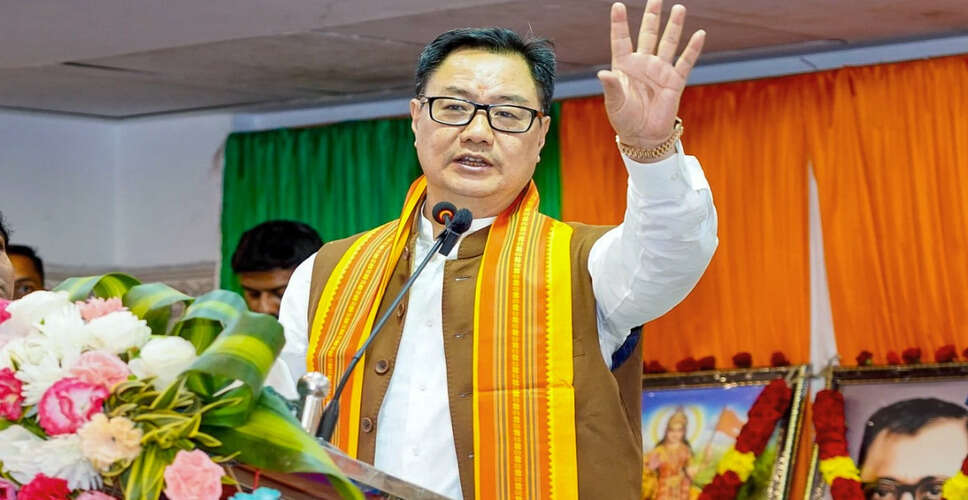
On Tuesday, Kiren Rijiju, the Minister of Parliamentary Affairs, announced that the government is prepared to extend discussions on the 'Public Examination (Prevention of Unfair Means) Amendment Bill, 2026' for up to 10 hours if necessary. Rijiju mentioned that he had engaged with leaders from various parties, including Congress, the Samajwadi Party, DMK, and NCP, who agreed to extend the initially planned six-hour discussion by an additional two hours. He stated in the house, 'I have spoken with the leaders of all parties, including the Chief Whip of Congress, the Chief Whip of the Samajwadi Party, and leaders from DMK and NCP, and we have all agreed to extend the discussion from six to eight hours.'
He further added that if more time is required, the government would not object to extending the discussion. Rijiju remarked, 'If you need two more hours, the government has no objections. We can decide this together.' The Speaker has indicated that extending the discussion by one hour is acceptable. If more than eight hours is needed, we are ready for a 10-hour discussion.
Union Minister Jitendra Singh initiated the debate on the 'Public Examination Amendment Bill,' stating that these changes are being made in the 2024 bill. He described this bill as the first of its kind in independent India, introduced by the current government to safeguard students' futures. Singh referred to the 'Public Examination (Prevention of Unfair Means) Amendment Bill, 2026' as a 'significant law' that reaffirms the government's commitment to the future and welfare of the nation's youth.
While participating in the parliamentary discussion on the bill, Singh emphasized that the aim of this amendment is to strengthen the examination system, enhance its credibility and transparency, and ensure that students receive recognition for their genuine and honest efforts. He noted that incidents of paper leaks and other irregularities have occurred across various states and governments, highlighting the need for comprehensive legislation to address such issues.