
Government Mandates Shift from LPG to Piped Natural Gas Amid Supply Disruptions
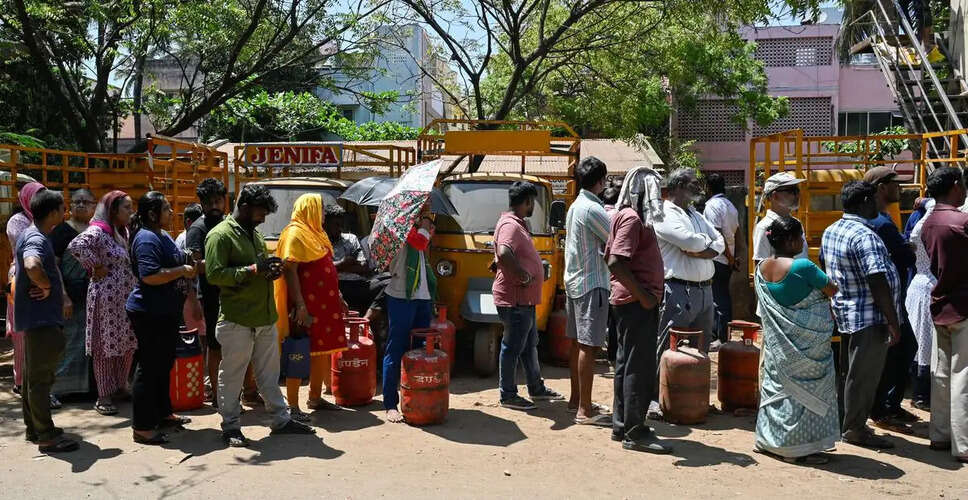
New Directive for Households Using LPG
The Union government has issued a directive requiring households that utilize liquefied petroleum gas (LPG) to transition to piped natural gas (PNG) in regions where the necessary infrastructure is present.
This decision comes in response to ongoing energy supply disruptions affecting India since the onset of the conflict in West Asia on February 28. Iran has largely obstructed the strategic Strait of Hormuz, impacting international commercial shipping. Approximately 20% of the world's petroleum supply traverses this critical maritime route.
Consequently, LPG supplies in India have been impacted, as the nation imports around 60% of its LPG needs, primarily from Gulf nations.
In light of these challenges, the government is encouraging consumers to switch to PNG where available to alleviate pressure on LPG supplies. Additionally, it has proposed increased commercial LPG allocations to states that facilitate the expansion of the PNG network.
On Tuesday, the Ministry of Petroleum and Natural Gas announced the 2026 Natural Gas and Petroleum Products Distribution Order, which aims to expedite pipeline infrastructure development, simplify approval processes, and promote the transition from LPG to PNG to enhance energy security.
According to the new order, households that do not switch to PNG within three months, where it is available, will have their LPG supply discontinued. However, LPG will still be supplied in cases where providing a piped connection is technically unfeasible, contingent upon obtaining a no-objection certificate.
The order mandates that public authorities must grant necessary permissions within specified timelines to ensure a swift rollout of the infrastructure. If they fail to do so, approvals will automatically be considered granted. Furthermore, it prohibits authorities from imposing additional charges beyond those specified.
Entities responsible for access in residential areas are required to provide permissions within three working days, and last-mile PNG connectivity must be established within 48 hours. Applications for pipeline connectivity in these areas cannot be denied.
During a press briefing, Sujata Sharma, joint secretary in the Ministry of Petroleum and Natural Gas, stated that licensed entities authorized to retail PNG will notify LPG users about its availability.
The 2026 Natural Gas and Petroleum Products Distribution Order aims to create a streamlined and timely framework to accelerate pipeline installation and expand gas infrastructure, particularly in residential zones, thereby enhancing last-mile connectivity and facilitating a shift to cleaner fuels.
Sharma also highlighted that approximately 60 lakh households in India have access to PNG infrastructure but still rely on LPG. So far in March, around 2.5 lakh new PNG connections have been established, with 2.2 lakh LPG users transitioning to PNG.