

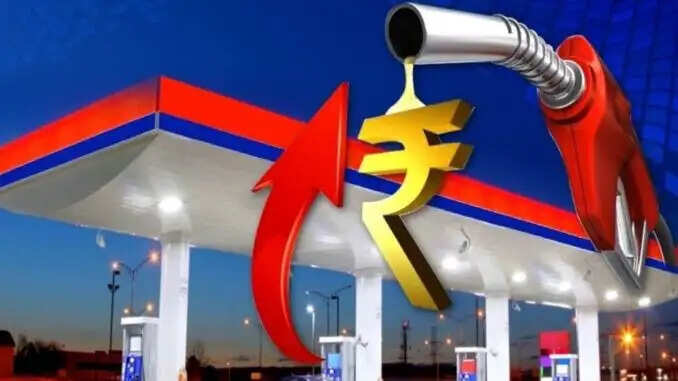
New Delhi. The government has made a crucial decision regarding petrol, diesel, and jet fuel. On Saturday, the export duty on diesel was more than doubled, increasing from ₹21.5 per liter to ₹55.5 per liter. Similarly, the export charge on jet fuel (ATF) has risen from ₹29.5 per liter to ₹42 per liter. The export duty on petrol remains unchanged at zero.
This adjustment is believed to be a strategy by the government to avoid passing the burden of inflation onto domestic prices, thereby increasing the export duty to ensure the availability of petrol, diesel, and jet fuel in the local market. This is particularly important given the ongoing volatility in global energy prices, with Brent crude oil prices hovering around $100 per barrel.
This move is part of a broader windfall tax framework, which allows the government to periodically adjust the duties on fuel exports to maintain a balance between the profits of refiners and the needs of the local market.
Impact on Oil Companies
However, this could negatively affect oil companies, particularly those that supply refined diesel and jet fuel to other countries. The unchanged export duty on petrol means that petrol businesses will not be impacted, as there is sufficient stock available for domestic use and export.
No Changes to Petrol Export Duty
The government’s decision to keep the export duty on petrol unchanged indicates that refiners have ample stock for domestic needs and can also export to other countries. Increasing the export duty on diesel and jet fuel is a strategic part of the government’s efforts to secure domestic energy supplies.
It is noteworthy that the prices of Brent crude have remained below $100 per barrel due to the ceasefire between Iran and the USA, and there are hopes that oil prices may decrease further following peace talks, although risks remain.