
Government Imposes Fare Caps Amid IndiGo Flight Disruptions
New Fare Regulations Introduced
On Saturday, the Ministry of Civil Aviation announced the implementation of distance-based fare caps, which can reach up to Rs 18,000 for the longest routes. This decision comes in response to ongoing disruptions in IndiGo's flight operations and a significant increase in ticket prices.
Details of the Fare Caps
The newly established fare limits will take effect immediately and will remain until the situation stabilizes or the government decides to reassess it. According to the new guidelines, airlines are permitted to charge a maximum of Rs 7,500 for routes up to 500 km, Rs 12,000 for distances between 500 km and 1,000 km, Rs 15,000 for routes ranging from 1,000 km to 1,500 km, and Rs 18,000 for distances exceeding 1,500 km. These caps do not include user development fees, passenger service fees, or taxes.
Scope of the Fare Caps
The fare ceilings will apply exclusively to economy-class tickets and will not extend to business-class or UDAN flights. UDAN flights are government-subsidized regional services aimed at connecting smaller or remote airports with affordable fares on select seats.
Impact of IndiGo's Operational Issues
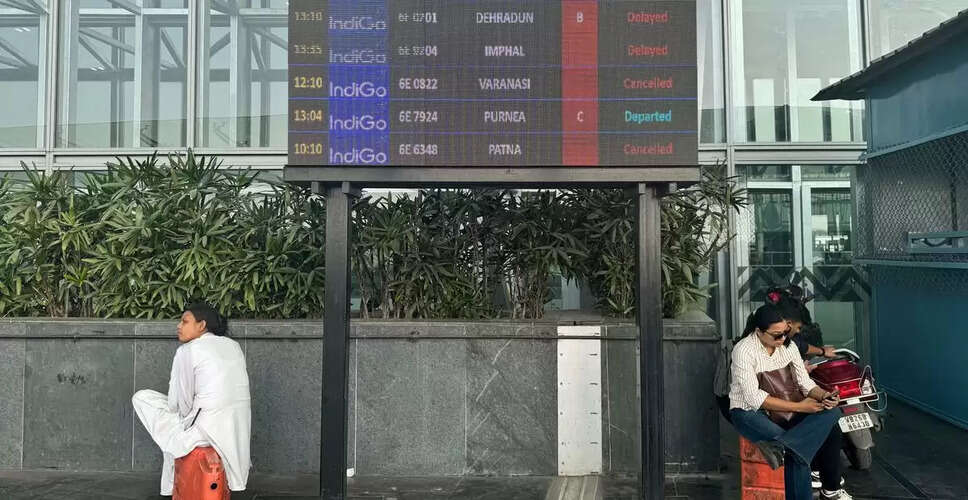
Air travel has faced significant challenges since Tuesday, when a shortage of pilots and crew led IndiGo to cancel and delay numerous flights, causing ticket prices on various routes to soar to unprecedented levels. Recently, one-way economy fares have skyrocketed, with some routes seeing prices exceeding Rs 1 lakh.
Recent Price Surges
For instance, a Delhi-Bhopal flight was priced at approximately Rs 1.32 lakh on Friday, a stark contrast to the usual fare of Rs 4,000 to Rs 5,000. Similarly, the only available Mumbai-Delhi flight was listed at Rs 51,860, while the Delhi-Mumbai service was priced at Rs 48,972. In the Delhi-Bengaluru sector, fares reached around Rs 40,000, with Bengaluru-Delhi flights costing nearly Rs 70,000.
Ministry's Directives to Airlines
On Saturday, the ministry instructed airlines to adhere to the newly established fare caps and ensure ticket availability across all pricing tiers. It also suggested that airlines might need to increase capacity on routes experiencing heightened demand.
Guidance for Airlines
Airlines have been advised to refrain from implementing steep fare increases on routes affected by cancellations and to provide maximum assistance to stranded passengers, including offering alternative flight options when possible.
Reasons Behind the Disruption
The operational disruptions at IndiGo began on Tuesday due to a shortage of pilots and crew, which stemmed from the airline's inability to adjust its roster in accordance with the Directorate General of Civil Aviation's updated duty and rest regulations that took effect on November 1.
Regulatory Changes and Their Effects
These new regulations include a stipulation that 'no leave shall be substituted for weekly rest.' The revised rostering rules were introduced in January 2024 to mitigate pilot fatigue and were initially set to be implemented on June 1. However, airlines requested a delay due to staffing shortages and operational difficulties, leading to the eventual implementation on November 1.
IndiGo's Response to the Crisis
As IndiGo struggled to comply with the new regulations, it faced challenges in staffing sufficient flights, resulting in widespread cancellations and delays throughout the week. On Friday, the Directorate General of Civil Aviation retracted its instruction regarding weekly rest for crew members, indicating that the provision required reevaluation in light of the disruptions and requests from airlines to maintain operational continuity.
Flight Cancellations and Passenger Impact
IndiGo, which holds the largest market share among Indian airlines, canceled over 800 flights across four major airports on Saturday. The previous day, it had canceled all domestic flights from Delhi until midnight, affecting services in other cities and leaving many passengers stranded at airports.