
Government Ensures Steady Supply of Natural Gas Amid LPG Import Disruptions
Natural Gas Supply Update
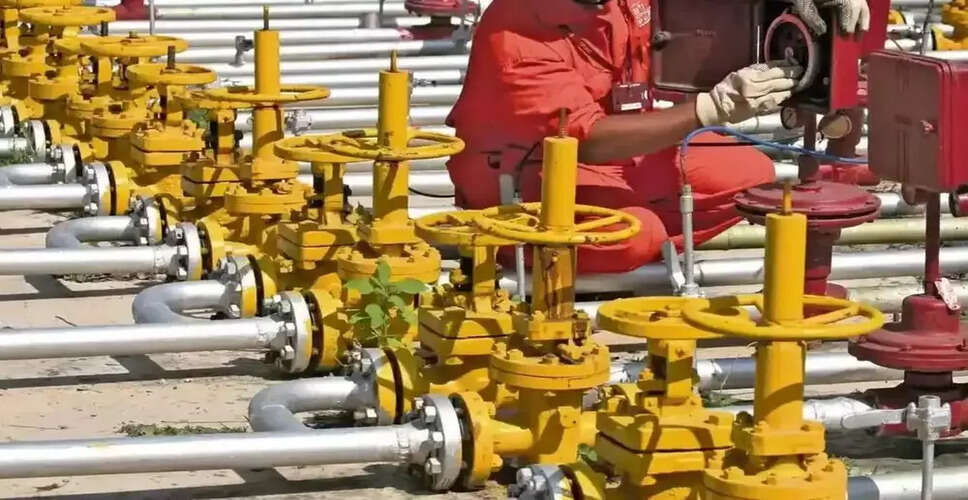
New Delhi, March 31: In March, over 310,000 PNG connections have been established for various sectors, including domestic, commercial, and hostel use, as the government works to enhance natural gas availability for cooking. This initiative comes in response to disruptions in LPG imports due to the ongoing conflict in Iran, as reported by the Petroleum and Natural Gas Ministry on Tuesday.
Since March 1, 2026, an average of more than 5 million domestic LPG cylinders have been delivered daily, with no reports of shortages at distribution centers. Additionally, over 320,000 5 kg cylinders have been sold to migrant workers since March 23, including more than 63,000 sold just on Monday, according to the ministry's statement.
For piped natural gas (PNG) and CNG for vehicles, the government has prioritized supply to consumers, ensuring 100% availability to meet demand. Industrial and commercial consumers connected to the grid are receiving around 80% of their average consumption.
To maintain a steady supply of petroleum products and LPG nationwide, especially following the closure of the Strait of Hormuz, various measures have been implemented. All refineries are functioning at high capacity with sufficient crude oil reserves, and stocks of petrol and diesel are being adequately maintained. Furthermore, domestic LPG production from refineries has been ramped up to meet local needs.
Petrol stations across the country are operating normally, although some areas have experienced panic buying due to rumors, leading to increased sales and crowded retail outlets. Nonetheless, ample stocks of petrol and diesel are available at all stations, as emphasized in the statement.
The government has urged the public to disregard rumors and has asked state governments to provide accurate information through press briefings.
Online bookings for LPG have surged to approximately 92%, with delivery authentication code (DAC) based deliveries rising from 53% in February 2026 to 83% currently, which helps prevent diversion.
Commercial LPG supply has been restored to 70% of pre-crisis levels, with the latest allocations prioritizing industries such as steel, automobiles, textiles, chemicals, and plastics, particularly those requiring specialized heating.
Most states and Union Territories have issued orders for non-domestic LPG allocation, with around 41,503 MT uplifted since March 14.
City gas distribution (CGD) companies have been instructed to prioritize PNG connections for commercial entities like restaurants, hotels, and canteens to alleviate concerns regarding commercial LPG availability.
CGD entities are also directed to prioritize PNG connections for residential schools, colleges, hostels, community kitchens, and Anganwadi kitchens within five days where pipelines are accessible.
Supply to operational urea fertilizer plants is now stable at approximately 70-75% of their average consumption over the last six months. Additional LNG cargoes and Regasified LNG (RLNG) are being sourced to maintain supply and pipeline hydraulics.
CGD companies, including IGL, MGL, GAIL Gas, and BPCL, are providing incentives to encourage domestic and commercial PNG connections.
The Centre has requested states, UTs, and Central Ministries to expedite approvals for the expansion of the CGD network.
An additional 10% allocation of commercial LPG has been offered to states and UTs to facilitate a long-term transition from LPG to PNG, with allocations based on the reform measures undertaken by the states.