
Government Dismisses Ethanol Blending Concerns in Karnataka Petrol

Clarification from the Ministry of Petroleum
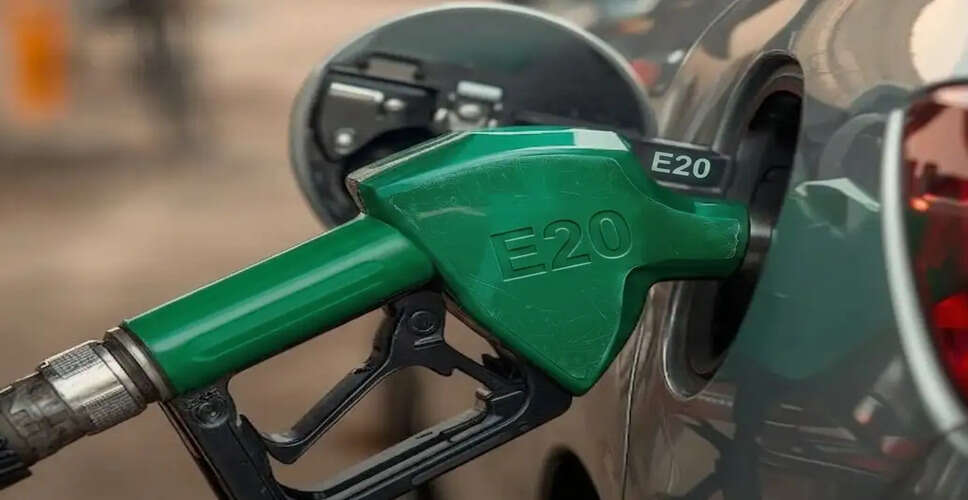
On Saturday, the central government refuted allegations regarding high levels of ethanol blending in petrol at various retail stations in Karnataka. The Ministry of Petroleum & Natural Gas (MoPNG) raised questions about the sampling and testing methods used by the state, asserting that all 56 samples analyzed during a nationwide quality check met the E20 standards.
The three major public sector oil marketing companies (OMCs)—Indian Oil Corporation Ltd (IOCL), Bharat Petroleum Corporation Ltd (BPCL), and Hindustan Petroleum Corporation Ltd (HPCL)—stated that the claims of 26-31% ethanol blending were not substantiated by tests conducted according to established statutory and technical protocols.
According to the ministry, the E20 petrol distributed by these companies nationwide, including in Karnataka, adheres to IS 17021, which is the Bureau of Indian Standards specification for ethanol-blended motor gasoline.
The OMCs expressed concerns regarding the sampling and testing methods used in the October 2026 assessment, emphasizing that the Motor Spirit and High-Speed Diesel (Regulation of Supply, Distribution and Prevention of Malpractices) Order, 2005, mandates a specific procedure for sampling, retention, testing, and result communication.
Under this procedure, six one-liter samples should be collected, with two given to the dealer, two retained by the oil company, and two sent to a designated laboratory.
The government noted that samples taken during the September 2026 assessment were processed through the State Level Coordinator to designated OMC laboratories for quality testing. However, the October exercise reportedly involved samples collected without OMC representatives present.
The companies have not received the necessary retention samples, detailed outlet information, or laboratory reports, despite requests made through the State Level Coordinator.
Furthermore, the OMCs highlighted that the findings were based on certificates from a third-party laboratory, which was not authorized under the Control Order. These certificates lacked comprehensive technical details, such as the standard test method, dilution process, and reference materials used to assess ethanol content.
The ministry pointed out that these gaps hindered independent verification of the reported ethanol levels and restricted the companies and dealers from pursuing retesting.
Additionally, discrepancies in density readings were noted, as samples allegedly containing 26-31% ethanol exhibited lower densities than those recorded in E20 samples tested by the OMCs.
The ministry emphasized the importance of adhering to prescribed testing methodologies and verifying results against appropriate reference samples.
As part of a quality coordination initiative, 893 E20 samples from 27 states and Union Territories were tested for ethanol content according to IS 17021, Annex C, at refinery and OMC quality-control labs.
Out of these, 330 samples were from IOCL, 280 from BPCL, and 283 from HPCL, with all samples falling within the acceptable 19-21% ethanol range.
Notably, all 56 samples tested in Karnataka, from various locations and all three OMCs, complied with specifications, showing ethanol content between 19% and 20%, averaging 19.30%. These results contradicted the significantly higher ethanol levels reported in the Karnataka press release, highlighting the need for transparent and technically sound testing.
The ministry also questioned claims of an estimated annual consumer mileage loss of around Rs 62,000 crore and vehicle repair costs of Rs 39,000 crore, totaling approximately Rs 1.01 lakh crore. It stated that these estimates should be carefully evaluated against established technical evidence and actual vehicle performance data.
Over 30 crore two-wheelers and 4 crore four-wheelers have been using E20 fuel for more than three years, with over six crore people visiting petrol stations daily for refueling. The ministry noted that no widespread vehicle breakdowns have been reported, emphasizing that extensive real-world usage is crucial in evaluating fuel quality and vehicle performance.
Studies conducted by the Inter-Ministerial Committee, IOCL, the Automotive Research Association of India (ARAI), and the Society of Indian Automobile Manufacturers (SIAM) have assessed the performance and mileage effects of E20. Vehicles calibrated for E20 may experience a mileage reduction of about 1-2%, while some others could see a decrease of approximately 3-6%, depending on the vehicle type and calibration.
The ministry argued that applying a blanket assumption of 10% mileage loss across all vehicles to estimate national consumer losses lacks scientific basis. It also stated that the vehicle repair cost estimates need to be validated through transparent assessments of vehicle performance, material compatibility, and documented repair expenses.
The ethanol blending initiative aims to reduce reliance on imported crude oil, bolster domestic agricultural value chains, and enhance energy security. Since the Ethanol Supply Year (ESY) 2014-15, the program has led to foreign exchange savings exceeding Rs 1.97 lakh crore, the substitution of around 316 lakh metric tonnes of crude oil, a reduction of approximately 952 lakh metric tonnes of carbon dioxide emissions, and a transfer of over Rs 1.66 lakh crore to farmers.
During ESY 2025-26, which concluded on October 31, 2026, public sector OMCs procured 1,089 crore liters of ethanol and blended 1,134 crore liters against petrol sales of about 5,673 crore liters, in line with the national 20% blending target.
The ministry reiterated that the suggestion of OMCs having a commercial incentive to exceed the prescribed blending target is misguided, as additional ethanol procurement would raise their costs. However, the government reaffirmed its commitment to maintaining fuel quality, regulatory compliance, and consumer protection through established quality assurance and monitoring systems.