
Government Approves Major Infrastructure Initiatives to Enhance Air Connectivity and Immigration System
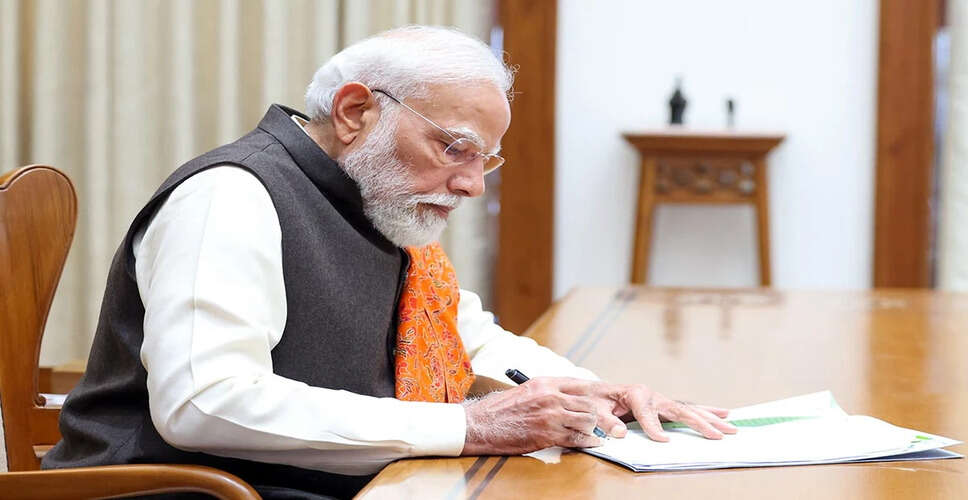
Cabinet Meeting Led by Prime Minister Modi Approves Key Initiatives
In a significant cabinet meeting chaired by Prime Minister Narendra Modi, crucial decisions were made today. Information and Broadcasting Minister Ashwini Vaishnaw shared details about the cabinet's resolutions. He announced the continuation of the revised Regional Air Connectivity Scheme and the Immigration, Visa, and Foreign Registration and Tracking Scheme.
The government has approved the implementation of the revised Regional Air Connectivity Scheme from 2026-27 to 2035-36, with a budget allocation of ₹28,840 crores. The primary aim of this initiative is to connect smaller towns and remote areas to the air network, thereby providing affordable air travel options for the general public.
Development of New Airports and Economic Growth
Under this scheme, the development of 100 new airports is planned, with an estimated expenditure of around ₹12,159 crores. This initiative is expected to accelerate development in remote regions and create job opportunities. Additionally, special provisions have been made for the operation and maintenance of these airports, with financial support provided for approximately 441 airports over three years to ensure their economic sustainability.
Enhancing Connectivity in Remote Areas
Furthermore, the government has decided to construct 200 modern helipads in hilly, island, and remote areas. Each helipad will incur a cost of about ₹15 crores, significantly improving emergency services, medical assistance, and last-mile connectivity. The aviation companies will also receive viability gap funding to maintain services on less profitable routes, with ₹10,043 crores allocated over ten years.
Additionally, to promote indigenous aircraft under the Atmanirbhar Bharat initiative, the government plans to procure Dhruv helicopters and Dornier aircraft, strengthening the country's aviation sector.
Boosting Trade and Tourism
This initiative is set to enhance trade, tourism, and investment in smaller cities, making healthcare services more accessible and reducing emergency response times. It will also play a vital role in achieving the vision of a developed India by 2047. Over the past nine years, 663 routes have been operationalized under this scheme, connecting 95 airports, facilitating over 341,000 flights, and benefiting more than 16.2 million passengers.
Modernizing Immigration and Visa Processes
In addition, the cabinet has approved the continuation of the Immigration, Visa, Foreign Registration, and Tracking Scheme from April 1, 2026, to March 31, 2031, with a budget of ₹1,800 crores. This initiative aims to modernize and secure the country's immigration system. By leveraging new technologies, travelers will receive faster and more efficient services while enhancing national security.
Mobile-based services, self-service kiosks, and an integrated digital platform will be developed under this scheme, making the visa process entirely contactless and saving time. Notably, over 91% of e-visa applications were processed within 72 hours in previous years, and airport screening times have reduced to approximately 2.5 to 3 minutes.
Streamlining Immigration Procedures
Moreover, automated gates have been installed at major airports under the fast immigration program, reducing screening times to just 30 seconds, greatly benefiting travelers. This initiative is expected to increase the number of international travelers, significantly benefiting the tourism, medical, and business sectors, while also creating job opportunities and strengthening the national economy.
Conclusion
Overall, these decisions by the central government are set to provide new directions for the country's infrastructure, security, and economic development. While the Regional Air Connectivity Scheme aims to connect every corner of the nation, the modern immigration system will make India more attractive on a global scale. These steps will play a crucial role in achieving the goal of a developed India.