
Global Leaders Condemn Iran's Violence Against Protesters Amid Ongoing Unrest
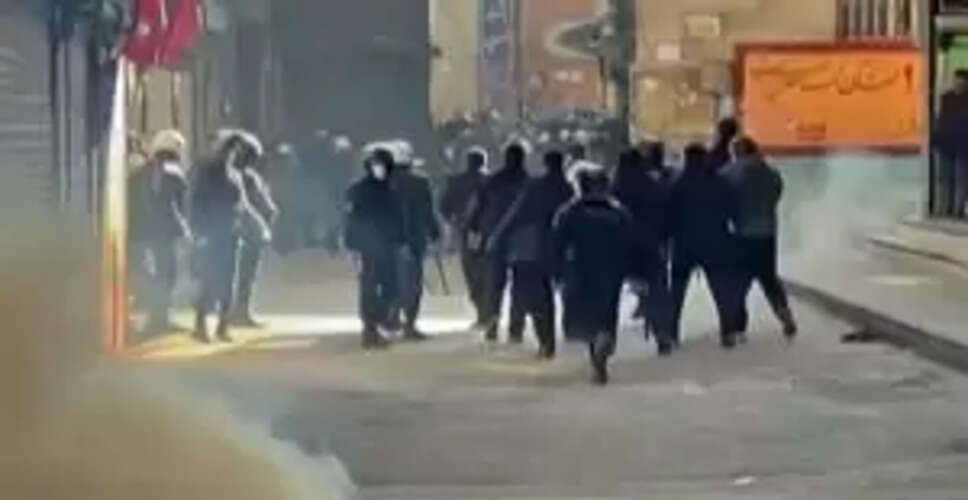
International Outcry Over Iran's Treatment of Protesters
In a significant move, Australia, Canada, and the European Union have jointly condemned the violent suppression of anti-government protests in Iran, praising the courage of the Iranian people in their fight for fundamental rights.
Protests against the Iranian government have escalated, resulting in numerous fatalities and a communication blackout in various regions, with no signs of the unrest diminishing.
Reports indicate that at least 62 individuals have lost their lives since the protests began in December of the previous year.
The Foreign Ministers from Australia, Canada, and the EU expressed their solidarity in a statement, saying, “We commend the bravery of the Iranian people as they stand up for their dignity and their fundamental right to peaceful protest. We strongly condemn the killing of protestors, the use of violence, arbitrary arrests, and intimidation tactics by the Iranian regime against its own people.”
They further urged Iran to cease the excessive and lethal force employed by its security forces, including the Islamic Revolutionary Guard Corps (IRGC) and Basij, against demonstrators, noting that over 40 lives have already been lost.
The Ministers emphasized that the Iranian government has a duty to safeguard its citizens and must ensure freedom of expression and peaceful assembly without fear of retaliation.
The protests, which began on December 28, 2025, in two Tehran markets over inflation and the plummeting value of the rial, have evolved into a nationwide movement.
These demonstrations reflect a growing discontent with the clerical regime led by Supreme Leader Ayatollah Ali Khamenei, fueled by economic hardship and public dissatisfaction.
While state media in Iran had largely refrained from discussing the death toll associated with the protests, it acknowledged on Friday that there had been “casualties,” though without providing specific figures.
The US-based Human Rights Activists News Agency (HRANA) reported that more than 65 individuals have died in the protests, which have now entered their 13th day as of January 9, with at least 2,311 people detained.
According to their findings, protests have spread to 512 locations across 180 cities in all 31 provinces of Iran.
In a related development, Iran’s exiled crown prince Reza Pahlavi made an urgent appeal to US President Donald Trump for intervention as protests continued throughout the Islamic Republic.
“Mr. President, this is an urgent and immediate call for your attention, support, and action,” Pahlavi stated in a social media post. “Please be prepared to intervene to help the people of Iran.”
Pahlavi has been actively using social media to encourage Iranians to rise against the regime under Khamenei.
Following his appeal, large crowds took to the streets on Thursday and Friday.
Amid anti-government chants, demonstrators expressed support for Pahlavi and called for his return to Iran.
Pahlavi’s father was the last monarch of Iran, fleeing the country just months before the monarchy was overthrown during the Islamic Revolution of 1979.