
Global Aid Mobilizes for Venezuela After Devastating Earthquakes
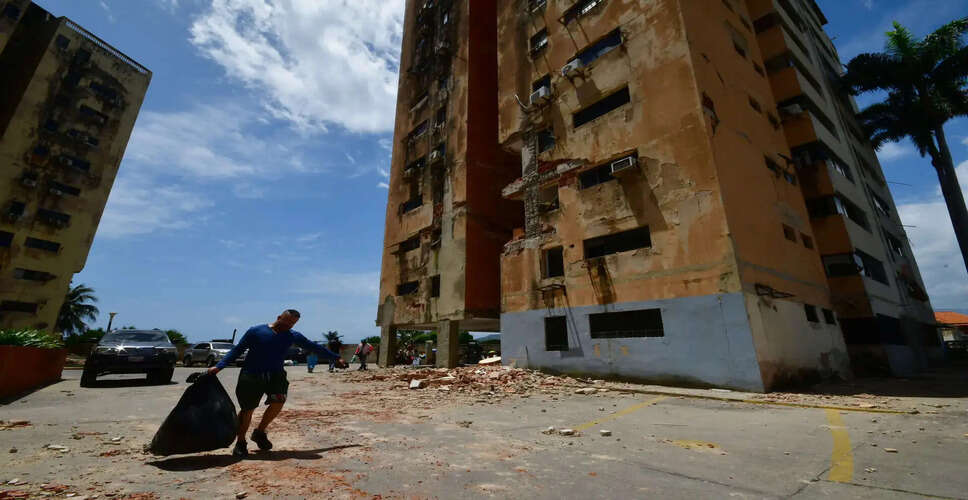

International Response to Venezuela's Earthquake Crisis
Rescue teams and humanitarian assistance from around the globe are arriving in Venezuela as officials urgently search for survivors trapped under the rubble following two significant earthquakes that struck the nation. The confirmed death toll has reached 589, with thousands more injured. Various countries in the Americas, including Brazil, Canada, Mexico, Colombia, El Salvador, Cuba, and the US, have sent search-and-rescue personnel, medical teams, and essential supplies. The United Nations has also joined the relief efforts, emphasizing the need for immediate international aid. UN humanitarian chief Tom Fletcher stated that rescuers are committed to reaching those still buried.
The earthquakes, measuring 7.2 and 7.5, occurred on Wednesday and are among the most powerful to hit Venezuela in over a century. The tremors caused extensive damage across the region, with authorities reporting around 3,000 injuries and hospitals overwhelmed with victims. Many individuals are still believed to be trapped under collapsed buildings.
Severe Impact in Coastal Areas
The coastal state of La Guaira, located just north of Caracas, has experienced the most significant destruction, with over 100 buildings collapsed and approximately 70,000 families affected, according to Interior Minister Diosdado Cabello. The damage has also led to the closure of the country's main international airport. Volunteers and emergency responders are manually searching through debris for survivors, while local residents are providing food, water, and medical supplies to those in need. One resident lamented, "We lost everything. We have no food or medicines," as families spent another night outdoors, fearing additional collapses.
Global Aid Efforts Underway
The US has initiated a comprehensive emergency response, deploying military transport aircraft, helicopters, ships, and allocating $150 million in humanitarian aid, as stated by Secretary of State Marco Rubio. Brazilian President Luiz Inácio Lula da Silva has sent a field hospital and firefighting teams, while El Salvador is dispatching hundreds of rescue workers along with medical supplies. Countries such as Mexico, Colombia, Cuba, Spain, France, Germany, Switzerland, the Netherlands, the Czech Republic, China, Türkiye, and India are also contributing rescue teams, aircraft, and medical assistance. The International Federation of Red Cross and Red Crescent Societies has allocated $2.5 million to support emergency operations, and Pope Leo XIV has announced an initial donation of 100,000 euros for relief efforts.
Challenges in Recovery Efforts
Relief operations are facing significant hurdles due to Venezuela's fragile infrastructure, ongoing economic difficulties, and frequent power outages, which have put immense pressure on hospitals and emergency services. Rescuers are working tirelessly, but as time passes, hopes of finding more survivors diminish, although international teams stress that every hour is crucial in the search for those still trapped.