
Glaw Lake Achieves Ramsar Site Status, Marking a Milestone for Arunachal Pradesh

Significant Recognition for Glaw Lake
Located in Lohit district, the freshwater lake becomes India’s 101st wetland of global significance
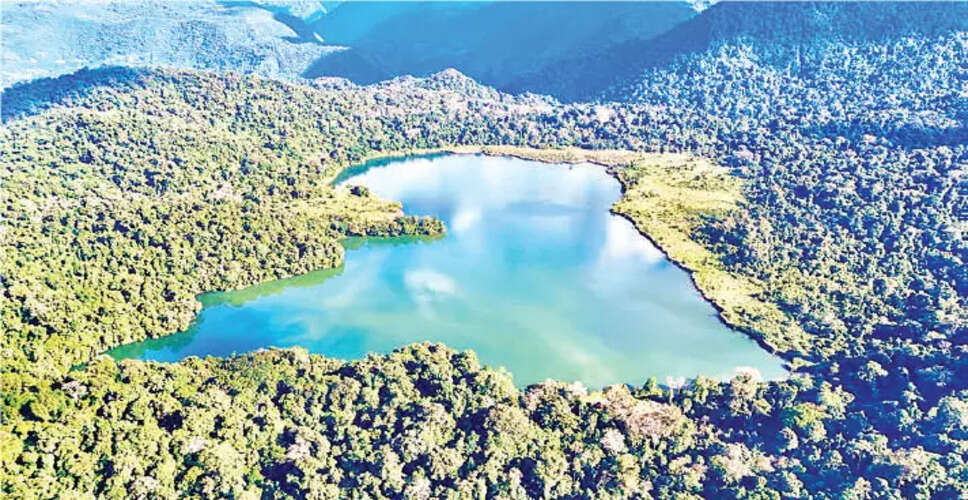
Itanagar, Aug 5: In a remarkable achievement, Glaw Lake situated in the Lohit district of Arunachal Pradesh has been designated as a Ramsar Site, marking the first such honor for this mountainous state. This designation makes it the 101st wetland of international significance in India under the Ramsar Convention.
Union Minister for Environment, Forest and Climate Change, Bhupender Yadav, hailed this recognition as a crucial advancement in promoting biodiversity conservation, enhancing water and climate security, and supporting sustainable livelihoods.
In a post on social media, Yadav highlighted that Glaw Lake, a pristine freshwater body located within the Kamlang Tiger Reserve and Wildlife Sanctuary in the Eastern Himalayas, serves as a biodiversity hotspot. The area surrounding the lake is home to over 150 species of trees and 49 types of orchids.
Yadav described this recognition as a significant milestone, noting that Arunachal Pradesh has now received its first Ramsar Site designation, which reflects India's increasing dedication to wetland conservation.
He pointed out that the number of Ramsar Sites in India has risen from 26 in 2014 to 101, emphasizing the government's commitment to environmental protection, biodiversity preservation, and sustainable development.
Arunachal Pradesh's Chief Minister, Pema Khandu, welcomed this announcement and expressed his appreciation to Prime Minister Narendra Modi and Union Minister Yadav for this historic recognition.
Khandu referred to this as a proud moment for the state, stating that the Ramsar designation would enhance biodiversity conservation efforts, promote sustainable livelihoods, and motivate future generations to protect the state's rich natural heritage.
This Ramsar recognition is anticipated to bolster conservation initiatives in this ecologically sensitive area while also creating opportunities for scientific research, eco-tourism, and community-driven sustainable development.