
Giant Frog Discovery in Solomon Islands Captivates Social Media

A Remarkable Find in the Solomon Islands
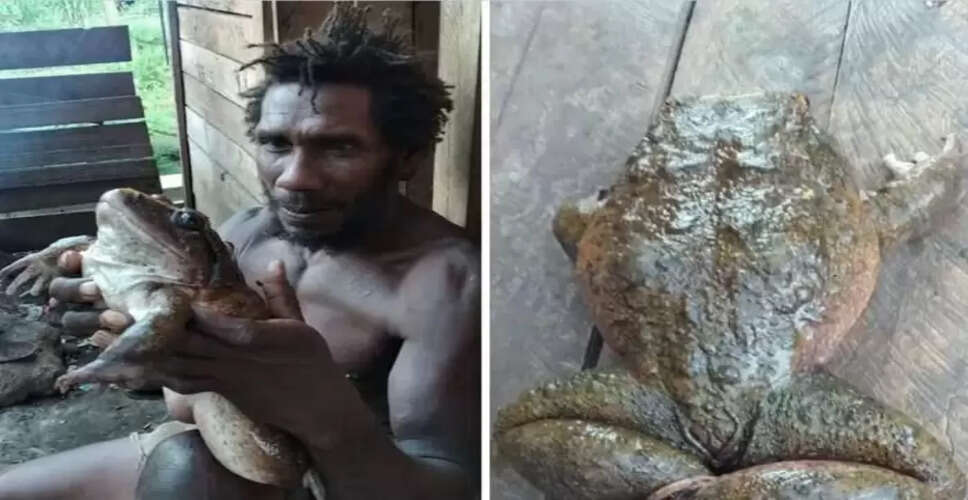
The world is vast and filled with diverse creatures. Take frogs, for instance. Typically, frogs are small in size, but a recent discovery has introduced us to a giant frog that resembles the size of a human child. This extraordinary amphibian was found by locals in the Solomon Islands.
A Stunning Photograph
Jimmy Hugo, a resident of Honiara, captured a striking image of this giant frog. In the photo, a young boy stands holding the massive frog in his arms, making it appear as though he is cradling a human child.
An Endangered Species
This frog belongs to a unique species that is currently facing a decline in population. Hugo, who owns a timber milling operation, shared that some workers stumbled upon this giant frog while hunting wild pigs. Known as the 'Cornufer gupi,' this frog is also referred to as 'bush chicken' in the area where Hugo lives.
Viral Sensation on Social Media
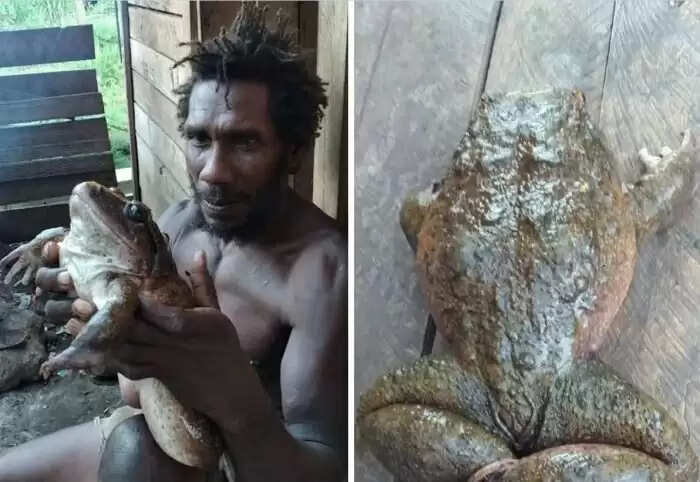
The image of the giant frog has gone viral on social media, garnering thousands of shares and comments. One user exclaimed, 'Wow! What an amazing frog!' while another remarked, 'This is the largest water frog from the Solomon Islands and possibly all of Melanesia.'
Unexpected Popularity
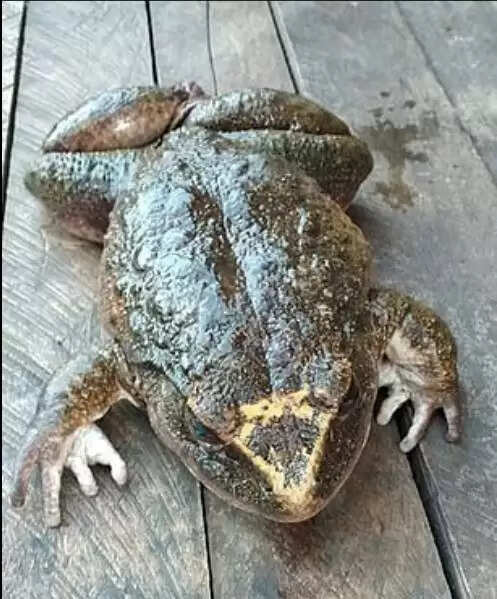
During an interview with the media, Hugo expressed his surprise at the overwhelming response to his photograph. He noted that he never anticipated so many people would react to it. He further explained that the Cornufer gupi, known as 'bush chicken' in the Solomon Islands and Papua New Guinea, is hunted for its valuable meat.
A Culinary Delight

Hugo added that bush chicken is said to taste even better than chicken. Not only the locals but scientists are also astonished by this large frog. According to curator Jodie Rowley from the Australian Museum, he has never seen a frog of such size in his entire life, suggesting that it must be quite old.
Conservation Concerns
While this frog is indeed fascinating, its habitat is threatened by destruction and pollution, leading to a continuous decline in its population.