
Geopolitical Tensions Threaten Iran's Participation in 2026 FIFA World Cup
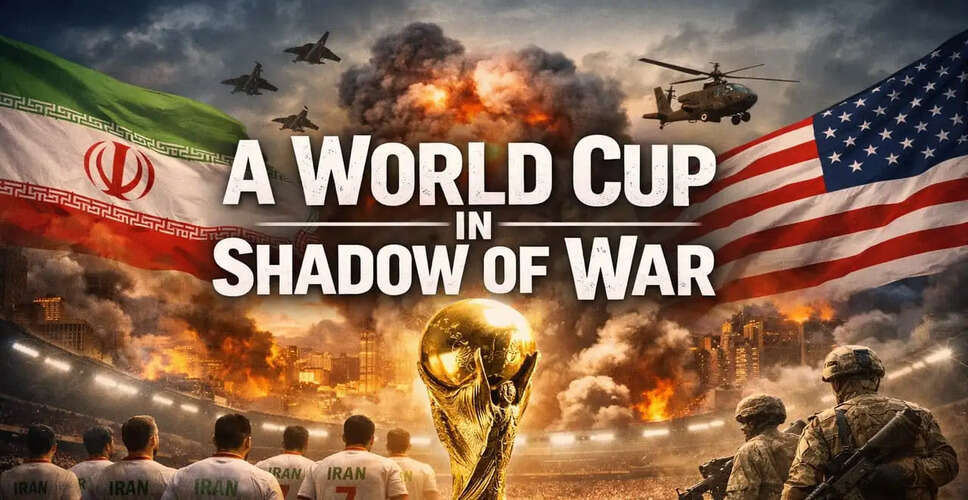
A Fragile Situation Ahead of the 2026 FIFA World Cup
As the 2026 FIFA World Cup approaches, set to take place across North America, the event is overshadowed by significant geopolitical turmoil. Iran, a team that has qualified for the tournament, faces the alarming prospect of missing out—not due to their performance on the field, but because of escalating military conflict.
The situation has raised concerns about the implications for the tournament, which is intended to foster unity among nations.
Iran's Sports Minister Issues Dire Warning
On March 11, Ahmad Donyamali, Iran's Sports Minister, expressed a grim outlook, stating there was "no possibility" for the men's national team to participate in the World Cup. This statement came amid rising tensions following military actions by the US and Israel against Iran, which have reverberated throughout the Middle East.
This scenario is unprecedented; never before has a World Cup host nation been in active conflict with a participating country, raising concerns that extend beyond sports to include oil supply and trade routes.
FIFA's Peace Prize Under Scrutiny
The situation is further complicated by the irony surrounding FIFA's introduction of the "FIFA Peace Prize" in 2025, aimed at recognizing individuals who promote unity. The inaugural award was controversially given to US President Donald Trump in January 2026, a decision that drew criticism due to the US's involvement in the Gaza conflict and its domestic policies.
Following the US-Israel military actions against Iran, calls for revoking the award have intensified.
Mixed Messages from Trump
After a meeting with FIFA President Gianni Infantino on March 10, Trump initially conveyed a welcoming message for Iran's participation. However, he later expressed concerns on his social media platform, suggesting it might not be safe for Iran to attend, which was interpreted as a warning.
In response, the Iranian team asserted that no individual has the authority to exclude a nation from the World Cup, emphasizing that security is the responsibility of the host nation.
Iran's Players Remain Focused Amid Uncertainty
Despite the political turmoil, Iran's players are continuing their preparations, with friendly matches against Nigeria and Costa Rica scheduled in Turkey. However, the geopolitical situation complicates their plans, particularly since their group-stage matches are set to occur in California and Seattle, both in the US.
Iran's Football Federation President Mehdi Taj has made it clear that while they will prepare for the World Cup, they intend to boycott the United States but not the tournament itself.
Potential Relocation of Matches
Iran hopes for a relocation of their matches, with Mexico expressing willingness to host if necessary. President Claudia Sheinbaum has indicated that Mexico is ready to accommodate Iran's group-stage games. Canada is also considered a possible alternative.
However, FIFA has maintained its stance, stating that Iran's matches will not be moved from the US.
FIFA's Position and Contingency Plans
FIFA continues to publicly support the participation of all teams, with Infantino emphasizing the importance of fair play and mutual respect. Behind the scenes, however, contingency plans are reportedly being developed, which may include leaving Iran's slot vacant or replacing them with another team, such as Iraq or the UAE.
Each of these options presents its own challenges, from fairness in qualification to political implications.
Historical Context of Withdrawals
If Iran withdraws or is excluded, it would not be without precedent, though the context would be unique. Historical instances include:
- 1950: India, Turkey, and France withdrew due to travel costs.
- 1958: Indonesia refused to play against Israel.
- 1994: Yugoslavia was banned due to UN sanctions.
However, none of these situations involved a direct conflict between a host nation and a participating country.
Possible Sanctions from FIFA
Should Iran decide to withdraw, FIFA could impose penalties, ranging from financial sanctions to exclusion from future tournaments like the 2030 World Cup. Nevertheless, given the extraordinary circumstances, FIFA may opt for leniency.
The Intersection of Football and Politics
FIFA has long claimed to remain politically neutral, yet its actions, such as banning Russia from qualifiers, suggest otherwise. The stakes are particularly high in this instance, as Iran's participation transcends football, touching on issues of diplomacy, safety, and the role of sport in a divided world.
As the tournament date approaches, a pressing question remains: Can the spirit of football endure amidst the complexities of geopolitics?