
General Upendra Dwivedi Hands Over Command to General Dhiraj Seth After Distinguished Military Career
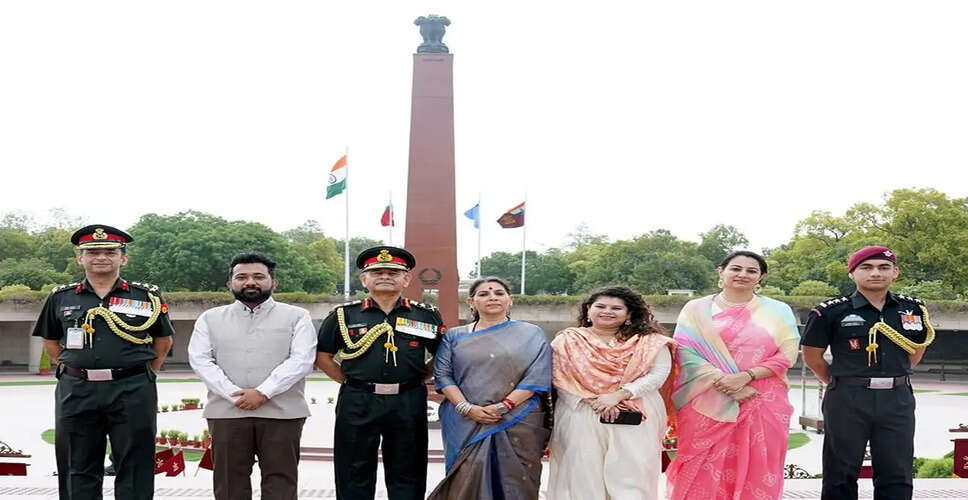

Transition of Command in the Indian Army
General Upendra Dwivedi has officially transferred the leadership of the Indian Army to General Dhiraj Seth, concluding a remarkable military career spanning over four decades. During the farewell ceremony, General Dwivedi expressed that serving in the Indian Army has been the greatest honor of his life. He conveyed his gratitude to soldiers, veterans, their families, and the citizens of the nation, emphasizing that the true strength of the Indian Army derives not from any single individual but from the unwavering trust of its soldiers, commanders, veterans, and the populace.
Before stepping down, General Dwivedi paid tribute to fallen soldiers at the National War Memorial. He reflected on his unforgettable journey that began at a military school, stating that serving in the Indian Army for over forty years has filled him with pride and satisfaction. He honored all soldiers who made the ultimate sacrifice while fulfilling their duties.
Highlights of Military Preparedness
In his address, General Dwivedi highlighted the Indian Army's readiness and vigilance over the past two years. He noted that under the 'Snow Leopard' operations along the northern borders, the army has executed its responsibilities with utmost strength and alertness. Similarly, on the western front, the army has demonstrated seriousness and restraint, exemplified by 'Operation Sindoor'. He affirmed that the Indian Army has approached all matters related to national security with clear objectives, discipline, and a sense of responsibility.
Collaboration Among Armed Forces
General Dwivedi emphasized the growing synergy among the three branches of the armed forces as crucial for national security. He stated that the army, navy, and air force have worked together with a shared vision, mutual trust, and improved coordination. He pointed out that future warfare will be more joint, coordinated, and region-based, necessitating collaboration in decision-making and action among the three services. This mindset is strengthening the new paradigm of national security.
Confidence in Successor General Dhiraj Seth
As he concluded his term as army chief, General Dwivedi expressed complete confidence in his successor, General Dhiraj Seth. He described General Seth as an experienced soldier and capable leader, under whose guidance the Indian Army will reach new heights. He expressed optimism that the army will remain prepared to face future challenges while upholding its glorious traditions, professional capabilities, and resolve.
Farewell Ceremony and Future Challenges
The farewell ceremony was marked by an emotional and proud atmosphere, where General Dwivedi formally handed over his responsibilities to General Dhiraj Seth, assuring that the future of the Indian Army is in secure and strong hands.
In various interviews before his departure, General Dwivedi described the situation along the Line of Actual Control as stable yet sensitive. He noted that recent agreements between India and China have enhanced stability in border areas, with both sides showing greater sensitivity to each other's concerns. He mentioned that military-level talks, hotlines, flag meetings, and commander-level discussions have facilitated the management of border issues. The Indian Army prioritizes maintaining peace and stability at the borders, resolving local issues through dialogue, and ensuring robust military preparedness to handle any situation.
Embracing Modern Technology
General Dwivedi stated that the Indian Army is rapidly adopting modern technologies to address future challenges. In response to questions, he explained that modern warfare extends beyond just weaponry, incorporating information systems, surveillance, communication networks, drone technology, and rapid decision-making capabilities. He highlighted initiatives such as the Rudra Brigade, Bhairav Battalion, Ashani Drone Platoon, Shaktibaan Regiment, and Divyaastra Battery, which have enhanced the army's combat capabilities and precision. Additionally, efforts are underway to improve monitoring and rapid response capabilities through units like the Baaz Battalion.
Self-Reliance in National Security
General Dwivedi underscored self-reliance as a critical necessity for national security, asserting that the country must depend on its technology and resources for future wars. He noted that indigenous defense systems have become integral to the army's preparations, with their use in surveillance, communication, electronic warfare, precision strikes, and military decision-making systems steadily increasing. He mentioned that modern defense technologies are being rapidly developed in collaboration with defense research organizations, public enterprises, private industries, small businesses, and the innovation sector, tailored to Indian conditions, ensuring the army can robustly face every challenge.