
General Dheeraj Seth Takes Command of Indian Army with a Vision for Modern Warfare
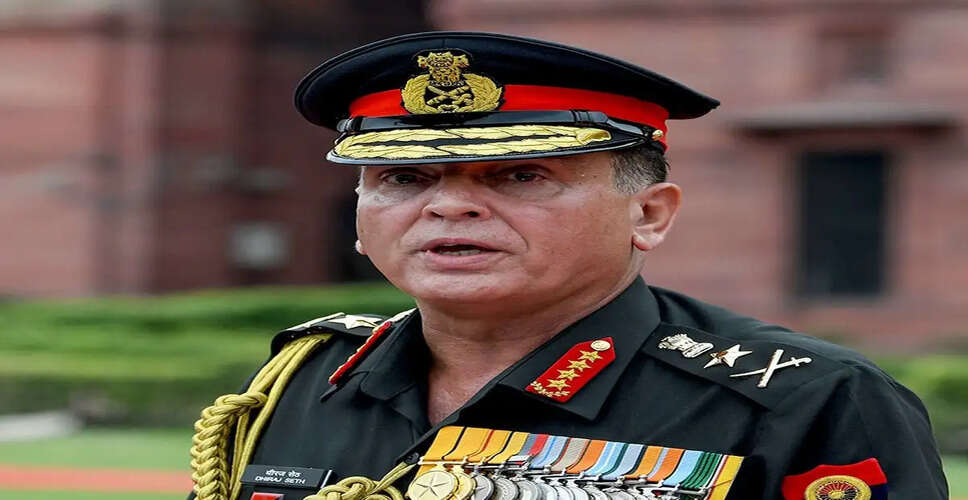

A New Era for the Indian Army
The Indian Army is now under the leadership of a military officer who not only possesses combat experience but also embraces a modern perspective on the evolving battlefield. General Dheeraj Seth has assumed the role of the 31st Chief of Army Staff, making it clear that the primary objective in the coming years will be to develop a technologically advanced, agile, self-reliant, and multi-dimensional military force. In his inaugural address, he indicated that the Indian Army is set to transcend traditional warfare boundaries and fully commit to preparing for future conflicts.
A Proud Responsibility
Upon taking office, General Seth expressed that this responsibility is both a source of pride and humility for him. He emphasized his unwavering commitment to the principles of 'Duty, Honor, and Nation First.' He thanked the Prime Minister and the Defence Minister for their trust and pledged to honor the sacrifices of the brave soldiers who have served the nation.
An Emotional Ceremony
The most poignant moment during General Seth's induction ceremony was when he saluted his father, retired Lieutenant General K.M. Seth, and his younger brother, Rear Admiral Ravinish Seth. This scene sparked widespread discussion across the country, symbolizing a legacy of military service that spans generations.
Transformational Changes Ahead
General Seth has taken command at a time when the Indian Army is undergoing significant transformations. The army is working on a comprehensive plan termed the 'Decade of Change,' which includes structural reforms, the integration of new technologies, drone warfare capabilities, the establishment of integrated battle groups, and improved coordination among the three armed forces. His tenure is expected to see decisive progress towards unified theater commands, enhancing strategic coordination among the army, navy, and air force.
Vision for the Future
Clarifying his vision, General Seth introduced the mantra 'VIJAY.' Each letter represents a key aspect of the army's future direction. 'V' stands for Vigilance and Readiness, emphasizing the army's commitment to monitoring borders and emerging threats while being prepared for any challenge.
'I' signifies Innovation and Change, with General Seth asserting that future warfare will be won not just by troop numbers but through technology, information, and rapid decision-making. He plans to accelerate the integration of new ideas, AI-based systems, drones, surveillance technologies, and modern weaponry into the army.
'J' represents Unity and Integration, as he believes that modern warfare cannot be fought by a single service alone. Enhanced coordination among the army, navy, and air force is crucial for elevating India's strategic strength.
'A' stands for Self-Reliance, with General Seth emphasizing the need for the future Indian Army to rely on indigenous technology and domestic defense production to reduce foreign dependency and strengthen the nation during wartime.
'Y' signifies Warrior First, highlighting that every soldier, from the newest recruit to the most senior veteran, is a vital asset to the army. The morale, welfare, and respect of soldiers will remain his top priority.
A Distinguished Career
General Seth's military career is marked by extensive experience. He was commissioned into the prestigious 2nd Lancers Regiment of the Armored Corps in 1986 and has held significant responsibilities ranging from counter-terrorism operations in Jammu and Kashmir to leadership roles on the western front. He is among the few officers to have commanded two different military commands on the western front, overseeing the Southern Command in Pune and the South Western Command in Jaipur, both crucial for strategic preparations related to the Pakistan border.
Facing Future Challenges
Experts believe that General Seth's biggest challenge will be to adapt the army's structure to meet the demands of future warfare, which is increasingly technology-driven and reliant on long-range systems. This necessitates comprehensive changes in command structure, leadership systems, and technological integration.
General Seth is an alumnus of the National Defence Academy, Indian Military Academy, Command and Staff Course in Paris, and the National Defence College. He has been awarded the Param Vishisht Seva Medal, Uttam Yudh Seva Medal, and Ati Vishisht Seva Medal.
A Legacy of Military Service
His family background is steeped in military pride. His father, Lieutenant General Krishna Mohan Seth, served as the Adjutant General in the army and later became the Governor of Chhattisgarh, Madhya Pradesh, and Tripura. Both father and son have commanded the Surya Chakra Corps, while his younger brother, Rear Admiral Ravinish Seth, holds a senior position in the navy.
Leadership Changes Across the Armed Forces
Significant leadership changes have also occurred in the army and air force. Following General Seth's appointment, Lieutenant General Sandeep Jain has become the new Deputy Chief of Army Staff, while Lieutenant General Rajesh Pushkar has taken charge of the Southern Command, and Lieutenant General Mohit Malhotra has assumed leadership of the South Western Command. The 14th Corps, known as the Fire and Fury Corps, stationed in Ladakh, is now under the command of Lieutenant General Madanraj Pandey.
In the Indian Air Force, Air Marshal Ashutosh Dixit has taken over as Deputy Chief of Air Staff. Overall, this extensive leadership transition in the armed forces comes at a time when the country's security challenges are rapidly evolving, necessitating a decisive shift towards technology-driven warfare.
A Clear Message for the Future
Despite the significant challenges ahead, General Dheeraj Seth's initial message is clear: the Indian Army will not be confined to merely defending borders but will emerge as a new power in future battlefields, driven by technology, self-reliance, joint operations, and the morale of its soldiers.