
General Anil Chauhan Reveals Shocking Details of Operation Sindoor
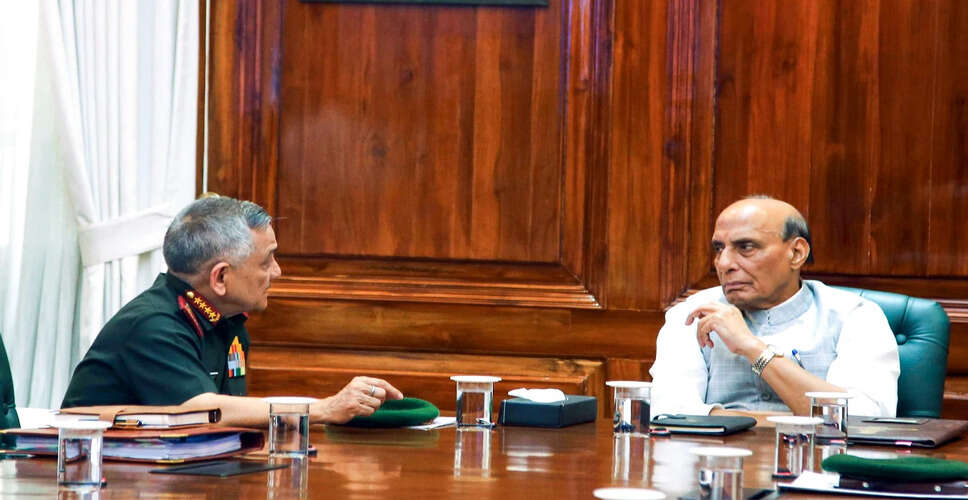

Revelations from Former CDS General Anil Chauhan
Former Chief of Defence Staff (CDS) General Anil Chauhan has made a startling revelation regarding 'Operation Sindoor'. He disclosed that on the morning of May 10, 2025, Pakistan urgently requested a ceasefire through the DGMO hotline. Instead of immediately accepting the request, India deliberately delayed its response until noon. According to the former CDS, this was a strategic decision, as half of India's planned military strikes were still pending, and the aim was to secure a decisive victory.
Destructive Strikes on Pakistani Military Bases
During a media event, General Chauhan explained that from the night of May 9 to the afternoon of May 10, the Indian armed forces launched a series of missile and air strikes on 11 key military installations and airbases within Pakistan. Major Pakistani airbases, including Noor Khan in Rawalpindi, Rahim Yar Khan, and Bholari, suffered extensive damage. The attacks resulted in significant destruction of hangars, radar systems, airstrips, and numerous fighter jets, with repair efforts still ongoing.
How the Ceasefire Came About
General Chauhan noted that he was taken aback when Pakistan reached out to India for talks on May 10. He remarked, "It was surprising... especially considering the aggressive statements from the Pakistani side on May 9, where they claimed they would teach India a lesson within 48 hours."
Despite the aggressive rhetoric, the Indian forces continued their assault on the 11 military sites and airbases, causing extensive damage to hangars, radar sites, and several fighter jets. General Chauhan emphasized that the objective was to send a clear message that no military installation in Pakistan was beyond the reach of Indian forces.
The Strategic Decision to Delay Ceasefire
The damage inflicted on key locations like Noor Khan, Rahim Yar Khan, and Bholari was so severe that repairs are still underway. He stated, "Within about eight hours, they (Pakistan) picked up the phone. We hadn't even completed half of our plans." General Chauhan pointed out that Pakistan was well aware that if the conflict continued, they would face even greater losses.
He further explained, "We did not accept the ceasefire at 9:30 AM and continued our operations until noon because we wanted our victory to be even more decisive." Operation Sindoor was initiated in response to a terrorist attack in Pahalgam on May 7, which resulted in the deaths of 25 tourists. In the initial phase of the operation, India destroyed nine terrorist camps linked to groups like Jaish-e-Mohammed and Lashkar-e-Taiba located within Pakistan.
Pakistan's Response and India's Tactical Advantage
In retaliation, Pakistan targeted military installations in border towns of Jammu and Kashmir, Punjab, and Rajasthan with drones and missiles. However, most of these attacks were thwarted or intercepted. Following this, India decided to strike back at Pakistani military bases.
General Chauhan emphasized that Delhi's strength lay in its military commanders' ability to rapidly assess the impact of both Indian and Pakistani strikes compared to their adversaries. He stated, "We had better situational awareness on the battlefield... we knew the outcomes of our strikes and the effects of Pakistan's attacks... we could make quick decisions."
Desire for a Decisive Victory
General Chauhan highlighted the importance of having a clear understanding of the battlefield and one's capabilities. He noted that Islamabad aimed to conduct deep strikes within Pakistan similar to India's operations without crossing borders. By that time, India had already destroyed several of Pakistan's radar systems.
The former CDS remarked, "Pakistan believed that if they could act quickly and deeply, they could inflict significant damage." However, before they could execute their plans, India had already commenced attacks on their airfields. Due to the damage to critical airstrips, Pakistan was unable to conduct further sorties.
General Chauhan explained that Pakistan called India around 9:30 AM on May 10 because the impact of India's air power was becoming evident. He added, "They felt it was better to negotiate now, or the situation could worsen."
Nevertheless, the Indian Army was determined to leave a lasting impact before concluding the conflict. To ensure a decisive outcome, a new round of attacks was initiated at 10 AM and again at 1 PM before agreeing to the ceasefire. General Chauhan stated, "India continued the third round of attacks. It had to be decisive."