
Garbhitar: A Hidden Gem of Assam's Rich Heritage
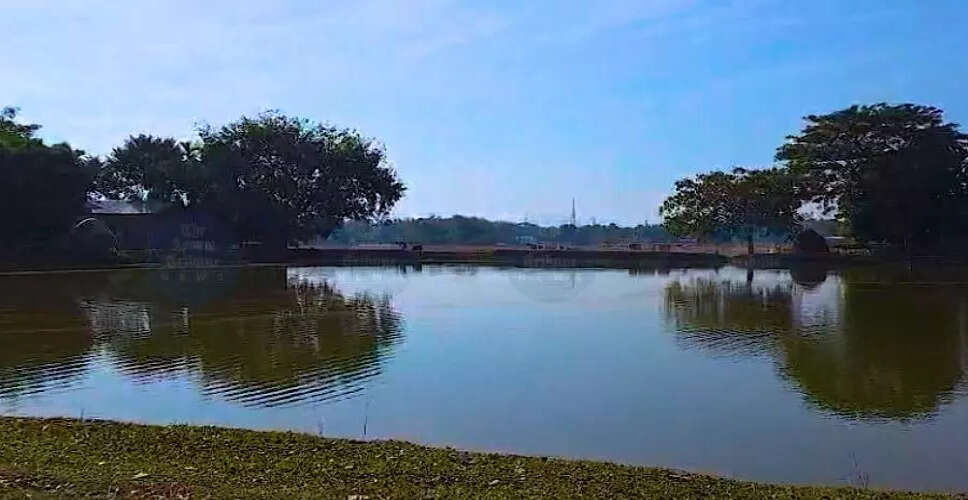
Exploring the Historical Significance of Garbhitar
Nalbari, Jan 7: Nestled near Dhamdhama in Assam’s Tamulpur district, the village of Garbhitar is steeped in history, with remnants of ancient earthworks and historic ponds telling tales of its past.
Once the vibrant capital of Fengua Raja, a king from the Kachari dynasty, Garbhitar is gradually fading into obscurity, now existing as a tranquil rural community that still bears traces of its royal heritage.
Centuries ago, Fengua Raja chose this location for his capital, constructing a fortified settlement that spanned nearly four miles.
This fortification served as the political and administrative center of the area. To support royal activities, the king commissioned the digging of seven large ponds, each serving a distinct purpose.
Ghoradhowa was designated for bathing royal horses, while Madaikata and Patmadaiya catered to palace attendants. Kawaimari, Kurihamari, and Chital Pukhuri were utilized for breeding various fish species. Remarkably, all seven ponds still exist today, although many are at risk due to neglect and the passage of time.
What distinguishes Garbhitar is not just its historical significance but also the enduring spirit of communal harmony that thrives within its landscape.
“Hindus and Muslims coexist here peacefully. We have Assamese Muslims, Bengali Muslims, Bengali Hindus, and Assamese Hindus, and our relationships are harmonious. There has never been any conflict among us,” shared local resident Jomiruddin Ahmed.
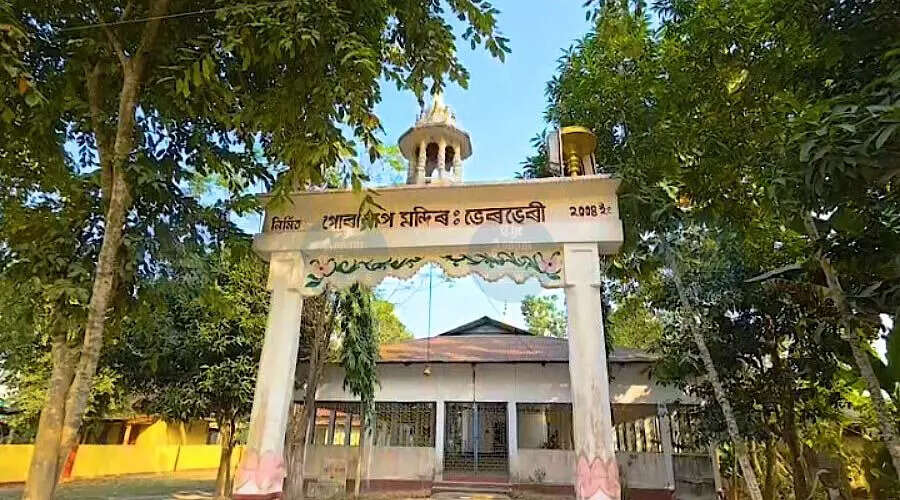
Poradhap Bishnu Temple in Bherbheri
This spirit of unity is most vividly illustrated at Chital Pukhuri, a sizable pond of nearly 12 bighas situated on the border between Garbhitar and the adjacent village of Bherbheri.
While Garbhitar is primarily Muslim and Bherbheri predominantly Hindu, the residents of both villages collaboratively manage the pond through a fisheries committee established decades ago.
The profits from fish sales are shared equally between the Poradhap Bishnu Temple in Bherbheri and the mosque in Garbhitar.
“Both communities fish together and sell the catch. The earnings are then divided between the temple and the mosque. We attend each other's events, fostering a sense of community,” Ahmed added.
Even now, Garbhitar’s social fabric reflects this shared ethos, with devotional hymns from the Naamghar harmonizing with the mosque's call to prayer. This coexistence stands as a quiet testament in an era often dominated by communal tensions.
However, despite its historical and social importance, Garbhitar faces neglect. The ancient fort has suffered significant damage from floods and encroachments, while the royal ponds lack formal conservation efforts, leading to their gradual erosion.
Poor road access and inadequate infrastructure further isolate this once-thriving capital.
Concerned that these invaluable heritage sites may vanish, residents have urged both the Assam government and the Bodoland Territorial Council (BTC) to take immediate action to preserve Fengua Garh, Chital Pukhuri, and other historical remnants.
With timely intervention, they believe Garbhitar can be safeguarded not just as a forgotten relic but as a living testament to Assam’s shared history, cultural richness, and communal harmony.