
Gandhari: A Gripping Tale of Child Trafficking in Joypurra

A Troubling Day in Joypurra
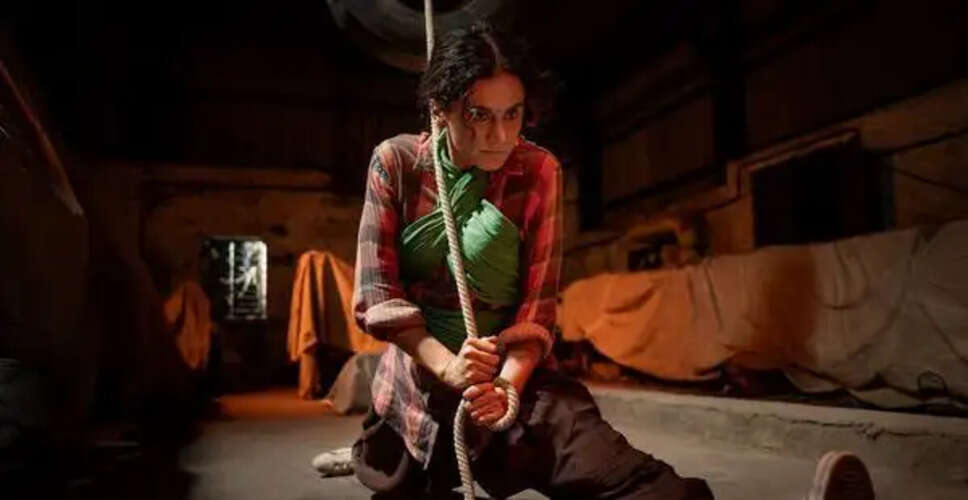
In the bustling town of Joypurra, Bengal, a tragic event unfolds as Bani (played by Taapsee Pannu) and her husband Gokul (Ishwak Singh) face the horrifying abduction of their daughter Mishty by sex traffickers. In her desperate attempt to rescue her child, Bani suffers temporary vision loss while pursuing the kidnappers. Coincidentally, on this fateful day, police officer Kabir (Jatin Sarna) arrives in Joypurra with the mission to dismantle the notorious Blackhole trafficking gang.
Bani's Determination
Frustrated by the local police's indifference and undeterred by her own condition, Bani resolves to take matters into her own hands to save Mishty. Her mother, Jhunu (Mita Vashisht), is nearby, hiding her impressive skills while selling jhalmuri. The gang's leader, Dada (Prashant Narayanan), frequently mentions a sinister 'Plan Zero,' which involves keeping numerous abducted girls hidden in Joypurra until the right moment to smuggle them out.
Kabir's Ineffective Strategy
Kabir's strategy to counter Dada's scheme involves cordoning off Joypurra. Instead of engaging with Bani and Gokul or paying attention to crucial geographical insights that could aid his investigation, Kabir spends weeks appearing busy yet ineffective.
A Missed Opportunity
Despite a promising start, Gandhari soon falls into a state of nervous lethargy. The film, written and produced by Kanika Dhillon and directed by Devashish Makhija, attempts to tackle the grave issue of child sex trafficking but ultimately fails to deliver a compelling narrative.
Contrived Plotting
The film, named after the Kaurava queen from the Mahabharata who blindfolded herself in solidarity with her sightless husband, is blind to its own contrived storytelling and lack of genuine investigative depth. One of its central themes suggests that evil often hides in plain sight, masked by ordinary appearances.
Kabir's Limitations
A particularly absurd scene features a character driving a van with large windows, filled with suspicious bags that could either be oversized jackfruit or kidnapped girls. Kabir's failure to implement an effective dragnet places him just above the lethargic local police.
Gokul's Parallel Search
In a parallel narrative, Gokul also embarks on a quest to find his daughter. Interestingly, Bani is reluctant to share her discoveries with Kabir, who, despite being cast against type, is reduced to issuing ineffective commands.
Makhija's Direction
Devashish Makhija, known for his previous vigilante thrillers that offer simplistic solutions to complex social issues, delivers a film that struggles with a weak screenplay and attempts to introduce various twists with minimal impact.
Cast Performances
The 116-minute film features performances from Chhaya Kadam, Swastika Mukherjee, and Chandan Roy. While Taapsee Pannu showcases her emotional range, her efforts are largely in vain. Prashant Narayanan's portrayal of the antagonist seems to echo his previous role in Murder 2, yet lacks the same intensity.