
Gaggal Airport Expansion Sparks Outrage Among Local Families
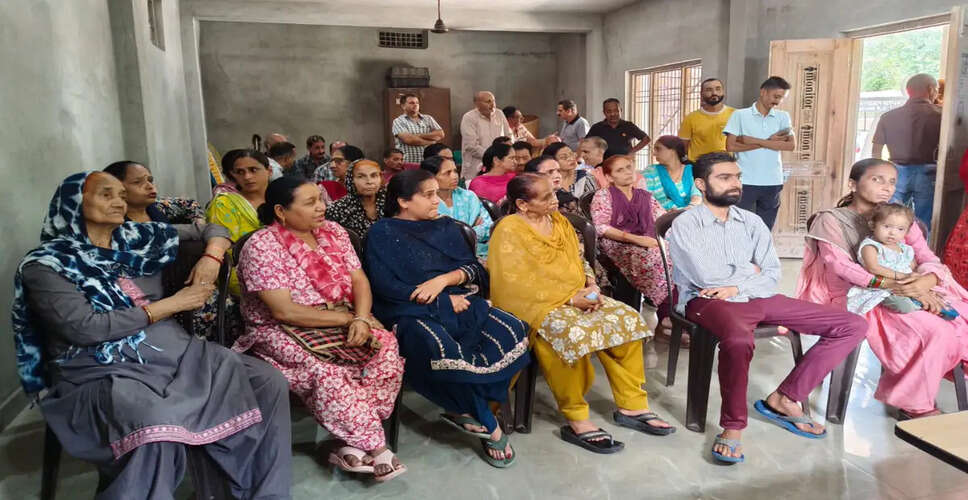

Local Families Protest Gaggal Airport Expansion
Rajkumar Chaudhary
Gaggal
The growing unrest among families impacted by the proposed Gaggal Airport expansion has reached a critical point. During a recent meeting at the Gaggal Panchayat, numerous families expressed their anger, cautioning the government and local authorities against evicting them without adequate compensation, rehabilitation, and resettlement. Their message was unequivocal: “If the government dares, let them attempt to remove us from our homes.”
Concerns Over Homes and Livelihoods
For many residents, the airport expansion is not merely an infrastructure project; it threatens their very existence. Families who have resided in the area for generations now face the grim reality of losing their homes, shops, and small enterprises. Although the government promises development and modernization, these families argue that their futures are being sacrificed.
Residents highlighted that not all families are receiving rehabilitation and resettlement (R&R) benefits. Those living on government land or in informal structures are particularly at risk of being excluded from compensation packages, leading to widespread anxiety. One villager voiced, “We have lived here for generations. If our homes are destroyed, where will we go? Who will ensure our children’s future?”
Frustration Towards Political Leaders
The meeting also served as a platform for villagers to express their frustration with political parties. They accused both the ruling Congress and the opposition BJP of neglecting their concerns. “Politicians speak of development but ignore the voices of families being uprooted. They should come here, stand with us, and explain what will happen to our lives,” another resident remarked.
This sentiment reflects a growing skepticism towards political assurances. While leaders emphasize the advantages of a longer runway and enhanced air connectivity, locals argue that the human cost of the project is being overlooked. “Development cannot come at the expense of destroying families,” one speaker asserted, receiving enthusiastic applause from the crowd.
Call for a Transparent Policy
Affected families are demanding that the government establish a clear and transparent policy before any evictions occur. They insist that no family should be displaced without guaranteed housing, financial compensation, and support for their livelihoods. “We are not against development. But development must include us, not exclude us,” stated a local representative.
This demand underscores a broader issue in infrastructure projects across India: the absence of comprehensive rehabilitation frameworks. While land acquisition laws exist, many families living on government land or lacking formal titles often find themselves vulnerable to eviction without adequate support.
Warning of Collective Resistance
The meeting concluded with a strong warning from the villagers. They declared that if their concerns continue to be ignored, they would unite to resist eviction. “We will not permit our homes to be destroyed without justice. If the government attempts to force us out, we will raise our voices together,” an elder proclaimed, a sentiment echoed by many attendees.
This warning indicates the potential for escalating protests in the area. While small demonstrations have already occurred, the tone of the latest meeting suggests that resistance could intensify if the government fails to address the community's concerns.
The Broader Context: Development vs. Displacement
The Gaggal Airport expansion is part of Himachal Pradesh’s initiative to enhance connectivity and promote tourism. A longer runway would accommodate larger aircraft, potentially increasing tourist arrivals and economic activity. However, this project necessitates significant land acquisition, impacting hundreds of families and businesses.
The conflict between development and displacement is not unique to Kangra. Similar tensions arise across India, where infrastructure projects often lead to disputes. While governments argue that such initiatives yield long-term benefits, affected communities frequently feel marginalized, excluded from decision-making, and inadequately compensated.
Personal Stories from the Community
During the meeting, several personal accounts underscored the human impact of the expansion. One shopkeeper shared that his family had operated a small business for over 25 years, supporting his children's education. “If my shop is demolished, I lose everything. The government talks about compensation, but what about the years of effort we invested in building our lives?” he questioned.
Another woman expressed her fear of becoming homeless. “We are not against the airport. But if they take our house, they must provide us with another place to live. Otherwise, we will be left on the streets,” she said, her voice filled with emotion.
Navigating the Future
As tensions escalate, the government faces a challenging situation. On one hand, the expansion project is viewed as essential for regional development. On the other, neglecting the demands of affected families could lead to unrest and erode public trust.
Officials have maintained that compensation and rehabilitation will be provided according to existing policies. However, the exclusion of families residing on government land remains a contentious issue. If not addressed, this could become a focal point for resistance.
Final Thoughts
The Gaggal Airport expansion has evolved into more than just a development initiative; it has become a litmus test for governance, fairness, and accountability. For families facing eviction, the stakes are their homes, livelihoods, and futures. Their message to the government is resolute: “Do not uproot us without justice.”
As the situation develops, the coming weeks will determine whether the government opts for confrontation or compassion. For now, the voices of Gaggal’s families resonate strongly, demanding that development should never come at the expense of dignity.