
Fuel Shortage in Assam: Understanding the Crisis at Petrol Pumps
Current Fuel Situation in Assam
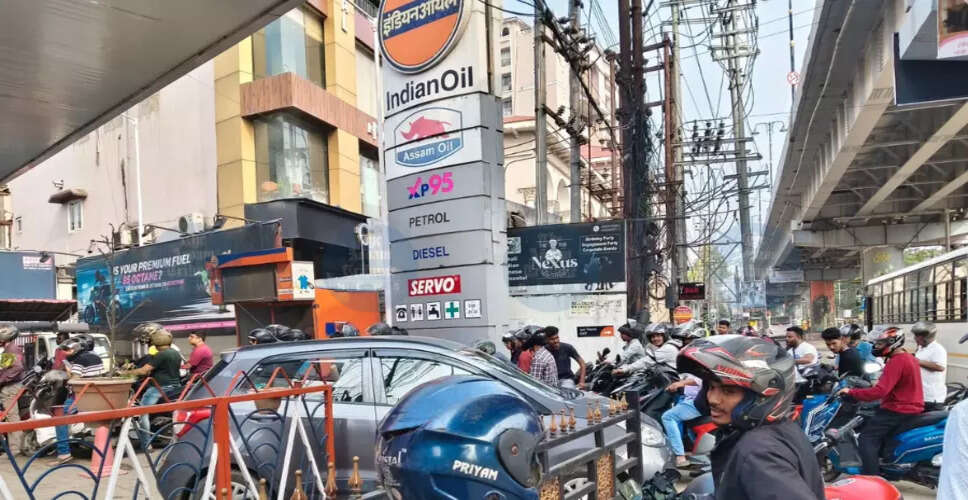
GUWAHATI, March 27: Despite the refineries in Assam being fully stocked with petrol and diesel, fuel shortages at petrol stations are evident. This situation arises from two main factors: the hesitation of oil marketing companies (OMCs) to procure sufficient supplies from refineries and a surge in panic buying among consumers.
Long lines have formed at various petrol stations, with some even shutting down due to a lack of fuel availability. This issue is not due to an actual fuel shortage.
According to sources within the oil industry, all four refineries in Assam are operating at full capacity and have ample petrol and diesel supplies. However, these refineries do not sell fuel directly to consumers. Previously, Numaligarh Refinery Limited (NRL) operated its own petrol stations, but these have since been transferred to Bharat Petroleum Corporation Limited (BPCL).
It has been noted that OMCs must purchase fuel from refineries at prices linked to international market rates. Currently, global prices are elevated, benefiting the refineries economically, but posing challenges for the OMCs.
The government regulates fuel prices and is currently preventing OMCs from increasing their prices. As a result, OMCs are facing financial losses due to the disparity between the higher procurement costs from refineries and the fixed retail prices.
To mitigate these losses, OMCs are not acquiring enough stock, leading to the current petrol and diesel shortages. This has caused significant inconvenience for the public.
If international prices decrease, the refinery transfer prices will also drop, allowing OMCs to resume adequate stock purchases, thereby alleviating the crisis. Additionally, the government could consider compensating OMCs for their current losses to benefit consumers by bridging the gap between the refinery transfer price and retail prices.