
Fuel Price Hike in India: Government Responds to Global Oil Market Pressures

Significant Fuel Price Increase in India
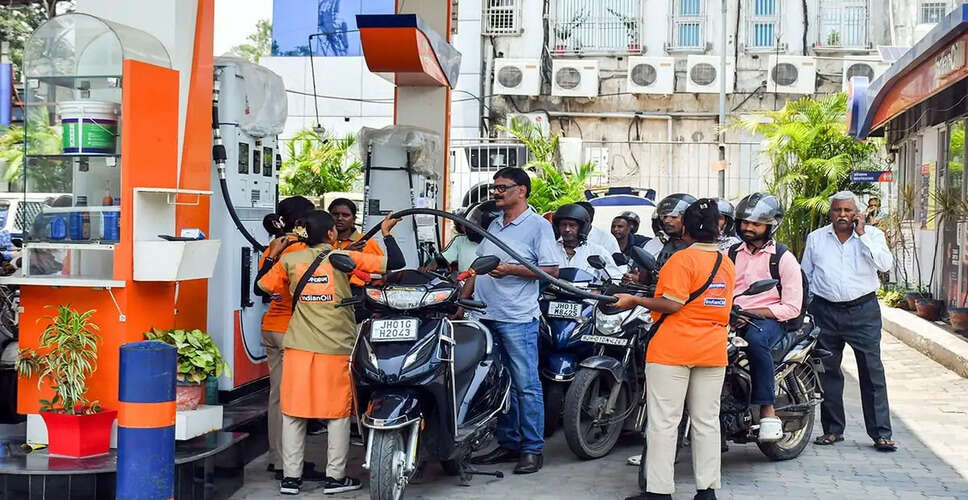
The long-awaited day has finally arrived for citizens of India, as the government has announced a hike in petrol and diesel prices after a prolonged period of stability. While many countries have already raised fuel prices due to the crisis in West Asia, India had maintained its rates without any increase until now. Notably, petrol and diesel prices in India remained unchanged since April 2022, making it one of the few countries to do so. However, just before the upcoming Lok Sabha elections in March 2024, a reduction of two rupees per liter was implemented.
The recent price increase can be attributed to rising international crude oil prices and a significant decrease in domestic oil reserves. Reports indicate that India's oil reserves have dropped by approximately 15% from 107 million barrels to around 91 million barrels since February, putting additional pressure on the government and oil companies.
Government's Call for Fuel Conservation
In light of the situation, Prime Minister Narendra Modi has urged citizens to conserve fuel. He recommended increased use of public transport, carpooling, remote work, and online meetings. The Prime Minister also advised against unnecessary foreign travel and gold purchases to alleviate pressure on the foreign exchange reserves. Farmers have been encouraged to reduce the use of chemical fertilizers and adopt solar-powered irrigation methods.
Concerns Over Future Price Increases
Oil marketing companies had requested a price hike of 16 to 17 rupees per liter, but only a three-rupee increase was approved. This raises questions about whether further increases in petrol and diesel prices are on the horizon. It is possible that the government opted for gradual increases rather than a sudden spike. Additionally, domestic LPG prices saw a rise of 60 rupees per cylinder in March, although they remain significantly lower than actual costs.
The recent increase in fuel prices has raised concerns across various sectors, from the general public to the industrial community. In Delhi, petrol is now priced at 97.77 rupees per liter, while diesel costs 90.67 rupees per liter. Experts attribute this price surge primarily to a sharp rise in global crude oil prices, exacerbated by the ongoing conflicts involving the U.S., Israel, and Iran, which have heightened instability in West Asia.
Impact of Global Oil Supply Disruptions
India imports over 80% of its crude oil, meaning fluctuations in international prices directly affect domestic fuel costs. Disruptions in the Hormuz region have led to a significant decline in oil supply from Gulf countries, further complicating matters for import-dependent nations like India. Government oil companies have been absorbing the costs of rising international prices for several months to avoid burdening consumers, but with dwindling reserves and escalating costs, they are now under severe financial strain.
According to industry estimates, public sector oil companies are incurring losses of approximately 10 billion rupees daily. This situation leaves them with little choice but to raise prices.
Inflation Concerns and Political Reactions
The central petroleum minister, Hardeep Puri, acknowledged the increasing pressure on government refineries, raising concerns about how long these companies can sustain losses. Experts warn that if tensions in West Asia do not ease soon, fuel prices may continue to face upward pressure.
Meanwhile, inflation rates have also raised alarms, with petrol inflation reaching 32.4% in April and high-speed diesel inflation at 25.19%. The rising costs of crude oil, natural gas, LPG, petrol, and diesel have intensified overall inflation, potentially increasing transportation, manufacturing, and everyday goods costs. India's retail inflation rose to 3.48% in April, up from 3.40% in March, while wholesale inflation hit a 42-month high of 8.3%.
The Congress party has criticized the central government for the fuel price hike, claiming it will lead to increased inflation and a decline in economic growth. Party general secretary Jairam Ramesh stated that while international crude oil prices were low, the Modi government failed to provide relief to consumers, instead opting to raise prices after state elections.