
Former FBI Director Robert Mueller Passes Away at 81, Leaving a Controversial Legacy
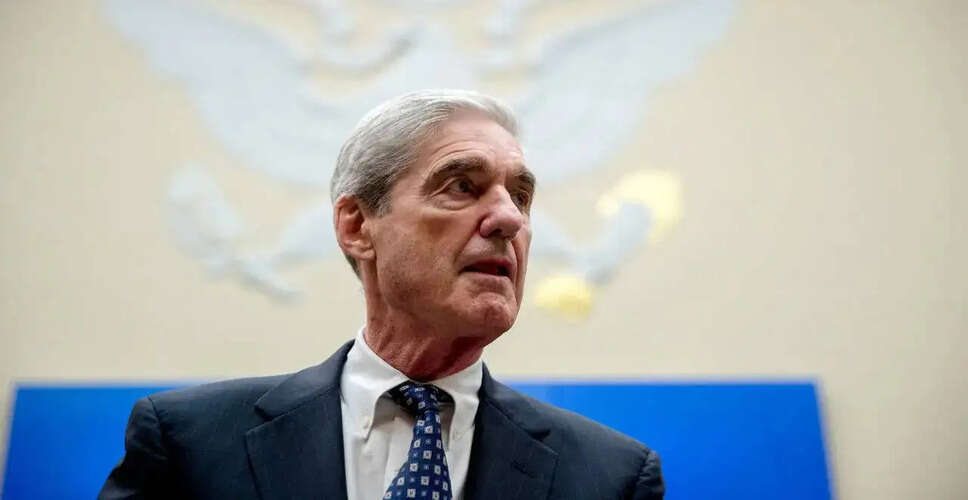
Robert Mueller's Death and Its Implications
Robert Mueller, who served as the director of the FBI and led the investigation into Russian interference in the 2016 U.S. presidential election, has reportedly passed away at the age of 81. His death has reignited discussions about his complicated relationship with Donald Trump, who was a focal point of Mueller's inquiry. Appointed as special counsel by the U.S. Department of Justice in May 2017, Mueller took over the investigation shortly after Trump dismissed FBI director James Comey, who had been overseeing the probe into potential connections between Trump's campaign and Russian efforts to sway the election.
Trump was openly critical of the investigation, labeling it a "witch hunt" and expressing concern over Mueller's appointment. Following the news of Mueller's passing, Trump took to Truth Social to express his feelings, stating, "Robert Mueller just died. Good, I'm glad he's dead. He can no longer hurt innocent people!" During the investigation, Mueller sought to question Trump under oath regarding Comey's dismissal and other potential obstruction of justice issues, but Trump opted not to participate in an interview, instead providing written responses that often cited memory lapses on crucial matters.
Mueller's investigation uncovered numerous instances where Trump and his aides attempted to influence or obstruct the inquiry. However, in his final report, submitted in March 2019 to then Attorney General William Barr, Mueller refrained from accusing Trump of any crime. The report stated, "While this report does not conclude that the President committed a crime, it also does not exonerate him," referencing longstanding Justice Department guidelines that prevent the indictment of a sitting president. Barr later concluded that the evidence was insufficient to support an obstruction of justice charge, a claim Trump used to assert his complete exoneration.
Mueller expressed concern that Barr's summary led to public misunderstanding regarding key aspects of the investigation. Despite facing significant political pressure, he maintained a low profile, speaking publicly only on rare occasions, including congressional testimony and an opinion piece in a major publication where he defended the investigation's integrity. In that piece, he emphasized that all decisions were made based on facts and law, countering claims of political bias.
Trump continued to contest the investigation's findings and later issued pardons to several individuals convicted during the probe, such as Michael Flynn, Paul Manafort, and Roger Stone. Mueller's investigation concluded that Russia attempted to influence the 2016 election in favor of Trump and that members of his campaign anticipated benefiting from these efforts, although it did not establish a criminal conspiracy. Appointed as FBI director just days before the September 11 attacks in 2001, Mueller led the bureau for 12 years, implementing significant reforms and enhancing counterterrorism efforts. The exact cause of his death has not been disclosed, but it is known that he had been battling Parkinson's disease for several years.