
Former Bangladeshi Prime Minister Khaleda Zia Passes Away at 80 Amid Political Turmoil
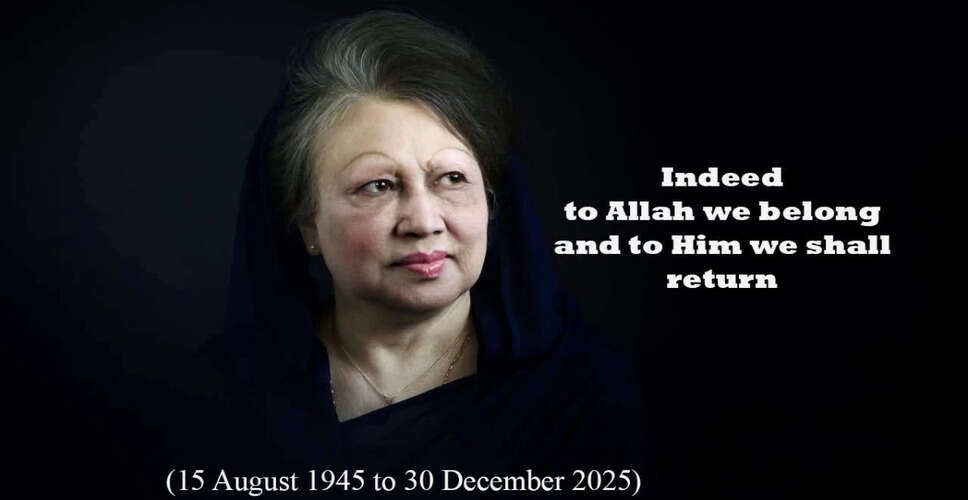
Khaleda Zia's Legacy in Bangladeshi Politics
The Bangladesh Nationalist Party has announced the passing of Khaleda Zia, the former Prime Minister of Bangladesh, who was 80 years old. Her long-standing rivalry with Sheikh Hasina has significantly influenced the political landscape of the country for decades. Zia faced corruption charges, which she claimed were politically motivated. However, in January 2025, the Supreme Court acquitted her in the last corruption case, allowing her to potentially participate in the upcoming elections in February. Her death comes at a time of considerable political and social unrest in Bangladesh, marked by protests, violence, and increasing scrutiny of minority rights.
A Pioneer Against Military Dictatorship
Khaleda Zia played a crucial role in the popular movement against military dictatorship in Bangladesh, contributing to the downfall of then-ruler H.M. Ershad in 1990. Her fierce political rivalry with Sheikh Hasina has shaped the nation's politics for a generation. The BNP confirmed her death in a statement released on Tuesday.
Bangladesh's First Female Prime Minister
Zia was the first woman to hold the office of Prime Minister in Bangladesh. She consistently described the corruption charges against her as politically motivated. Following her acquittal in January 2025, she was poised to run in the February elections.
Repeated Requests for Medical Treatment Abroad
After being released from prison in 2020 due to health issues, Zia's family sought permission from the government, led by her rival Sheikh Hasina, for her to receive medical treatment abroad at least 18 times, all of which were denied. It was only after Hasina's departure from power in 2024 that an interim government, led by Nobel laureate Muhammad Yunus, granted her permission to travel abroad for treatment.
Political Instability in Bangladesh's Early Years
Zia traveled to London in January and returned in May. Following Bangladesh's independence from Pakistan in 1971, the country experienced significant political instability and coups. Her husband, Ziaur Rahman, assumed power as army chief in 1977 and founded the BNP in 1978, only to be assassinated in a military coup in 1981.
Zia's Political Journey and Challenges
Khaleda Zia was instrumental in mobilizing public support against military rule, leading to her first term as Prime Minister in 1991. Throughout her political career, she faced fierce competition from Sheikh Hasina, the daughter of the leader of the liberation struggle, Sheikh Mujibur Rahman.
Short-Lived Government and Subsequent Returns
In the early elections of 1996, the BNP won 278 out of 300 seats amid widespread boycotts, but Zia's government lasted only 12 days due to demands for a caretaker government. She returned to power in 2001, during which her administration faced accusations of anti-India rhetoric and corruption involving her son, Tarique Rahman.
Conviction and Release
Zia was sentenced to 17 years in prison across two separate corruption cases, which her party claimed were politically motivated. The Hasina government denied any interference in the judicial process. In 2020, she was released and placed under house arrest in Dhaka, where she frequently visited a private hospital for treatment.
Final Years and Death
Following a rebellion against Hasina's government in August 2024, she left power and the country. The interim government later allowed Zia to seek medical treatment abroad. Although she had been away from active politics for several years, she remained the BNP chairperson until her death. Her son, Tarique Rahman, has been acting as the party's interim president since 2018. Zia was last seen on November 21 at a military event in Dhaka, appearing fatigued and in a wheelchair. She is survived by her elder son, Tarique, while her younger son, Arafat, passed away in 2015.
Tributes and Condolences
The BNP Chairperson and former Prime Minister, Begum Khaleda Zia, passed away today at 6:00 a.m., shortly after the Fajr prayer. Inna lillahi wa inna ilayhi raji‘un. We pray for the forgiveness of her soul and request everyone to offer prayers for her departed soul. pic.twitter.com/KY2948UPD5
— Bangladesh Nationalist Party-BNP (@bdbnp78) December 30, 2025