
Flour Prices Soar in Pakistan: A Crisis for Households Amid Economic Strain
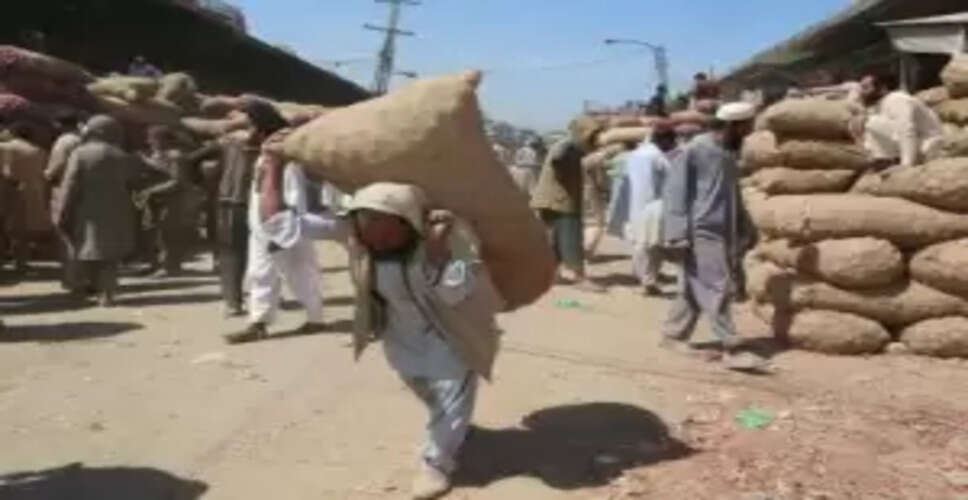
Rising Flour Prices Trigger Alarm in Khyber Pakhtunkhwa
Islamabad: A recent spike in flour prices across Shangla and other districts in Khyber Pakhtunkhwa has raised serious concerns among locals, who attribute the increase to inadequate government regulation, hoarding, and profiteering, according to local news sources.
Currently, a 20-kilogram bag of flour is priced at (Pakistani) Rs 2,850 in Shangla and surrounding regions, while a 40-kilogram bag can cost as much as Rs 5,700. Additionally, a 50-kilogram bag is reported to be around Rs 7,000, making essential food items unaffordable for many families in the lower and middle-income brackets, as highlighted by a local daily.
Residents have expressed that the rising flour prices are exacerbating the financial burden already imposed by inflation, urging the provincial government and local authorities to swiftly implement price controls on essential goods.
Previously, the illegal smuggling of flour from Punjab and other provinces into Afghanistan was cited as a reason for the price hikes in Khyber Pakhtunkhwa. However, locals and traders now indicate that the recent price increases in upper districts, despite the closure of the Afghanistan-Pakistan border, suggest that smuggling is no longer the primary factor driving costs up.
Economists and social analysts have cautioned that if prices continue to rise, it could lead to increased poverty and food insecurity. They have called on authorities to activate the price control committee and take action against hoarding and profiteering networks.
Earlier this month, a report indicated that Pakistan's economy has shifted from growth to mere survival, with households now spending nearly two-thirds of their income on food and electricity. According to the latest Household Integrated Economic Survey from the Pakistan Bureau of Statistics, life in Pakistan has increasingly become a struggle for basic necessities.
"Food alone now consumes over a third of household expenditures, while another quarter is allocated to housing, electricity, and gas. Together, these essentials account for 63 percent of total spending. This situation stems from prolonged inflation and policy decisions that have consistently raised the cost of living. Although average monthly earnings have nominally increased over the past six years, household expenses have escalated at a faster rate, eroding any gains in income," reported a local daily.
The report also highlighted the diminishing purchasing power of the Pakistani rupee, which is evident in what families can no longer afford.
"Expenditure on education has plummeted to just 2.5 percent, now less than half of what is spent on housing and utilities. Health and recreational spending barely account for a few percentage points. A society that reduces investment in education and well-being is sacrificing its future for short-term stability," it warned.
The report emphasized that this situation reflects fragility disguised as resilience. It outlined necessary steps, stating, "First, stabilizing food and energy costs must be prioritized economically. Second, inflation control should extend beyond interest rates, addressing supply-side issues in food markets. Lastly, education and health expenditures need protection from economic shocks. Household budgets are under severe pressure."
"If policies continue to treat survival as an acceptable norm, the long-term repercussions will far outweigh today's fiscal challenges," the report concluded.