
First-Time Voters in Cachar: A New Force in the Upcoming Assembly Elections
Emerging Influence of Young Voters
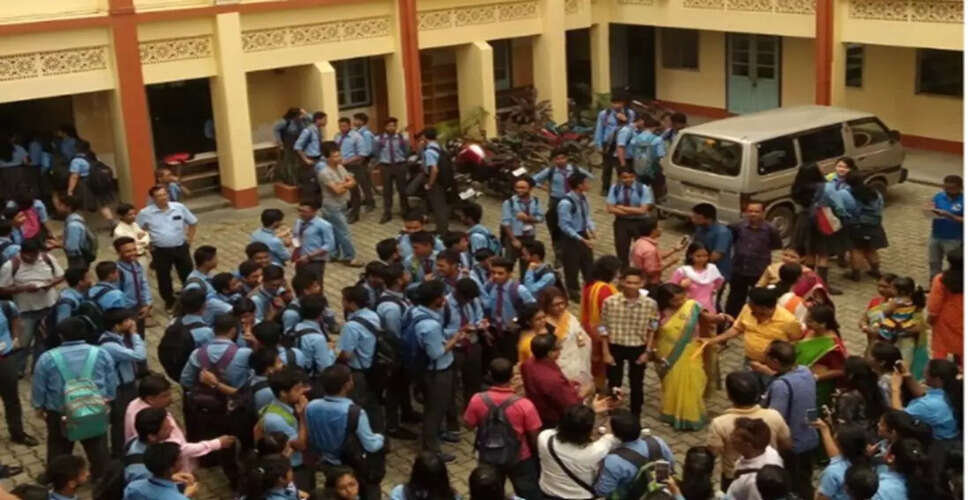
A file image of a gathering of college students. (AT Photo)
Silchar, April 2: As the campaign fervor intensifies in Cachar district ahead of the April 9 Assembly elections, a significant yet quieter group is making its presence felt - first-time voters.
The latest electoral roll, released on February 10, indicates that Cachar has 1,381,903 registered voters, with 34,498 individuals aged 18 to 19 preparing to cast their votes for the first time. Although their numbers are relatively small, they are beginning to shape the electoral conversation with distinct expectations.
Discussions with these young voters reveal a notable shift in focus from mere political rhetoric to tangible outcomes. Their primary concerns include employment opportunities, migration issues, healthcare, urban flooding, and infrastructure, reflecting their real-life experiences rather than political slogans.
Central to their worries is the ongoing exodus of young talent. Jyoti Rajbongshi, a Political Science student at Cachar College, expressed that the lack of local job opportunities is a significant factor driving youth away from the state.
“If there were opportunities available here, why would we leave?” she questioned, emphasizing the urgent need for job creation in Assam.
For Tomalika Purkayastha, a second-semester student at Women’s College, Silchar, participating in the election is both a duty and a learning experience.
“I frequently discuss candidates and parties with my parents to better understand my choices,” she noted, highlighting how political awareness is cultivated through everyday conversations.
Local civic issues, particularly in Silchar, are also a major concern. Sonia Baidya pointed out the persistent problem of flooding during the monsoon season, attributing it to poor drainage systems and advocating for sustainable solutions.
Sneha Paul, a Journalism student at Ramanuj Gupta Degree College, remarked on the lack of a robust industrial or IT sector in the area.
“There are very few multinational companies or IT industries here, which is why many youths choose to relocate,” she stated, while also stressing the need for improved road conditions and enhanced safety for women.
Healthcare infrastructure is another pressing issue. Shibashish Chakraborty, a fellow student, raised concerns about overcrowding at Silchar Medical College and the scarcity of accessible super-specialty services.
“In emergencies, people often consider traveling to Guwahati or Chennai, which speaks volumes,” he remarked.
Traffic congestion and failing civic systems further exacerbate frustrations. “Every year, we face the same issues - flooded roads, delays, and disruptions. We simply want to reach our destinations on time,” Barnali Singha stated, calling for improved traffic management and waterlogging-free roads.
What connects these voices is a strong demand for accountability. Unlike previous voting trends influenced by traditional loyalties, this new generation is becoming more informed and independent in their electoral choices.
With the rise of social media and increased access to information, they are critically evaluating political promises.
As Cachar approaches polling day, first-time voters are not just participating in the electoral process; they are redefining its expectations. Their message is clear - create local jobs, address infrastructure issues, enhance healthcare, and ensure effective governance.
For this emerging electorate, development is not just a vague promise but a pressing necessity, measured in terms of opportunities, mobility, safety, and access to reliable public services.