
Federal Judge Halts West Point's Faculty Speech Restrictions

Significant Ruling on Academic Freedom
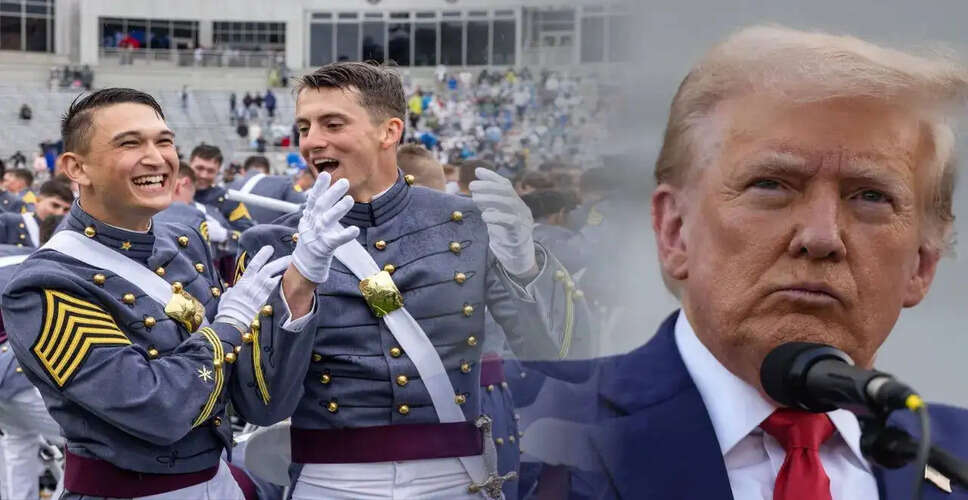
A federal judge has temporarily halted the enforcement of speech restrictions imposed on faculty at the US Military Academy at West Point, a decision that marks a notable win for advocates of academic freedom in military education. The ruling, issued by US District Judge Cathy Seibel in White Plains, New York, prevents the academy from implementing a policy set to take effect in February 2025, which mandated civilian faculty to seek approval before making public statements or publishing work in an official capacity. This decision follows a class-action lawsuit initiated by law professor Tim Bakken, who claimed that the academy's actions infringed upon constitutional free speech rights. The case has garnered significant attention as it touches on the delicate balance between military discipline, academic independence, and presidential authority.
Today marked the culmination of 47 months of challenge, sacrifice and growth for the Class of 2026.Now, their next chapter begins as leaders and officers in the U.S. Army. #WestPoint #LongGrayLine #USMA2026 #ForCountryWeCommit pic.twitter.com/TDRl0b5tYo
— U.S. Military Academy at West Point (@WestPoint_USMA) May 23, 2026
Constitutional Concerns Raised
Judge Seibel acknowledged the serious constitutional issues raised by Bakken. She noted that West Point cadets are already well-equipped to handle diverse and controversial viewpoints, suggesting that they do not need shielding from such discussions. The legal challenge specifically targeted two directives from the academy: the first, introduced in February 2025, required faculty to obtain prior approval for public speaking or publishing, while a second directive from August prohibited instructors from expressing personal opinions in class. Bakken argued that these measures fostered a culture of censorship and stifled open dialogue on critical topics relevant to legal, political, and military education. He contended that the restrictions overstepped professional boundaries and encroached upon protected speech.
In her ruling, Seibel prohibited West Point from enforcing the February policy against civilian faculty and specifically allowed Bakken to share his views with students in his classes. She characterized the restrictions as a "broad and standardless" violation of protected expression, likely at odds with the First Amendment. Furthermore, she expressed that limiting classroom discussions seemed incompatible with the academy's goal of training future military leaders.
Policy Origins Under Scrutiny
The ruling also delved into the origins of the controversial policy. Seibel highlighted evidence presented by Bakken indicating that the restrictions were influenced by an executive order signed by Trump in January 2025. This order aimed to align faculty speech with a directive that prohibited military academies from endorsing what it termed "un-American, divisive, discriminatory, radical, extremist, and irrational theories." It also restricted teaching that characterized America's founding documents as inherently racist or sexist, while promoting a positive portrayal of the United States and its constitutional principles. In response, West Point stated it would seek guidance from attorneys at the US Department of Justice regarding its future actions.