
Federal Court Blocks Trump's Election Order on Citizenship Proof
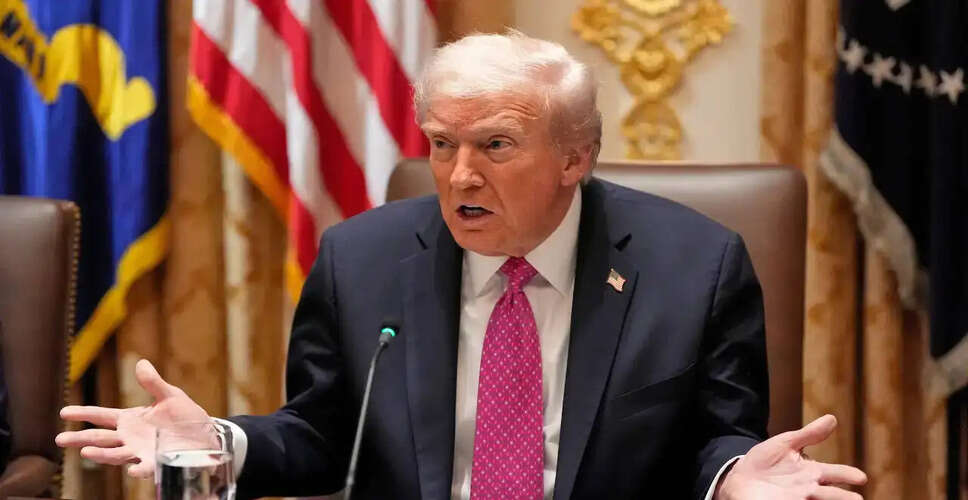

Court Ruling Against Trump's Election Executive Order
On Wednesday, a federal judge issued a permanent injunction against the majority of President Donald Trump’s initial executive order concerning elections. This order aimed to mandate that individuals provide documentary evidence of citizenship when registering to vote. U.S. District Court Judge Denise Casper's ruling in Boston transforms a previous temporary injunction into a lasting prohibition against many of Trump's election reform efforts.
Judge Casper dismissed the administration's claim that the lawsuit, initiated by Democratic state attorneys general, was premature since the rules had not yet been enacted. She affirmed that the Constitution grants states and Congress the authority to manage elections, asserting that Trump's requirements breached the principle of separation of powers. She noted, "The Constitution does not grant the President any specific powers over elections."
Trump's executive order proposed several changes, including the requirement for documentary proof of citizenship for voter registration, disallowing the counting of mail ballots arriving after Election Day, and penalizing states that did not comply by withholding federal funds. New York Attorney General Letitia James expressed gratitude for the court's decision, emphasizing the importance of defending voting rights in the upcoming midterm elections. She stated, "Generations of Americans fought tirelessly for the right to vote, and we honor their legacy by protecting that right against anyone who tries to undermine it."
Requests for comments from the White House and the Department of Justice went unanswered. This ruling is part of a series of legal setbacks for Trump’s election executive order, which he signed shortly after beginning his second term. He has since issued another executive order aimed at establishing a national voter registry and restricting mail-in voting, which is also facing legal scrutiny.
Last fall, a federal judge in Washington, D.C., blocked the government from implementing the proof-of-citizenship requirement on the federal voter registration form, following a separate challenge from civil rights and Democratic-aligned groups. This judge also prohibited the Secretary of Defense from enforcing citizenship proof for military personnel registering to vote or requesting ballots.
In light of the challenges in enforcing a proof-of-citizenship requirement through executive action, Trump is advocating for legislation in Congress to establish such a mandate. The SAVE America Act has passed the House but is currently stalled in the Senate, prompting Trump to call for the elimination of the filibuster that is hindering the bill's progress.
On Wednesday, Trump unexpectedly canceled the anticipated signing of a bipartisan housing bill, stating he would not approve any legislation until Congress enacts his proof of citizenship requirement for voting. The president and several Republican supporters have been promoting the idea that noncitizen voting is a significant issue, despite evidence showing it is quite rare. The federal voter registration form already requires individuals to affirm their U.S. citizenship, with violations punishable by felony charges that could lead to imprisonment or deportation.
In another significant voting-related case, the U.S. Supreme Court is expected to release a decision soon regarding whether mail ballots must be received by Election Day. This ruling could alter the regulations in 14 states that currently allow grace periods for ballots postmarked by Election Day.