
Fatima Ezzahra El Mansouri Becomes Morocco's First Female Prime Minister

Historic Appointment in Morocco
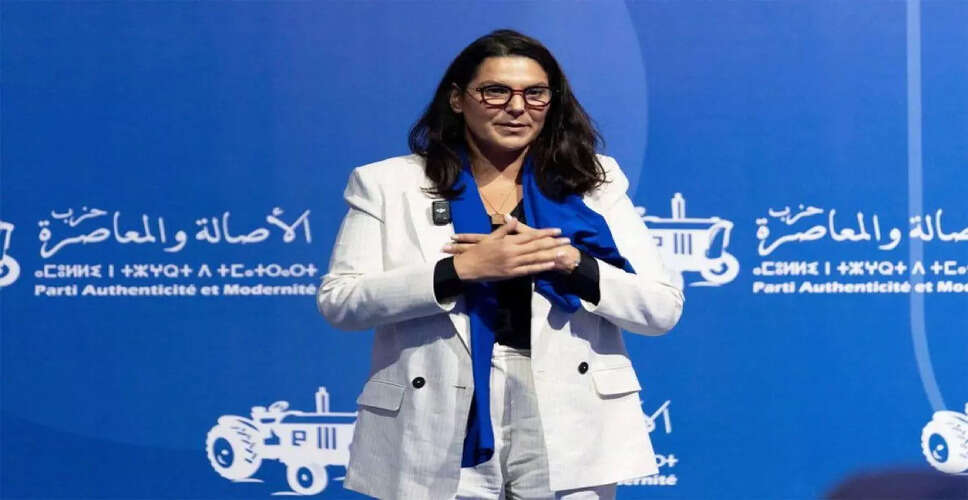
File image of Morocco's new PM Fatima Ezzahra El Mansouri(Photo: @GPoliticalArena/X)
Rabat, Sep 30: King Mohammed VI of Morocco has officially appointed Fatima Ezzahra El Mansouri, the national coordinator of the Authenticity and Modernity Party (PAM), as the new prime minister, as announced by the royal palace.
This marks a significant milestone as El Mansouri becomes the first woman to lead the Moroccan government.
In the parliamentary elections held on September 23, the PAM emerged victorious, securing 97 out of 395 seats in the House of Representatives, the lower chamber of parliament, according to reports from a news agency.
As per the constitutional provisions, the king selects the prime minister from the party that holds the majority of seats, which is responsible for forming the government.
Preliminary results from the Interior Ministry indicate that the PAM topped the election results, followed by the National Rally of Independents with 66 seats and the Istiqlal Party with 65 seats, as stated by Moroccan Interior Minister Abdelouafi Laftit.
The Justice and Development Party came in fourth with 54 seats, according to the election results.
Out of the 395 seats in the House of Representatives, 305 are contested through local electoral districts, while the remaining 90 are reserved for women through regional lists.
The Interior Ministry reported that a total of 7,288 candidates registered for the elections, representing 28 political parties, with women making up 2,658 of the candidates, which is approximately 36.47 percent of the total.
Morocco's parliament is bicameral, consisting of the House of Representatives and the House of Councillors. The upcoming 2026 elections will determine the members of the House of Representatives across the country's 12 regions.
The election for the House of Councillors is set for 2027.
The major political parties include the National Rally of Independents, the Authenticity and Modernity Party, and the Istiqlal Party, which previously formed the outgoing government.
These parties faced competition from the Justice and Development Party, which had led coalition governments after the 2011 and 2016 elections, along with the Socialist Union of Popular Forces, the Popular Movement, and the Party of Progress and Socialism.