
Farmers Protest Price Drop by Distributing Cabbage in Shillong
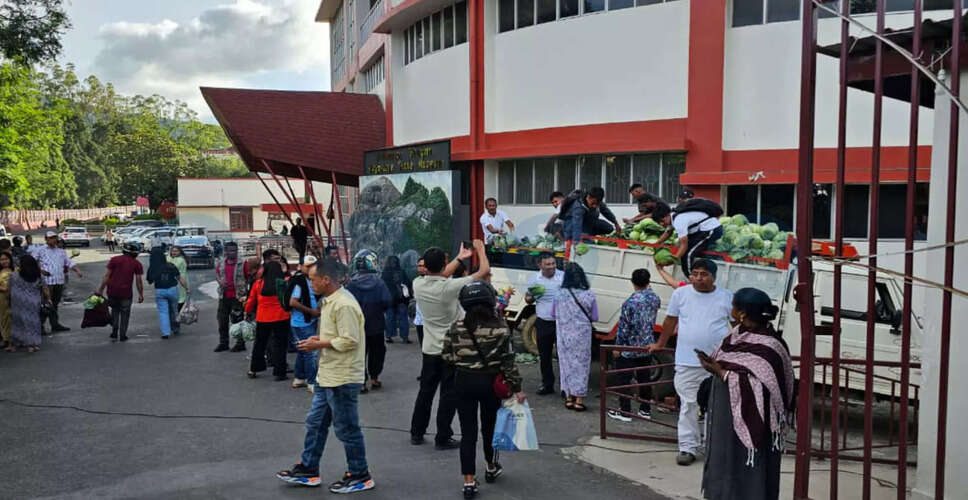

Farmers Take Action Against Falling Cabbage Prices
The cabbages were sourced from four villages in the Mawkynrew block of East Khasi Hills district.
Shillong, July 17: On July 24, the Deputy Commissioner of East Khasi Hills will hold a meeting with farmers and stakeholders to discuss the significant decline in wholesale agricultural prices and explore strategies to safeguard farmers from ongoing financial losses.
According to Alfonbirth Kharsyntiew, General Secretary of the Hill Farmers' Union, this initiative follows a symbolic protest where farmers distributed six tonnes of cabbage for free to the public in Shillong. These cabbages were collected from four villages within the Mawkynrew block.
Kharsyntiew explained, "This free distribution served as a quiet protest against the severe drop in cabbage prices. We were offered merely Rs 2 per kg, while the same cabbage was being sold for Rs 15-20 per kg at Iewduh (Bara Bazar)."
He noted that the farmers had secured permission from the Deputy Commissioner prior to the distribution event.
"Our approach was unique. Instead of discarding vegetables on the streets, we chose to give them to those who could benefit. Disposing of them would only pollute the roads and harm the environment. This way, we could convey our message while assisting the community," he added.
Kharsyntiew emphasized the challenges faced by farmers, stating that those who try to sell their goods directly in the market face high costs. These expenses include transportation from villages to Shillong, porter fees for moving goods from parking areas to markets, and a Rs 40 charge per sack imposed by market authorities.
"Many farmers are already burdened with seasonal loan repayments, and these extra costs further diminish their profits," he remarked.
To reduce losses, the union is now planning to transport their produce directly to markets in Jowai, Ri-Bhoi district, and other regions during market days in search of better pricing.
Kharsyntiew mentioned that during the peak summer season, vegetables from the Khasi Hills are sent to Silchar and Barpeta in Assam. From Silchar, the produce is further distributed to Manipur and Mizoram, while consignments from Barpeta reach various parts of Assam and even Siliguri in West Bengal.
He underscored the importance of middlemen and government agencies in regulating prices to ensure fair trading practices.
"They need to recognize the struggles of farmers and their families and guarantee that growers receive just compensation for their products," he concluded.