
Farmers in Nagaon Struggle as Monkey Population Threatens Livelihoods
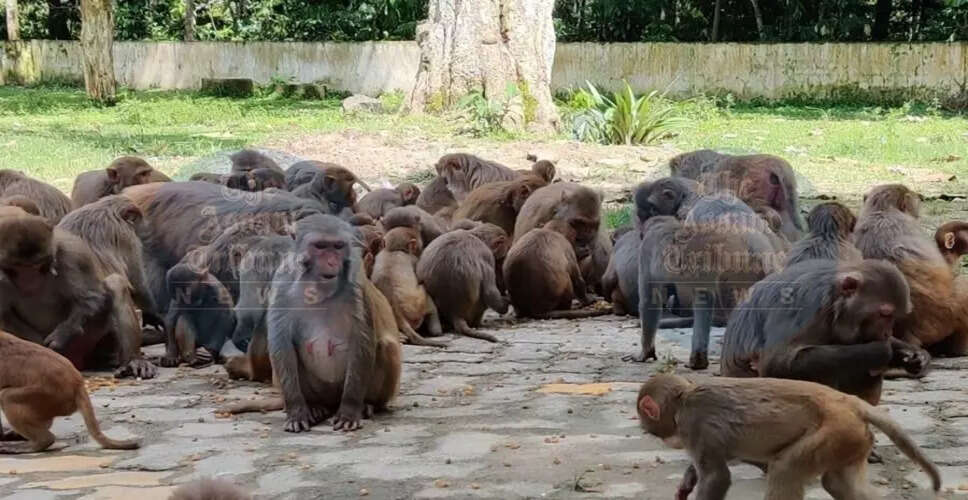

Monkey Menace in Nagaon District
Picture used for representational purpose (AT Photo)
NAGAON, July 3: An increasing population of monkeys has compelled numerous farmers to cease cultivation across a 10-20 km area from Puranigudam to Nagaon town, raising significant alarms regarding food security and the livelihoods of rural communities in the region.
Residents from more than 25 indigenous Assamese villages, including areas like greater Puranigudam, Barhampur, and Telia Pohukata, report that groups of rhesus macaques have been invading their fields daily for several months.
The monkeys are wreaking havoc on paddy nurseries, vegetables, and fruit crops such as bananas and papayas before they can be harvested.
“Numerous small-scale farmers have resorted to daily wage labor in Nagaon town or even Guwahati,” shared a farmer from Puranigudam. “This situation transcends mere crop loss; it signifies a collapse of the rural economy. Related sectors like dairy and poultry are also suffering due to the loss of feed crops.”
Moreover, local residents are unable to sleep past 4 am as the monkeys create disturbances by jumping on rooftops, leading to damage that requires annual repairs.
Another farmer expressed concern, stating that if the monkey problem persists, villagers could lose their entire means of livelihood within the next few years.
Forest officials attribute the monkey invasion to habitat loss and the easy availability of food in villages.
“The number of fruit trees in adjacent forests has diminished due to encroachment and climate change,” explained a forest official. As the monkeys venture closer to human habitats and develop a taste for agricultural produce, they return in larger numbers.
Villagers also claim that the disposal of urban food waste near village borders has exacerbated the situation. Cultural beliefs prevent locals from harming the monkeys, leaving them with limited options for deterrence. Traditional methods like firecrackers and scarecrows are ineffective against the large monkey populations.
Wildlife specialists caution that culling is not permissible under the Wildlife Protection Act of 1972, as rhesus macaques are a protected species. They recommend community-based deterrents and improved waste management as viable long-term solutions.
By
Correspondent