
Farmers in Kamrup Face Elephant Threat as Harvest Season Approaches

Wild Elephants Raid Paddy Fields in Kamrup District
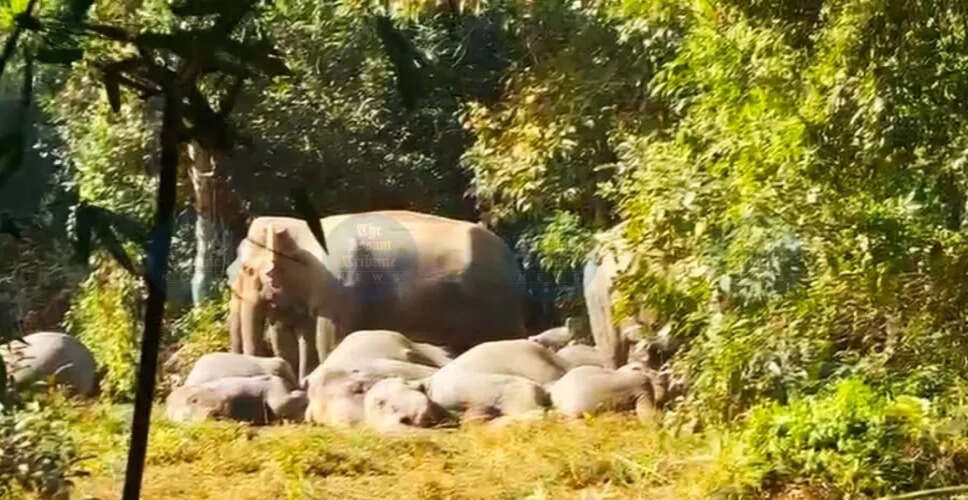
A file image of a herd of elephants
Palasbari, Oct 25: As the golden fields of paddy in Nalapara, located within the Rani forest range of Kamrup district, near harvest time, farmers are witnessing their months of labor turn into despair due to frequent raids by wild elephants.
Residents report that approximately 40 to 50 wild elephants are currently in the vicinity, raising alarms about potential destruction of crops. This ongoing issue in the Rani forest range not only jeopardizes the livelihoods of farmers but also amplifies worries regarding the unfinished solar fencing project along the Assam-Meghalaya border.
With the Sali paddy nearing maturity, farmers are increasingly anxious that their hard work and investments may be wasted as elephant herds continue to invade their fields, wreaking havoc on their crops. For many families, the anticipated harvest season has transformed into a time of dread rather than joy.
Particularly alarming for locals is the regular movement of elephant herds through fields adjacent to the Nalapara Beat Office. The presence of these elephants has heightened concerns among farmers reliant on paddy cultivation, with many stating that the ongoing destruction has made farming increasingly untenable, leading some to abandon their fields altogether.
Compounding the farmers' woes is the perceived lack of timely action from the forest department. Residents claim that forest officials only visit affected areas sporadically, often responding only after being alerted by villagers, and sometimes failing to show up even after being informed about the elephant incursions and crop damage.
Additionally, the slow progress of the solar fencing initiative along the Assam-Meghalaya border has become a significant worry. This project, intended to cover around 17 km from Mairapur Silputa to Garopara within the Rani forest range, aims to deter wild elephants from entering agricultural lands and mitigate human-elephant conflicts in border regions.
However, reports indicate that only about 3 km of the fencing has been completed, with work yet to commence in certain areas, including Nalapara.
As the harvest season approaches, farmers are increasingly concerned that the delay in completing the fencing will leave their ripening paddy crops exposed to further elephant raids. Residents are urging the forest department to accelerate the remaining work, especially in vulnerable areas, and to ensure regular monitoring and maintenance of the existing fencing. Reports of damage to sections of the fencing in places like Mairapur and Belguri have also raised doubts about the project's effectiveness.
Frustrated by the ongoing incidents, locals have questioned the operations of the Nalapara Beat Office and the effectiveness of the Rani Forest Range authorities in addressing the persistent human-elephant conflict. They argue that the lack of effective preventive measures and prompt responses has exacerbated the challenges faced by farmers trying to protect their crops from repeated elephant incursions.
Local farmer Atul Nath expressed his frustration, stating that the ongoing elephant threat has left him with no choice but to cease farming. He recounted an incident where wild elephants damaged a structure used for storing paddy, yet no forest officials came to assess the damage or offer assistance.
“I used to cultivate paddy, but due to the constant threat from wild elephants, I have had to stop farming. It feels like our livelihood has come to an end,” Nath lamented.
Nath mentioned that a herd of elephants damaged his paddy fields again recently, but no forest personnel had visited the area to address the situation. He voiced his deep dissatisfaction with the local forest administration and called for urgent measures to protect farmers and their crops.
Beyond the immediate agricultural threats, residents have also raised alarms about the alleged illegal logging of valuable trees in the area under the cover of darkness. Some locals suspect a possible connection between forest offenders and personnel associated with the Nalapara Beat Office.
Seeking immediate action, residents have urged the forest department to enhance patrolling, respond swiftly to reports of elephant movements and crop damage, and complete the pending solar fencing work. They have also called for an investigation into the alleged illegal tree felling and strict action against those involved.
Farmers have appealed to the Assam Forest Department and Chief Minister Himanta Biswa Sarma for intervention, accountability among officials, and necessary support for affected cultivators. They emphasized that timely and sustained action is crucial to safeguard agricultural livelihoods, prevent further crop losses, and protect forest resources.
For the farmers of Nalapara, the upcoming harvest now looms with the threat of another devastating loss. With around 40 to 50 wild elephants reportedly roaming the area, cultivators are anxiously awaiting effective measures to protect the crops that sustain their families.