
Explosions Rock Oil Tankers in Strait of Hormuz Amid Rising Tensions

Incident Overview
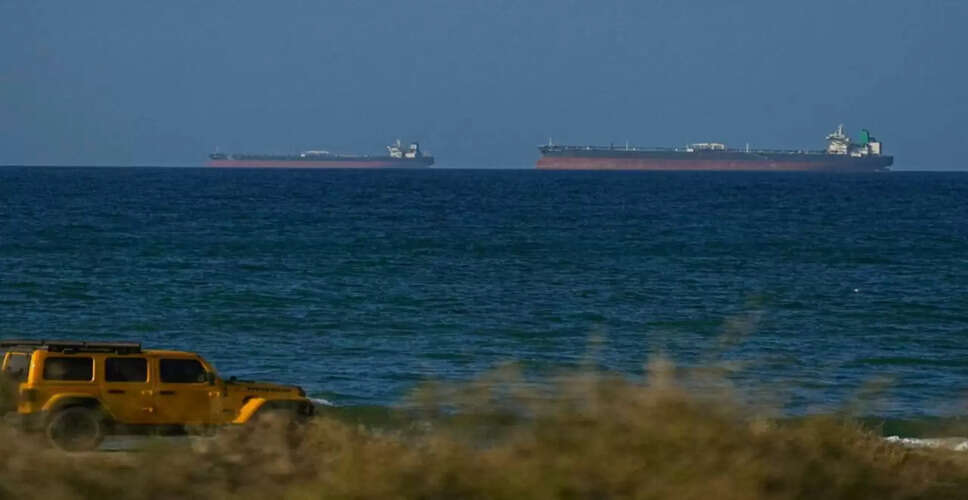
Tehran: On Saturday, the Islamic Revolutionary Guard Corps (IRGC) of Iran reported that two oil tankers experienced explosions and fires after striking naval mines in the Strait of Hormuz earlier that day.
According to the IRGC's official news outlet, Sepah News, one tanker hit mines near Khasab port in Oman, while the other encountered mines on an 'unauthorized' route to the east of the Strait.
The vessels had deactivated their GPS systems in an attempt to navigate the strait's 'illegitimate' path undetected.
The navy cautioned that this 'unauthorized' route is heavily mined, and that attempts by oil tankers, along with the 'terrorist' U.S. military's aerial support, will not avert collisions with the 'highly devastating' mines, as reported by Xinhua News Agency.
US Military Actions
In a related development, the U.S. military disabled a commercial ship in the Gulf of Oman after it allegedly tried to breach the U.S. naval blockade of Iran, despite multiple warnings. Tehran has asserted its intention to keep the strategically vital Strait of Hormuz closed and to challenge the embargo.
The U.S. Central Command (CENTCOM) stated that the incident occurred on November 26, when the Palau-flagged bulk carrier M/V Pacific Archer left the Iranian port of Bandar Abbas and attempted to navigate through regional waters.
CENTCOM reported that a U.S. military aircraft deployed precision munitions that struck the stern of the M/V Pacific Archer, ultimately disabling the ship's propulsion system, although the civilian crew remained unharmed.
The military command emphasized that the vessel had attempted to evade the U.S. naval blockade despite receiving several warnings from American forces.
CENTCOM reiterated that it had disabled a commercial vessel in the Gulf of Oman on November 26 after the crew attempted to breach the blockade following their departure from an Iranian port.
They further stated that American forces are rigorously enforcing the blockade, having redirected 158 commercial vessels that complied with instructions, while six vessels were disabled for non-compliance.
All mariners operating in the Gulf of Oman and the approaches to the Strait of Hormuz are advised to heed the blockade warnings issued by CENTCOM forces.