
Exploring the Legacy of Vithabai Narayangaonkar in the Upcoming Biopic 'Eetha'
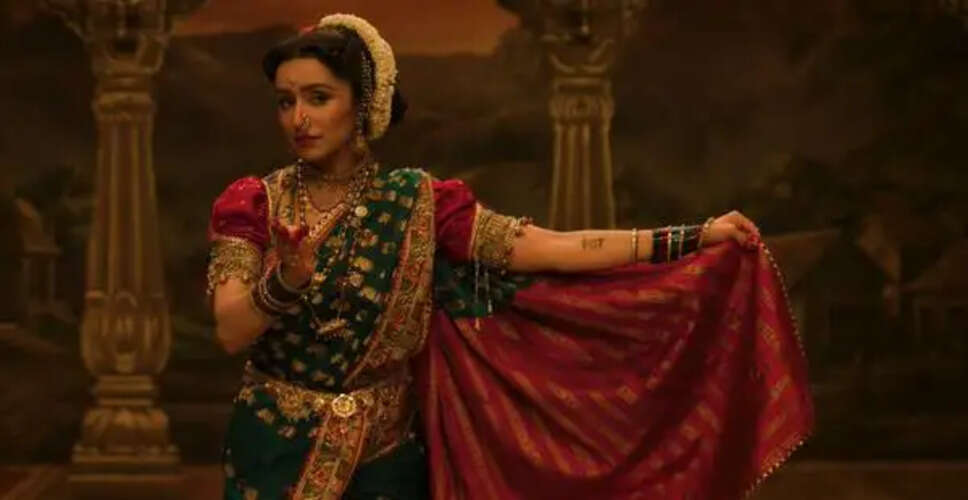

A Dramatic Entrance
As the audience's enthusiastic whistling fills the air, Vithabai Narayangaonkar endures the pain of childbirth backstage. Despite her discomfort, she focuses on the rhythmic beats of the dholki and the harmonium. The crowd eagerly anticipates her appearance. Just moments after giving birth, with a sari tightly wrapped around her waist, she steps onto the stage.
The Life of a Tamasha Icon
Vithabai, a celebrated tamasha performer from Maharashtra, is portrayed by Shraddha Kapoor in the upcoming biopic titled Eetha. The child born during this dramatic moment is Kailash Narayangaonkar, who is now 64 and carries the legacy of his mother's remarkable story.
The recently unveiled teaser of Eetha opens with the birth of Kailash on June 3, 1962, in Shikhar Shingnapur, located in Maharashtra's Satara district. It highlights the demanding nature of an art form that often consumed the lives of its practitioners, sparking discussions that extend beyond the realm of cinema.
Upcoming Release and Cultural Significance
Set to hit theaters on August 28, the Hindi film features music by Ajay-Atul and follows in the footsteps of Utekar’s previous work, Chhaava (2025), which also focused on a cultural icon from Maharashtra.
Vithabai's Early Life and Impact
Born on July 1, 1935, in Pandharpur to a Dalit Mang family deeply rooted in the tamasha tradition, Vithabai rose to prominence through the rural circuits of Maharashtra, becoming a pivotal figure in the art form. Her powerful voice, sharp wit, and captivating stage presence earned her admiration throughout the state.
She was honored with the Presidential medal twice, first in 1957 and again in 1990, recognizing her contributions to folk culture.
A Legacy Remembered
Vithabai passed away on January 15, 2002, leaving behind a legacy that her children remember with both pride and awe. Kailash Narayangaonkar shared, “My mother was never the soft, cuddly sort. That kind of unconditional love she reserved for her art. Nothing else came close.”
Several of her eight children followed in her footsteps, including daughters Mangala Bansode, Malati Inamdar, Bharti Sonawane, and the late Sandhya Mane. Kailash and his sons, Rohit and Mohit, continue to run the Vithabai Bhau Mang Narayangaonkar troupe, facing numerous challenges.
Cautious Optimism for 'Eetha'
The family approaches the release of Eetha with cautious optimism. Mohit Narayangaonkar mentioned that while they shared some photographs of Vithabai with the producers, they have not yet signed a formal agreement regarding the film's adaptation.
Neither Laxman Utekar nor the production company responded to inquiries about the film's portrayal.
Expectations and Concerns
Acknowledging that Eetha will take creative liberties, Mohit expressed hope that the film accurately represents his grandmother's essence. Vithabai was affectionately known as “Tamasha Samradni,” or the Empress of Tamasha, celebrated for both her artistry and her sharp repartee.
Mangala Bansode remarked on Vithabai's unforgettable stage presence, stating, “That energy and command cannot be taught.” She also highlighted Vithabai's quick wit, recalling a moment when Vithabai cleverly responded to a heckler during a performance.
Influence and Advocacy
In 1981, during a fuel crisis affecting tamasha troupes, Vithabai led a delegation to the chief minister, resulting in subsidized diesel for registered artists. Mohit noted, “She’d never have used influence for herself, but it shows the kind of respect she commanded.”
Despite facing personal hardships, Vithabai remained committed to preserving the traditional structure of tamasha and lavani, resisting the trend of cinematic adaptations.
Cultural Context and Future of Tamasha
Before Eetha, Vithabai's life inspired the Marathi play Vitha and a biopic of the same name, which was completed over a decade ago but never released. The upcoming film arrives at a time when tamasha is caught between heritage and neglect.
Shailaja Paik's research highlights the dual nature of tamasha, providing livelihoods while also stigmatizing performers. Mukund Kule emphasizes the complex relationship between caste and performance, noting that many performers were expected to entertain dominant castes within a deeply unequal society.
The Enduring Spirit of Tamasha
While Eetha may bring renewed attention to tamasha, concerns about its commercialization persist. Kule pointed out that the film industry has increasingly sought to adapt Marathi cultural narratives for broader audiences.
Despite the challenges faced by traditional tamasha performances, the art form continues to thrive in various ways, with younger artists reinterpreting it through modern lenses. The essence of tamasha remains alive, echoing through modest venues and resonating with audiences, however small.