
Exploring the Historical Significance of the Battle of Haifa


Discussion on 'Miracle at Haifa: The Master and the Maharajas'
Jaipur. During a book discussion held at the Ashok Club in Jaipur, Major Chandrakant Singh remarked, "The Battle of Haifa was a perilous mission for the Indian Army, yet it culminated in a glorious victory." This event was organized under the Prabha Khetan Foundation's 'Sahyog' initiative. Major Singh engaged in a dialogue with Ajay Singha, covering various aspects of history, military heritage, and literature. The audience was given a chance to view a historical event in a broader context, understanding how history influences the present and aids in comprehending the future.
The focus of the discussion was the Battle of Haifa, fought on September 23, 1918, during World War I on the hills of Mount Carmel. This battle is renowned for the indomitable courage displayed by Indian cavalry soldiers. Armed primarily with swords and spears, they faced the Ottoman army, which was equipped with rifles, machine guns, and artillery. Despite the odds, the Indian cavalry achieved a remarkable victory, capturing a significant number of enemy soldiers. This battle is recorded as a pivotal event in military history.
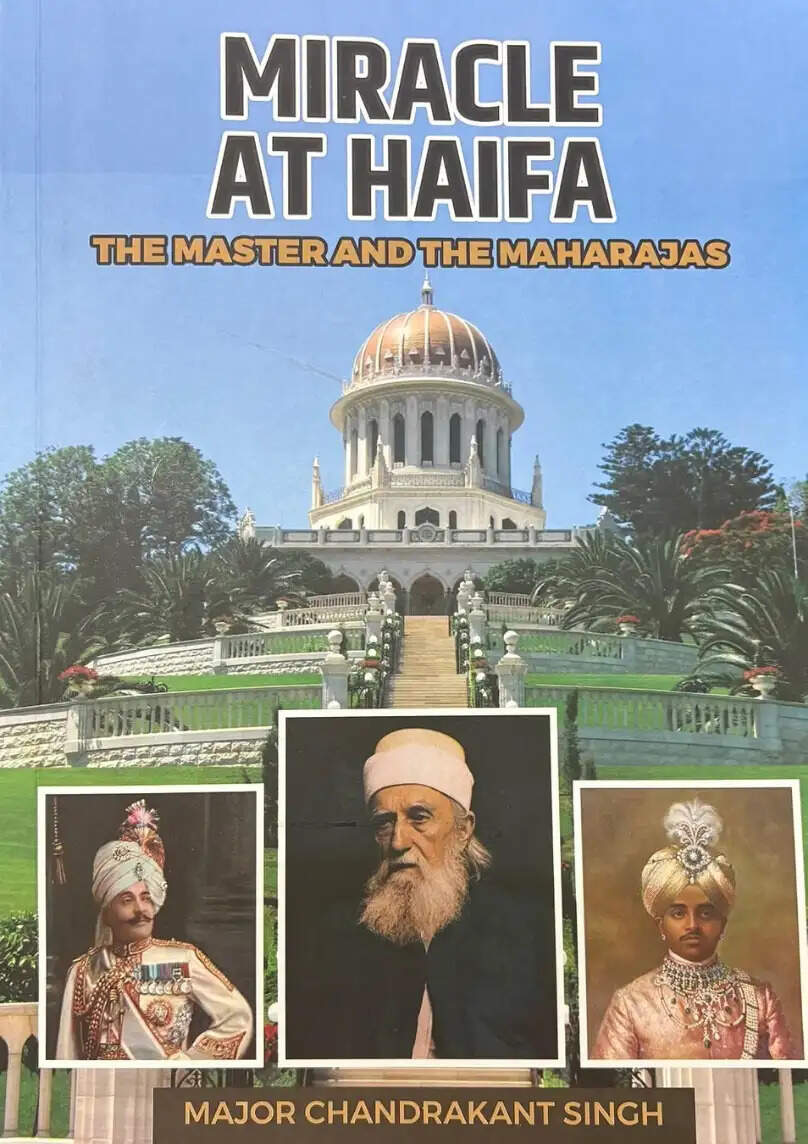
While discussing the book, Major Singh highlighted four major historical impacts of the Battle of Haifa. Firstly, it accelerated the end of World War I and paved the way for the collapse of Turkey and the abolition of the Islamic Caliphate in 1924, which had lasted for nearly 1400 years. He noted that the political vacuum created by this event is still being filled by entities like ISIS, Turkish President Erdogan, and the leadership of Saudi Arabia and Iran. Secondly, the battle saved Abdul-Baha, a religious leader of the Baha'i faith, which aligns with the principles of unity and equality found in the Upanishads. Thirdly, the valor of Indian soldiers under Indian officers compelled Britain to grant the King's Commission to Indians and open Sandhurst to Indian cadets.

According to Major Singh, this process eventually influenced the path to India's independence. Fourthly, the battle led to the end of Ottoman rule in Palestine and the establishment of British mandate governance, which subsequently increased Jewish immigration and set the stage for the formation of Israel. The idea to write a book about the Battle of Haifa originated from a conversation with Colonel Bahadur Singh, a resident of Jodhpur, whose father, Chandan Singh, was among the three hundred soldiers who played a crucial role in the battle. It is noteworthy that on the centenary of the Haifa battle, Prime Minister Narendra Modi visited Haifa on September 23, 2018, where he closely observed this historic site and had a fulfilling experience. The book also delves into the history and principles associated with the Baha'i faith.

It is significant to mention that Mount Carmel is regarded as a sacred site for the Baha'i community, where the founder of the Baha'i faith, Baha'u'llah, and the divine spirit, Bab, along with Abdul-Baha, are interred. This site serves as a center of faith for Baha'is worldwide, including those in Jaipur, Rajasthan.